Tobacco and rice plantations (Edexcel GCSE History): Revision Notes
📚Revision Notes
Tobacco and rice plantations (1713-1741)
The foundation of plantation agriculture
During the early 18th century, tobacco and rice became hugely profitable crops in British North America. However, these plantations could only succeed through the extensive use of enslaved labour. Both crops required intensive manual work that made them dependent on having large numbers of workers available at low cost.
The plantation system that developed was built entirely around forced labour, with enslaved people providing not just the workforce but also essential agricultural knowledge that made these crops successful.
Note
The period from 1713-1741 represents the peak era of plantation agriculture expansion in British North America, fundamentally shaping the economic and social structure of colonial society.
How slavery enabled plantation development
Providing the massive workforce needed
Both tobacco and rice cultivation demanded enormous amounts of manual labour that would have been impossible to find through other means. The scale of production required to make these crops profitable meant plantation owners needed far more workers than they could hire as free labourers.
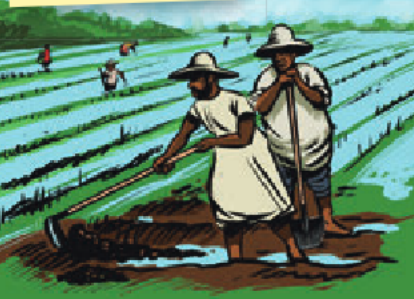
Between 1700 and 1740, over 55,000 enslaved Africans were forcibly transported to the Chesapeake region, where they primarily worked on tobacco plantations. Thousands more were sent to South Carolina, where they mainly worked on rice plantations.
This massive forced migration completely changed the population makeup of these regions. By 1720, approximately 35% of the Chesapeake's population consisted of enslaved people, while in South Carolina there were actually more enslaved people than free men and women combined.
Brutal working conditions
The work on these plantations was extremely demanding and dangerous. Enslaved people had to perform repetitive, manual tasks for very long hours, often in harsh weather conditions.
Important
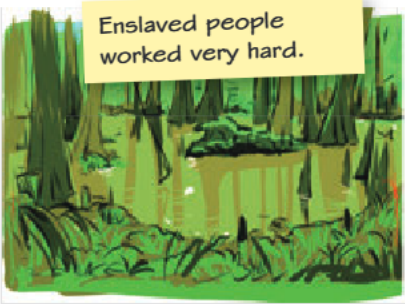
Rice production was particularly brutal because it took place in the swamps of South Carolina, where the risk of catching diseases was very high. Enslaved people were forced to work in these dangerous conditions because they had no choice in the matter. Plantation owners viewed them as property rather than human beings with rights.
Essential knowledge and expertise
Enslaved people brought crucial agricultural knowledge that made plantation success possible. Both tobacco and rice were grown in parts of West Africa, so many enslaved people already understood how to cultivate these crops effectively.
This was especially important for rice production. Colonists had very little knowledge about how to grow rice successfully, so the expertise provided by enslaved people from the "Rice Coast" of West Africa was absolutely essential for establishing profitable rice plantations.
Note
The agricultural expertise of enslaved Africans was often the difference between successful and failed crop cultivation, yet this crucial contribution was rarely acknowledged by plantation owners who profited from their knowledge.
Economic impact and profitability
Why slavery made plantations profitable
The use of enslaved labour was the primary reason plantation owners could make such enormous profits. While purchasing enslaved people required a large initial investment, in the long term it was much cheaper than paying wages to free workers or using indentured servants who would eventually gain their freedom.
Rice plantations became incredibly profitable, making roughly four times more profit than tobacco plantations. These profits increased significantly during the years 1700-1740, as rice became increasingly popular in European markets.
Creating efficient production systems
Enslaved people were forced to develop efficient methods of production under the supervision of plantation owners and overseers. Many enslaved people on rice plantations had positions of responsibility over other workers, though they remained under the control of white overseers.
Some plantation owners lived in towns rather than on their plantations, which sometimes meant enslaved people on rice plantations had slightly less direct supervision than those on tobacco plantations. However, this did not make their lives any easier or reduce the fundamental injustice of their situation.
Timeline of key developments
Example
Historical Timeline: Plantation Development 1700-1740
- 1700-1740: Peak period of enslaved African transportation to British colonies
- 1700: Beginning of major rice plantation development in South Carolina
- 1720: Enslaved people make up 35% of Chesapeake population
- 1740: Over 55,000 enslaved Africans transported to Chesapeake region by this date
- 1700-1740: Rice plantation profits increase dramatically during this period
Remember!
Summary
Key Points to Remember:
-
Slavery was essential: Both tobacco and rice plantations could only succeed through the forced labour of enslaved people who provided the massive workforce these crops required.
-
Knowledge mattered: Enslaved people brought crucial agricultural expertise from West Africa, especially for rice cultivation, without which colonists could not have developed successful plantations.
-
Harsh conditions: Enslaved people faced brutal working conditions, particularly in South Carolina's disease-ridden rice swamps, with no choice but to endure this treatment.
-
Massive population impact: Over 55,000 enslaved Africans were transported to the Chesapeake alone between 1700-1740, fundamentally changing regional demographics.
-
Enormous profits: The plantation system generated huge wealth for owners, with rice plantations making approximately four times more profit than tobacco plantations through the exploitation of unpaid labour.