Hundred Flowers: reasons (Edexcel GCSE History): Revision Notes
📚Revision Notes
Hundred Flowers campaign: reasons (1956-57)

The Hundred Flowers campaign was a significant political movement launched by Mao Zedong in 1956. After successfully consolidating Communist Party control over China, Mao made the surprising decision to encourage intellectuals, scientists, artists, and writers to openly criticise the Chinese Communist Party. By mid-1957, this period of relatively free expression had come to an end, but understanding why Mao initiated this campaign reveals important insights into both international Communist politics and domestic Chinese conditions.
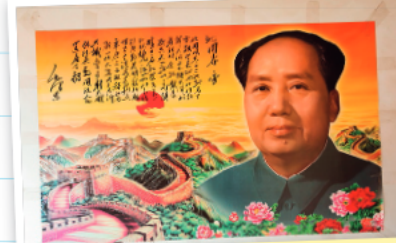
International factors influencing the campaign
The decision to launch the Hundred Flowers campaign was significantly shaped by major developments in the international Communist world during the mid-1950s.
De-Stalinization and Soviet influence
Following Stalin's death in 1953, the Communist world experienced significant upheaval. In 1956, Soviet leader Nikita Khrushchev delivered his famous "secret speech" at the 20th Party Congress, where he heavily criticised Stalin's use of terror and repression against Communist Party members. Khrushchev firmly believed that communism represented the ideal political system, but argued that the excessive use of force and fear tactics needed to end for the system to function effectively. This speech sent shockwaves throughout the Communist world and suggested that more liberal approaches to governance might be possible.
Note
Khrushchev's secret speech was not actually secret - it was called "secret" because it was delivered to a closed session of party delegates rather than the general public. However, its contents quickly spread throughout the Communist world and had enormous impact on Communist parties globally.
Unrest in Eastern Europe
The year 1956 witnessed significant political unrest across Eastern European Communist states. Major protests and uprisings occurred in Hungary and Poland as people demanded greater freedoms and reforms. These events demonstrated that rigid, oppressive Communist rule was facing serious challenges, and that some form of liberalisation might be necessary to maintain stability and popular support.
Communist parties experimenting with reform
Inspired by these developments, various Communist parties around the world began experimenting with allowing greater freedom of speech in politics while reducing centralised control over their economies. The goal was to reconnect with ordinary workers and citizens, while also addressing the problem of excessive bureaucracy that had developed within Communist party structures.
Domestic reasons for the campaign
Mao's decision to launch the Hundred Flowers campaign was driven by several important domestic considerations that reflected both his personal concerns and China's practical needs.
Combating bureaucratic inefficiency
Mao had grown increasingly suspicious of government experts and bureaucrats, fearing that the Communist Party was becoming too bureaucratic, inefficient, and corrupt. He worried that party officials were developing into a privileged elite class that was becoming disconnected from ordinary Chinese people. Mao believed that allowing open criticism would help identify these problems and force improvements through public pressure.
Example
Practical Example: Bureaucratic Problems
Mao observed that local party officials were:
- Making decisions in offices without consulting workers
- Living in better housing while ordinary citizens struggled
- Focusing more on personal advancement than serving the people
- Creating unnecessary paperwork and delays for simple requests
He hoped that public criticism would expose these issues and force officials to reform their behaviour.
Connecting with ordinary citizens
The campaign reflected Mao's genuine desire to hear the complaints and concerns of regular people and understand how they believed the Communist Party could be improved. Despite his authoritarian tendencies, Mao maintained faith in the ability to mobilise the masses and wanted to ensure that the party remained responsive to popular needs rather than becoming isolated in government offices.
Confidence in Communist achievements
By 1956, Mao felt increasingly confident about the benefits and achievements of the Communist system in China. He expected that when people were given the freedom to speak openly, they would ultimately praise the regime and its economic and military successes. This confidence led him to believe that criticism would be minimal and that any feedback received would help make the system even stronger.
Strengthening personal authority
The campaign also served Mao's personal political ambitions. By allowing criticism of the Communist Party, he expected that people would use this freedom to praise his leadership and achievements, thereby strengthening his position. Additionally, Mao calculated that criticism directed at party officials who were not meeting socialist ideals would actually weaken potential rivals within the government and party hierarchy.
Supporting industrialisation efforts
As China recovered from years of civil war and began implementing ambitious industrialisation plans, the Communist Party desperately needed the expertise and support of technical specialists and academics. The country's development of new infrastructure projects like bridges, roads, and canals required skilled professionals who might be more willing to contribute their knowledge if they felt their voices were being heard.
Addressing worker unrest
Throughout 1956, China experienced a series of strikes and protests, with workers demanding better pay and improved conditions. Many workers complained that Communist Party officials were misbehaving and serving their own interests rather than those of ordinary people. The Hundred Flowers campaign can be seen as an attempt to address these grievances through official channels rather than allowing underground opposition to develop.
The campaign slogan and its meaning
Note
Mao's famous slogan for the campaign was "Let a hundred flowers blossom, let a hundred schools of thought contend." This poetic phrase suggested that just as a garden benefits from many different types of flowers, Chinese society would benefit from hearing diverse viewpoints and ideas. The reference to "schools of thought" indicated that intellectual and political debate should be encouraged rather than suppressed.
Was it a trap?
Important
The Trap Theory
Many historians and party members suspected that the Hundred Flowers campaign was actually designed as a trap to identify opponents of the Communist regime. By encouraging people to speak freely, Mao could potentially identify critics and dissidents who might later be targeted for punishment.
While Mao never explicitly stated this as his intention, the campaign's abrupt end in 1957 and subsequent persecution of many who had spoken out lends some credibility to this theory. This remains one of the most debated aspects of the campaign among historians.
Timeline of key events
- 1953: Stalin dies, beginning period of uncertainty in Communist world
- 1956: Khrushchev delivers secret speech criticising Stalin
- 1956: Unrest in Hungary and Poland challenges Communist authority
- 1956: Series of strikes throughout China
- 1956: Mao launches Hundred Flowers campaign encouraging criticism
- Mid-1957: Campaign ends as criticism becomes too extensive
Summary
Key Points to Remember:
- The Hundred Flowers campaign (1956-57) was influenced by both international Communist politics and domestic Chinese conditions
- International factors included Khrushchev's secret speech, Eastern European unrest, and experiments with liberalisation in other Communist states
- Key domestic reasons were Mao's suspicion of bureaucracy, desire to hear popular grievances, confidence in Communist achievements, and need for technical expertise
- Mao's slogan "Let a hundred flowers blossom, let a hundred schools of thought contend" encouraged diverse viewpoints and intellectual debate
- The campaign may have been designed as a trap to identify regime opponents, though this remains debated among historians