Approaches to prevention and treatment (Edexcel GCSE History): Revision Notes
📚Revision Notes
Approaches to prevention and treatment in mediaeval England (c1250-c1500)
During the mediaeval period in England, people's understanding of disease and health was very different from today. Medical practitioners and ordinary people relied on a mixture of approaches when trying to prevent illness or treat disease. These methods can be broadly divided into three categories: rational treatments based on medical theory of the time, religious approaches rooted in Christian faith, and supernatural remedies based on folk beliefs and magic.
Note
This three-fold approach to medicine reflects the complex worldview of mediaeval society, where scientific understanding, religious faith, and folk traditions all coexisted and influenced medical practice.
Rational treatments and the theory of the Four Humours
Mediaeval physicians believed that illness was caused by an imbalance in the body's four humours (blood, phlegm, yellow bile, and black bile). This theory, inherited from ancient Greek medicine, formed the basis for most rational medical treatments of the period.
Important
The Four Humours theory dominated mediaeval medicine for centuries and was rarely questioned. Understanding this concept is essential for comprehending why treatments like bloodletting and purging were so widely used and accepted.
Bloodletting
Bloodletting was considered the most important treatment for restoring the balance of humours in the body. Medical practitioners believed that removing excess blood would help cure various ailments and restore good health.
There were several methods used for bloodletting:
- Cutting a vein - This was done using sharp instruments
- Using leeches - These blood-sucking creatures were applied to the skin
- Cupping - This involved creating suction to draw blood to the surface
Note
While physicians occasionally performed bloodletting, it was more commonly carried out by barber-surgeons or even non-medical people. Different points on the body were targeted depending on the specific illness being treated.
Purging
Purging was another treatment designed to rebalance the humours by removing excess substances from the body. This involved making patients either vomit or use their bowels to expel unwanted matter.
Methods of purging included:
- Emetics - Medicines that caused vomiting
- Laxatives - Substances that caused bowel movements
- Enemas - Liquid treatments administered through the rectum
These treatments were prepared and given by apothecaries (early pharmacists), 'wise women' (female healers), or sometimes physicians. In some cases, patients were even encouraged to give themselves enemas at home.
Religious treatments
Mediaeval society was deeply Christian, and many people believed that illness was either a punishment from God for sin or a test of faith. This led to various religious approaches to healing.
Common religious treatments included:
- Praying - People would pray for recovery, often to specific saints associated with particular illnesses
- Fasting - Giving up food was seen as a way to purify the soul and body
- Going on pilgrimage - Travelling to holy sites was believed to bring healing through divine intervention
- Paying for special Masses - Having prayers said by priests was thought to help with recovery
Note
These religious approaches were based on the belief that spiritual purity and devotion to God could restore physical health. This demonstrates the inseparable connection between spiritual and physical wellbeing in mediaeval thinking.
Supernatural treatments
Alongside rational medicine and religious faith, many mediaeval people also turned to supernatural remedies based on folk beliefs and magical thinking.
Examples of supernatural treatments included:
- Carrying lucky charms or amulets - People believed certain objects could protect against illness or cure disease
- Hanging specific items around the neck - For instance, a magpie's beak was thought to cure toothache
- Chanting incantations - Special words or phrases were believed to have healing power
Important
These treatments reflected the widespread belief in magic and the supernatural that existed alongside Christian faith in mediaeval society. This shows how multiple belief systems coexisted rather than conflicted in mediaeval medical practice.
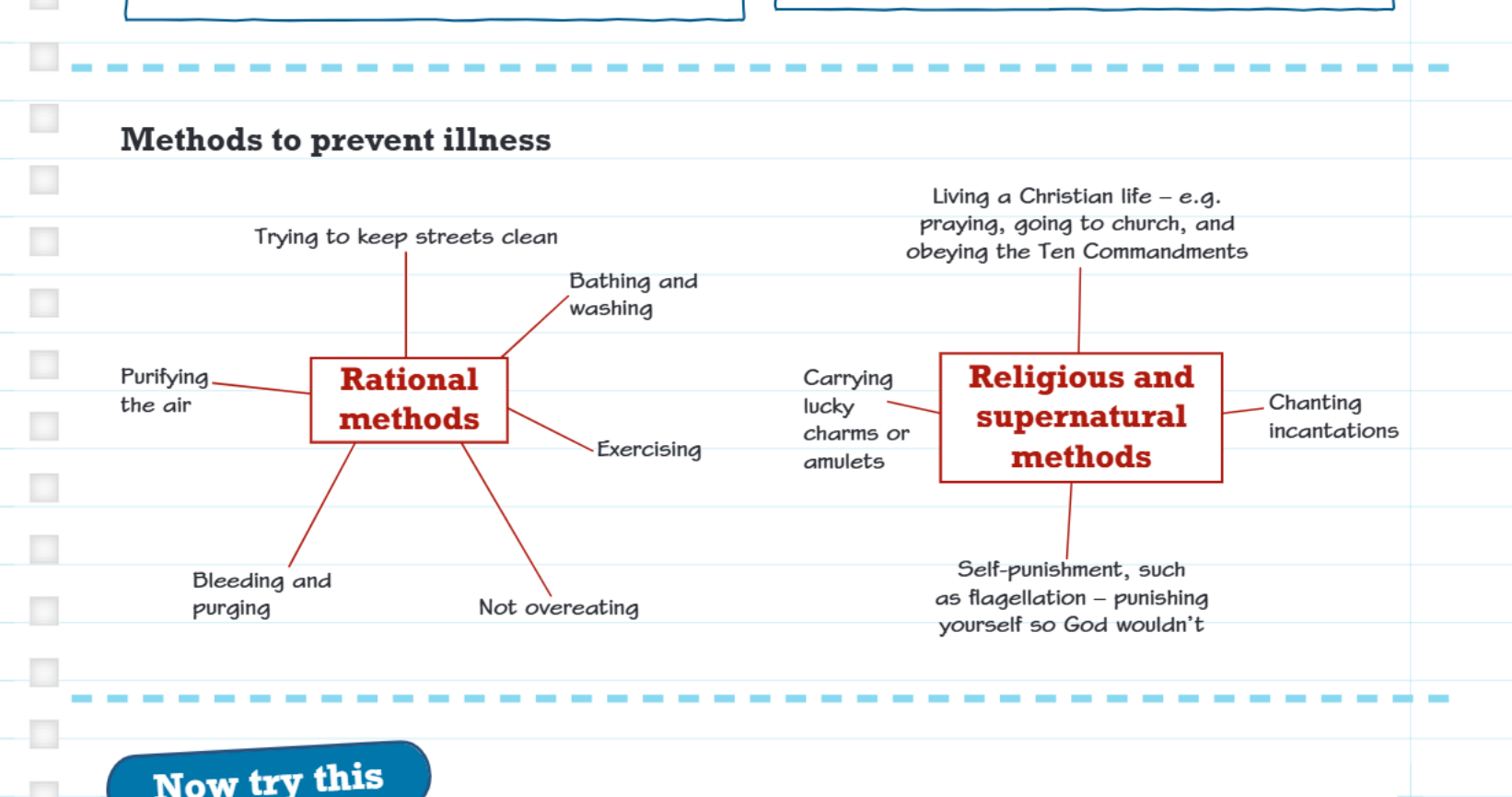
Methods to prevent illness
Mediaeval people used various approaches to try to prevent disease before it occurred. These prevention methods, like treatments, combined rational, religious, and supernatural elements.
Rational prevention methods
Based on contemporary medical understanding, people tried to maintain health through:
- Keeping streets clean - Removing waste and dirt was seen as important for health
- Bathing and washing - Personal hygiene was recognised as beneficial
- Purifying the air - People believed bad air caused disease, so they tried to improve air quality
- Exercising - Physical activity was understood to promote good health
- Bleeding and purging - These were used preventively as well as for treatment
- Not overeating - Moderation in diet was considered important for maintaining the balance of humours
Religious and supernatural prevention methods
People also tried to prevent illness through spiritual and magical means:
- Living a Christian life - This included regular prayer, attending church, and following the Ten Commandments
- Carrying protective charms - Lucky objects were thought to ward off disease
- Chanting incantations - Special words were believed to provide protection
- Self-punishment such as flagellation - Some people whipped themselves, believing this would prevent God from punishing them with illness
Note
The combination of practical hygiene measures with spiritual and magical practices shows how mediaeval people used every available means to protect their health, regardless of the underlying belief system.
The role of different practitioners
Various types of people provided medical care during this period:
- Physicians - Educated doctors who understood medical theory, though they were expensive and rare
- Barber-surgeons - Craftsmen who performed surgery and bloodletting alongside cutting hair
- Apothecaries - Prepared and sold medicines and treatments
- Wise women - Experienced female healers who used traditional remedies
- Religious figures - Priests and monks who provided spiritual healing
Important
The diversity of medical practitioners meant that people from different social classes had access to different types of care. Wealthy individuals could afford university-trained physicians, while ordinary people relied more on local healers and traditional remedies.
Summary
Key Points to Remember:
- Mediaeval approaches to prevention and treatment combined rational medical theory, religious faith, and supernatural beliefs
- The Four Humours theory dominated rational medicine, leading to treatments like bloodletting and purging designed to restore bodily balance
- Religious treatments reflected the Christian belief that illness could be divine punishment or a test of faith
- Supernatural remedies showed the continued influence of folk beliefs and magical thinking in mediaeval society
- Prevention methods mirrored treatment approaches, using rational, religious, and supernatural techniques to maintain health
- Different types of practitioners served the medical needs of mediaeval society, from educated physicians to traditional wise women