Improvements in hospital care (Edexcel GCSE History): Revision Notes
📚Revision Notes
Improvements in hospital care c1700-c1900
The 18th and 19th centuries marked a revolutionary period in hospital care and nursing practices. Before this time, hospitals were often little more than places where the poor went to die, with terrible conditions and no proper medical training. However, through the work of key reformers and changing attitudes towards healthcare, hospitals transformed into institutions focused on healing and professional medical care.
Florence Nightingale's revolutionary impact
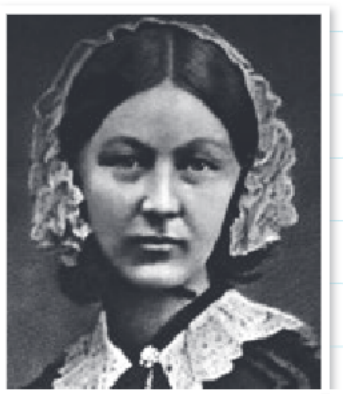
Florence Nightingale (1820-1910) became the most influential figure in transforming hospital care and establishing nursing as a respectable profession. Her work during the Crimean War between 1854-1856 exposed the shocking conditions in military hospitals and sparked widespread reforms across Britain.
Her background and training
Before Nightingale, nursing was not considered a respectable job for women, and there was virtually no formal training available. Recognising this problem, Nightingale took the unusual step of attending training schools in Germany and France to learn proper nursing techniques and hospital management.
Note
Florence Nightingale's decision to seek formal training abroad was revolutionary for her time, as few women pursued professional education, especially in medical fields.
The Crimean War experience
When Nightingale was asked to lead a team of nurses at the military hospital in Scutari during the Crimean War, she witnessed horrifically high death rates. Through careful observation, she identified that poor hygiene, lack of fresh air, inadequate supplies, and insufficient training for nurses were major contributors to patient deaths. Her systematic approach to improving these conditions led to a dramatic decrease in mortality rates.
Important
Nightingale's systematic data collection and analysis during the Crimean War was pioneering - she used statistical methods to prove that more soldiers died from preventable diseases than from battle wounds.
Her beliefs about disease prevention
Nightingale believed strongly in miasma theory - the idea that disease was caused by "bad air" or contamination from poor environmental conditions. This led her to focus intensively on hygiene, fresh air circulation, good supplies, and proper training for nurses. While we now know that germs cause disease rather than miasma, her emphasis on cleanliness actually helped prevent infections and save lives.
Long-term impact on nursing
The impact of Nightingale's work extended far beyond the Crimean War. British newspapers widely reported her reforms, making her a household name. In 1859, she published "Notes on Nursing," which became a foundational text for the profession. Most significantly, in 1860 she established the Nightingale Training School for Nurses, creating the first formal programme to train professional nurses and elevating nursing to a respectable career for women.
Transformation of hospital conditions
The period saw dramatic changes in how hospitals operated, moving away from the workhouse model towards institutions focused on medical care and recovery.
New hospital construction
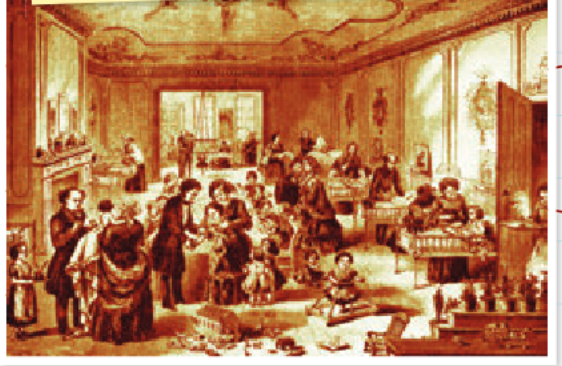
During the 19th century, new hospitals funded by charities and local councils opened specifically to care for the sick. These represented a major shift from earlier institutions that primarily served as places for the destitute to die. The new hospitals aimed to create environments conducive to healing rather than simply warehousing the poor and ill.
The cottage hospital movement
A particularly important development was the first cottage hospital, which opened in 1859. These were smaller buildings where nurses provided care and general practitioners could treat patients in a more homelike environment. This model made medical care more accessible, especially for those who couldn't afford private doctors but were not destitute enough for workhouse infirmaries.
Note
The cottage hospital movement represented a middle ground between expensive private care and workhouse infirmaries, making healthcare accessible to the working and middle classes for the first time.
Improved conditions and cleanliness
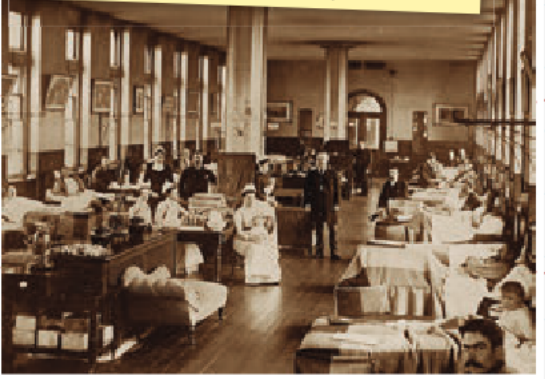
Influenced by reformers like Florence Nightingale, hospital cleanliness and organisation improved dramatically. Pasteur's germ theory provided scientific backing for the importance of hygiene that Nightingale had advocated. Hospitals became better organised, with nurses taking on more central roles in patient care and assisting doctors rather than simply providing basic maintenance.
Addressing social pressures
Public pressure led to infirmaries being separated from workhouses, recognising that the most disadvantaged people in society deserved proper medical care. This change reflected growing awareness that healthcare was a social responsibility rather than simply charity for the undeserving poor.
Important
The separation of infirmaries from workhouses was crucial because it removed the stigma associated with receiving medical care and recognised that illness was not a moral failing.
Specialist facilities
The period also saw the development of specialist hospitals designed for specific conditions. Mental health facilities, fever hospitals for treating infectious diseases, and hospitals for particular medical conditions emerged, allowing for more targeted and effective treatment approaches.
Timeline of key developments
- 1854-1856: Florence Nightingale serves in Crimean War, observes poor hospital conditions
- 1856: Great Ormond Street Hospital opens in London
- 1859: Florence Nightingale publishes "Notes on Nursing"; First cottage hospital opens
- 1860: Nightingale Training School for Nurses established
- 1870s-1880s: Pasteur's germ theory provides scientific support for hygiene practices
- 1875: Great Ormond Street Hospital shows improved conditions with better organisation
- Late 1800s: Infirmaries separated from workhouses; specialist hospitals develop
Summary
Key Points to Remember:
-
Florence Nightingale transformed nursing from an unrespectable job into a professional career through her Crimean War work and establishment of proper training programmes in 1860.
-
Hospital conditions improved dramatically through better hygiene, organisation, and the separation of medical facilities from workhouses.
-
New types of hospitals emerged, including cottage hospitals (from 1859) that provided more accessible care and specialist hospitals for specific conditions.
-
Scientific understanding supported reforms - while Nightingale believed in miasma theory, her emphasis on cleanliness actually prevented germ-caused infections.
-
Public pressure drove change as newspapers reported on poor conditions and society recognised healthcare as a social responsibility rather than just charity.