Injuries and illnesses (Edexcel GCSE History): Revision Notes
📚Revision Notes
Injuries and illnesses on the British sector of the Western Front, 1914-18
Overview of medical challenges
British soldiers fighting on the Western Front faced unprecedented dangers that went far beyond enemy bullets and shells. The unique conditions of trench warfare created a deadly combination of traditional combat injuries and entirely new medical challenges. Soldiers had to contend with chemical weapons, psychological trauma, and diseases caused by the appalling living conditions in waterlogged trenches.
The scale and nature of these medical problems forced military doctors to develop new treatments and preventive measures at an extraordinary pace. Many injuries had never been seen before, while others occurred on a scale that overwhelmed existing medical knowledge.
Note
The Western Front presented medical challenges on an unprecedented scale. Military doctors had to essentially learn battlefield medicine from scratch, as the nature of industrial warfare created injuries and conditions that had never been encountered before in military history.
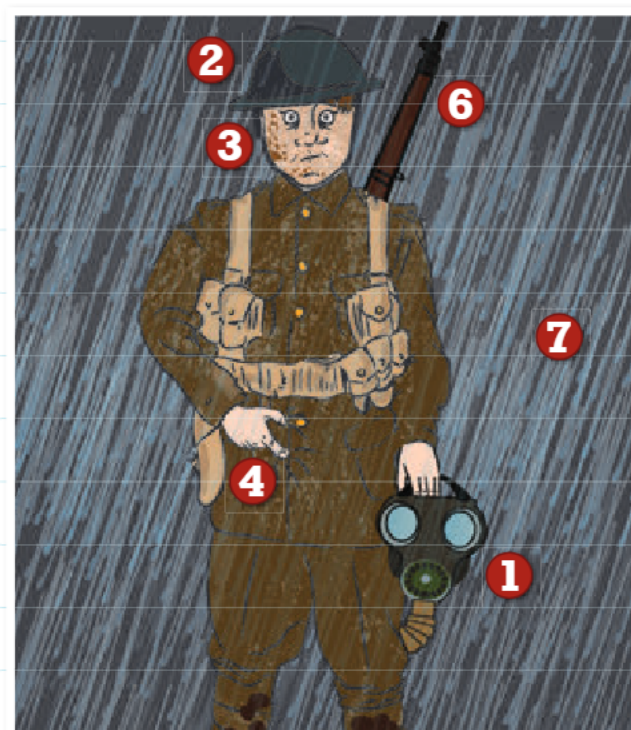
The seven main categories of injury and illness
Gas attacks and respiratory damage
Chemical weapons became one of the most feared aspects of trench warfare, though they caused fewer deaths than many soldiers expected. Gas attacks primarily resulted in temporary blindness and severe coughing fits, along with painful chemical burns to exposed skin and respiratory passages.
Important
Fear versus Reality of Gas Attacks
While gas attacks were greatly feared by soldiers, they were actually not a major cause of death on the Western Front. The psychological impact often exceeded the physical damage, though the injuries they did cause were severe and deeply traumatising.
The development of protective equipment happened rapidly. Before July 1915, soldiers had no proper protection and were forced to use makeshift methods, including holding cotton pads soaked in urine over their faces. This primitive protection was replaced when gas masks were distributed to all British troops in July 1915, dramatically reducing casualties from chemical attacks.
Head wounds and helmet development
Shrapnel from exploding shells caused far more head injuries than military planners had anticipated. These wounds became unexpectedly common because soldiers needed to look over trench parapets to observe enemy positions, exposing their heads to flying metal fragments.
The military response came in late 1915 when the traditional soft caps were replaced by steel Brodie helmets. This simple change significantly reduced the number of fatal head wounds, though many soldiers still suffered serious injuries requiring complex brain surgery and facial reconstruction.
Example
Medical Innovation: The Brodie Helmet
The introduction of the Brodie helmet demonstrates how quickly military medicine adapted to battlefield realities. When head injuries from shrapnel became unexpectedly common in 1915, military authorities:
Step 1: Identified the problem - soft caps provided no protection against metal fragments Step 2: Developed a steel helmet design that could deflect shrapnel Step 3: Mass-produced and distributed helmets to all troops by late 1915 Step 4: Achieved significant reduction in fatal head wounds
This innovation saved thousands of lives and became standard military equipment.
Psychological trauma and 'shell shock'
The constant stress of trench warfare, combined with the horror of witnessing devastating artillery bombardments, led to a condition that became known as 'shell shock'. This was essentially what we now understand as Post-Traumatic Stress Disorder (PTSD), though medical understanding was limited at the time.
Symptoms included severe mental health crises, uncontrollable shaking, and complete breakdowns in battlefield performance. Unfortunately, many affected soldiers were unfairly accused of cowardice rather than being recognised as suffering from a genuine medical condition. Some received treatment close to the front lines, while the most severe cases were evacuated to British hospitals.
Important
Misunderstanding Mental Health
The lack of understanding about psychological trauma in 1914-18 meant that soldiers suffering from 'shell shock' were often treated as cowards rather than medical patients. This represented one of the greatest failures of military medicine during the war, as thousands of soldiers were wrongly punished for suffering from what we now recognise as a serious mental health condition.
Trench fever and lice infestation
The cramped, unsanitary conditions in trenches created perfect breeding grounds for body lice, which transmitted trench fever. This disease produced flu-like symptoms that could persist for months and frequently returned even after apparent recovery.
The problem became so widespread that military authorities implemented a delousing programme in 1918. Soldiers were systematically treated to remove lice, which significantly reduced the number of trench fever cases in the final months of the war.
Note
Trench fever could keep soldiers out of action for months at a time, with symptoms recurring even after apparent recovery. The disease was so debilitating that it significantly reduced fighting effectiveness in many units, making the 1918 delousing programme a military necessity as much as a medical one.
Trench foot and circulation problems
Standing for extended periods in waterlogged trenches led to a painful condition called trench foot. The constant moisture and cold caused severe circulation problems, which could progress to dangerous gangrene requiring amputation if left untreated.
Military engineers attempted to address this by installing whale oil and spare socks for soldiers to change their footwear regularly. Pumps and duckboards were also added to many trenches to help keep soldiers' feet above water level, though the problem persisted throughout the war.
Bullet and machine gun wounds
Rifles and machine guns remained major causes of injury, with bullets capable of penetrating deep into the body and damaging vital organs. These weapons could also cause devastating bone fractures that required complex surgical reconstruction.
The high velocity of modern bullets created wounds that were difficult to treat, often requiring multiple surgical procedures and lengthy recovery periods.
High-explosive shells and shrapnel injuries
Artillery bombardments caused the majority of deaths and serious injuries on the Western Front. High-explosive shells created massive blast injuries, while the metal fragments (shrapnel) could cause severe damage to any part of the body they struck.
These weapons frequently resulted in traumatic amputations and internal injuries that challenged the limits of contemporary medical knowledge.
Specific medical challenges
Revolutionary surgical procedures
The unprecedented nature of many wartime injuries forced surgeons to develop entirely new treatment methods. Brain surgery became more common as doctors learned to treat severe head wounds, while facial reconstruction techniques were pioneered to help soldiers disfigured by shrapnel.
Example
Medical Breakthrough: Facial Reconstruction
The development of facial reconstruction surgery during WWI represents a major medical advancement:
The Challenge: Shrapnel wounds often caused severe facial disfigurement that had never been treated before
The Solution: Surgeons like Harold Gillies developed new techniques including:
- Skin grafts to rebuild damaged tissue
- Bone reconstruction to restore facial structure
- Early plastic surgery methods to improve appearance
The Result: These techniques formed the foundation of modern reconstructive surgery and helped thousands of soldiers return to civilian life with restored faces.
The need to locate and remove bullets and metal fragments led to improvements in surgical techniques, though many soldiers died from complications that would be easily treatable with modern medical knowledge.
The constant threat of infection
Battlefield conditions made infection almost inevitable for wounded soldiers. The soil of the Western Front was contaminated with tetanus bacteria and gas gangrene organisms, which would enter wounds either during the initial injury or when wounded soldiers lay on the ground waiting for rescue.
From late 1914, military medical services began administering tetanus injections as a preventive measure. However, no effective prevention existed for gas gangrene, making this a major killer throughout the war. The bacteria thrived in the dirty conditions of no man's land, where wounded soldiers often remained for hours or even days before stretcher bearers could reach them.
Important
The Infection Crisis
Infection posed such a serious threat that it often proved more deadly than the original wound. Gas gangrene bacteria, which thrived in the contaminated soil of the Western Front, could kill a soldier within days of a minor wound. While tetanus injections provided some protection from late 1914, the lack of antibiotics meant that many soldiers who survived their initial injuries died from infection.
Timeline of key medical developments
- 1914: War begins with traditional medical expectations
- Late 1914: Tetanus injections introduced after infection problems identified
- 1915: Gas attacks begin, cotton pad protection used
- July 1915: Gas masks distributed to all British troops
- Late 1915: Brodie helmets replace soft caps after head injury epidemic
- 1918: Systematic delousing programme reduces trench fever cases
Summary
Key Points to Remember:
- The Western Front created entirely new categories of injury and illness that military medicine had never encountered before
- Gas attacks were feared but caused fewer deaths than expected, leading to rapid development of protective equipment
- Head injuries from shrapnel were unexpectedly common, resulting in the introduction of steel helmets in late 1915
- 'Shell shock' (PTSD) was poorly understood at the time, leading to many soldiers being wrongly accused of cowardice
- Living conditions in trenches caused diseases like trench fever and trench foot that required new approaches to military hygiene and medical care
- Medical innovations developed during the war, including facial reconstruction and improved surgical techniques, formed the foundation for modern military and civilian medicine
- The threat of infection from contaminated battlefield conditions remained a major killer throughout the war