The Relationship Between Health & Fitness (Edexcel GCSE Physical Education): Revision Notes
📚Revision Notes
Collected Data For Fitness Testing
Reasons for Fitness Testing
Before A Training Programme:
-
To identify strengths and areas for improvement
-
Identify training requirements
-
To show a starting level of fitness
-
To motivate and provide goals During And After A Training Programme:
-
To monitor improvement
-
To provide variety to a training programme
-
Compare results against the norms of the group
-
To identify whether training has been successful
Limitations of Fitness Testing:
- Tests are often general and not sport-specific
- The movement required in the test is not the same as in the actual activity
- Tests do not have competitive conditions required in sports
- Some tests do not have direct measuring and are an estimate or submaximal
- Some tests need motivation because they are exhausting to complete
- Some tests have questionable reliability
Cardiovascular Fitness Test
Fitness Test
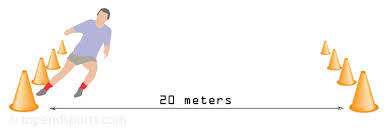
Multi-stage fitness test
Test Procedure
- Measure out 20 metres
- Place cones to mark the distance
- Start the audio recording Run from one cone to the other until you cannot continue
- Record results and compare to a rating chart Used by game players, long-distance runners/swimmers
Coordination Fitness Test

Fitness Test
Wall toss test
Test Procedure
- Stand 2 metres away from a wall
- Throw a tennis ball underarm against the wall
- Throw with the right hand and catch with the left hand; then alternate hands
- Record results and compare them to a rating chart Used by badminton and cricket players
Muscular Endurance Fitness Test
Fitness Test
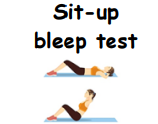
Sit-up bleep test
Test Procedure
- Lie on a mat, knees bent, feet on the floor. your hands across your chest on your shoulders
- Start the audio recording
- Sit up until you can no longer continue
- Record results and compare to a rating chart Used by tennis and football players
Balance Fitness Test
Fitness Test
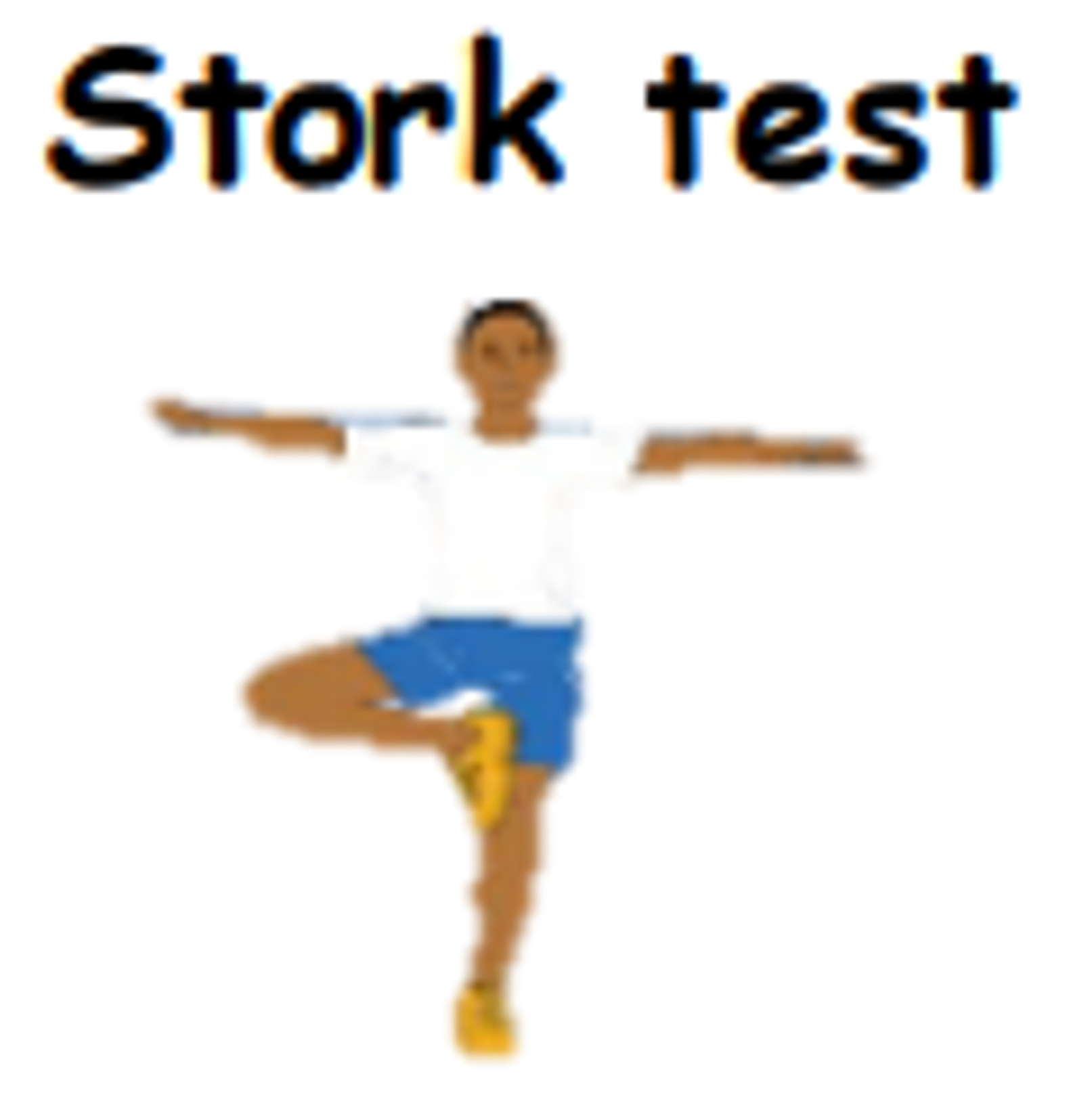
Stork test
Test Procedure
- Place hands on your hips & foot on your knee
- Raise your heel from the ground so you are balancing on your toes
- Time starts when you lift your heel
- Record results and compare them to a rating chart Used by gymnasts and games players
Reaction Time Fitness Test
Fitness Test
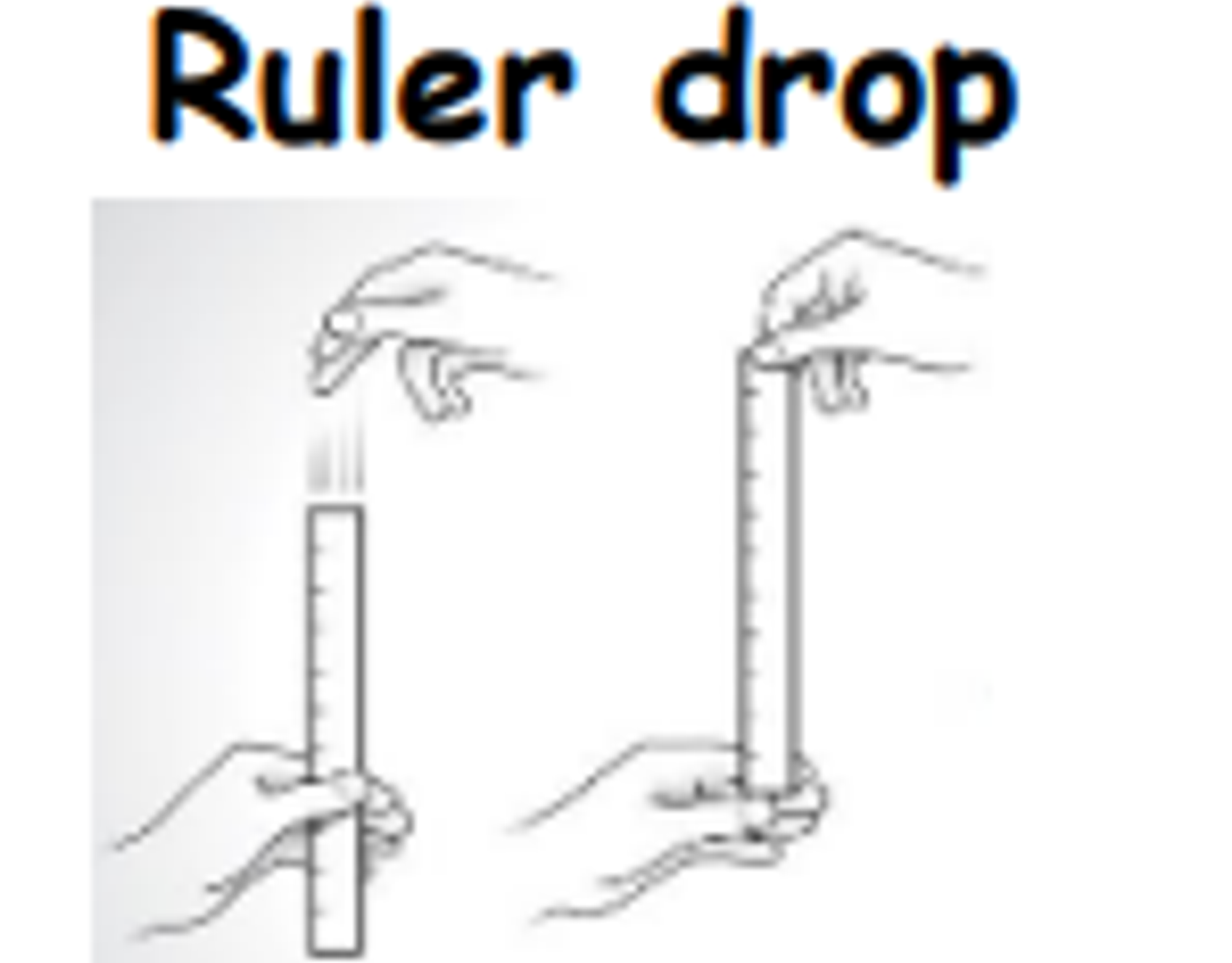
Ruler drop
Test Procedure
- Stand with your hand open around the ruler, with the 0 cm mark between thumb and forefinger
- The assistant holds and drops the ruler
- Catch the ruler as quickly as possible
- Record results and compare to a rating chart Used by basketball, rugby, and badminton players
Strength Fitness Test 1
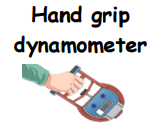
Used by performer such as climbers (to lift body weight)
Fitness Test
Hand grip dynamometer
Test Procedure
- Adjust the grip on your hand
- Keep your arm beside you at a right angle to your body
- Squeeze the handle as hard as you can
- Record results and compare to a rating chart
Agility Fitness Test
Fitness Test
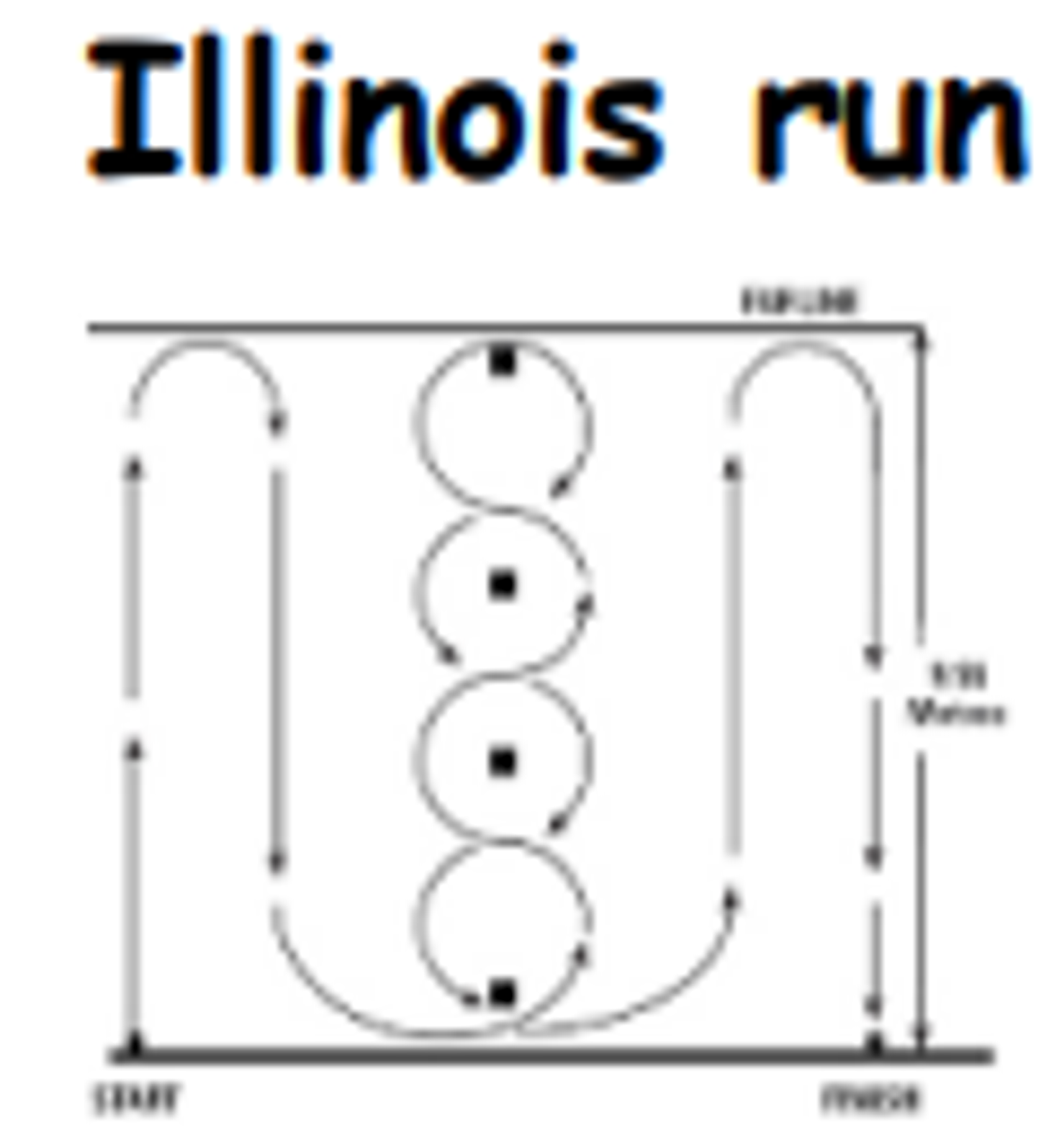
Illinois run
- Set up the course as shown in the picture
- Lie face down on the floor, by the first cone Fitness Test
Test Procedure
- On 'Go' run around the course as fast as you can
- Record results and compare them to a rating char Used by performers who change direction quickly such as games players
Flexibility Fitness Test
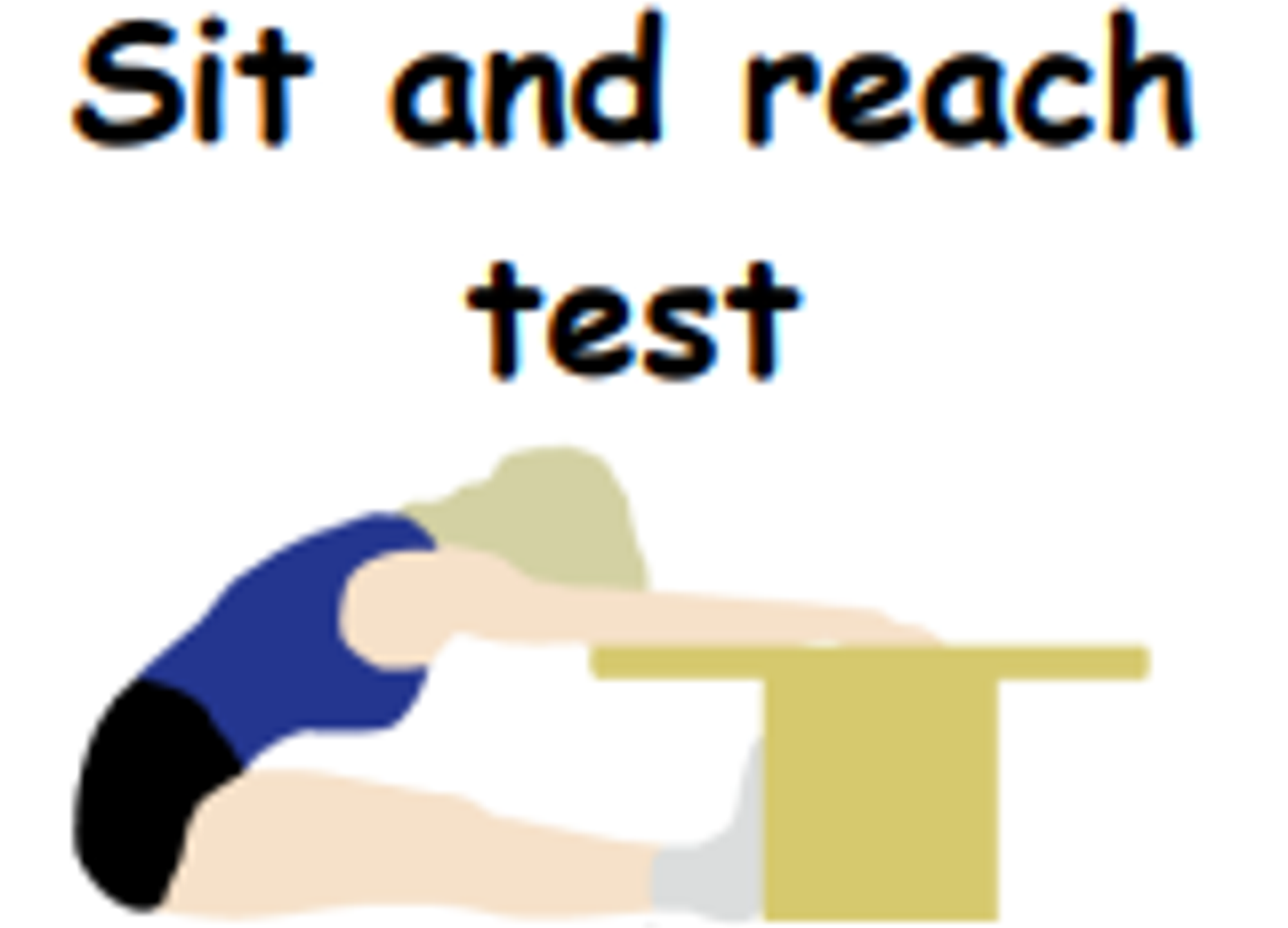
Used by performers such as gymnasts and high divers
Fitness Test
Sit and reach the test
Test Procedure
- Sit with your legs straight and the soles of your feet flat against the box
- With palms face down, one hand on top of the other, stretch and reach as far as possible
- Record results and compare to a rating chart
Strength Fitness Test 2
Fitness Test
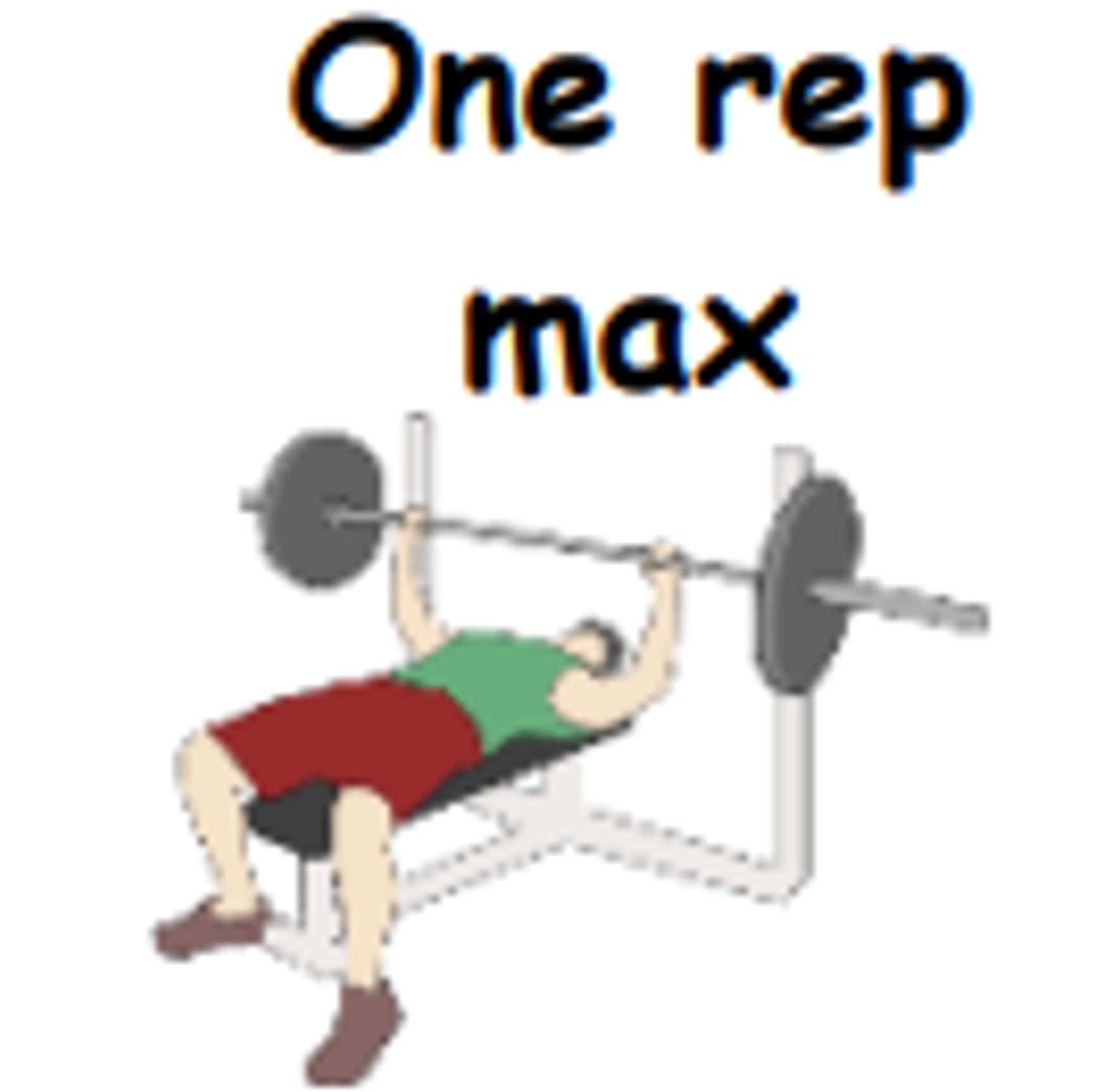
One rep max
Test Procedure
- Warm up
- Lift the maximum weight you can in one attempt
- Record results and compare them to a rating chart Used by performers such as power lifters rugby players & boxers
Speed Fitness Test
Fitness Test
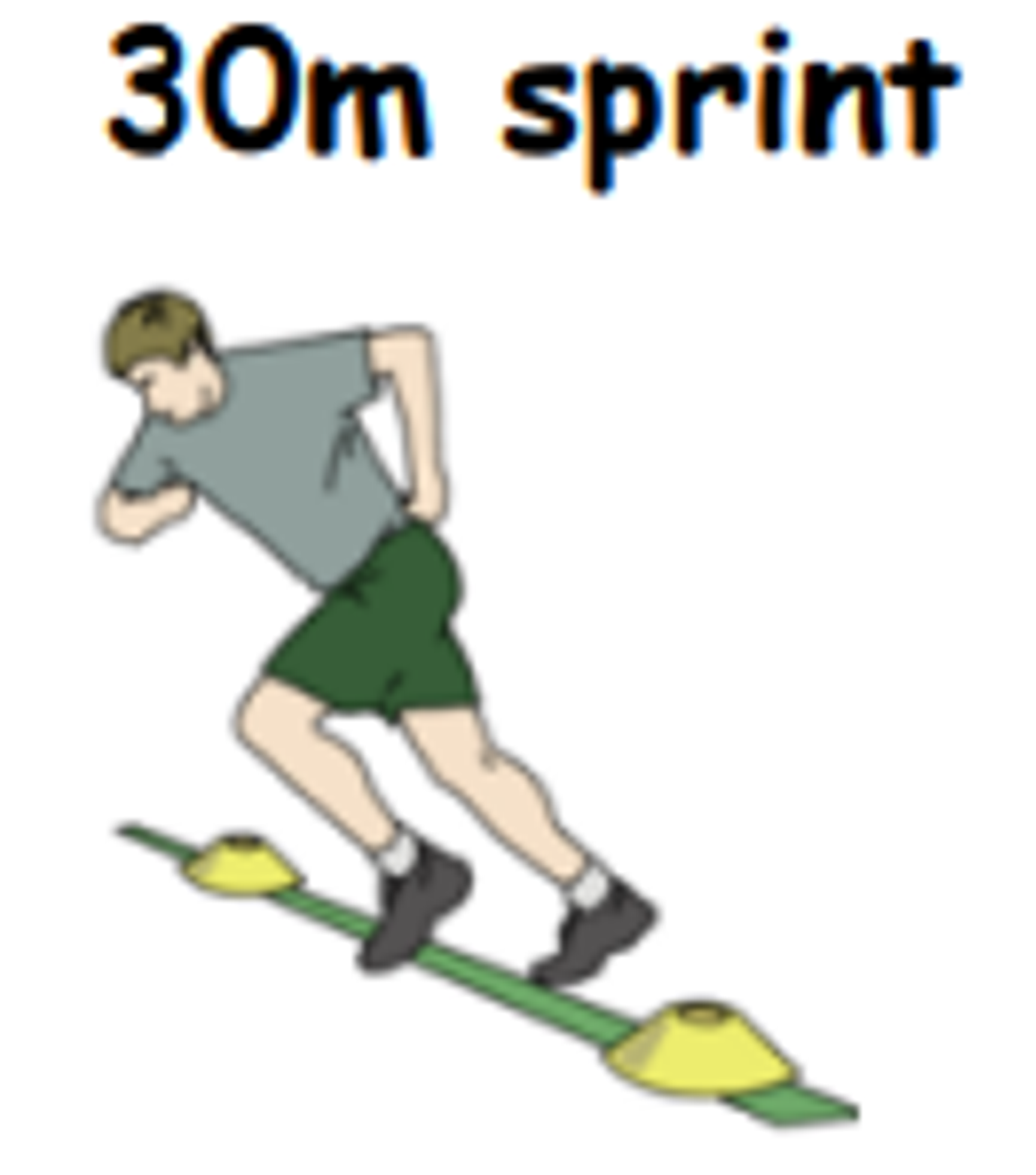
30m sprint
Test Procedure
- Measure and mark out 30 metres in a straight line
- Place one cone at the start and one at the end
- On 'Go' run as fast as you can
- Record results and compare them to a rating chart Used by 100 m sprinters and rugby players
Power Fitness Test
Fitness Test
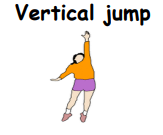
Vertical jump
Test Procedure
- Stand side onto the wall, feet flat on the floor
- Mark the highest point that the tips of your fingertips can reach
- Holding a piece of chalk, jump as high as you can
- Mark on the wall the top of your jump
- Measure the distance between the 1st and 2nd Used by sprinters, rugby players and long jumpers
Qualitative or Quantitative Data
When collecting pieces of data for fitness tests they are usually quantitative meaning. The measurements can be quantified as numbers such as time (seconds) Distance (metres)
Levels or numbers Data can be collected qualitatively meaning the measurements are based on quality rather than quantity, such as a number out of 10 for a routine. They are opinions, not fact