The Stomach (OCR GCSE Biology A (Gateway Science Suite)): Revision Notes
📚Revision Notes
2.1.2 The Stomach
Note
The stomach is a vital organ in the digestive system, responsible for breaking down food into a form that can be absorbed and used by the body. It is a muscular, J-shaped organ located between the oesophagus and the small intestine.
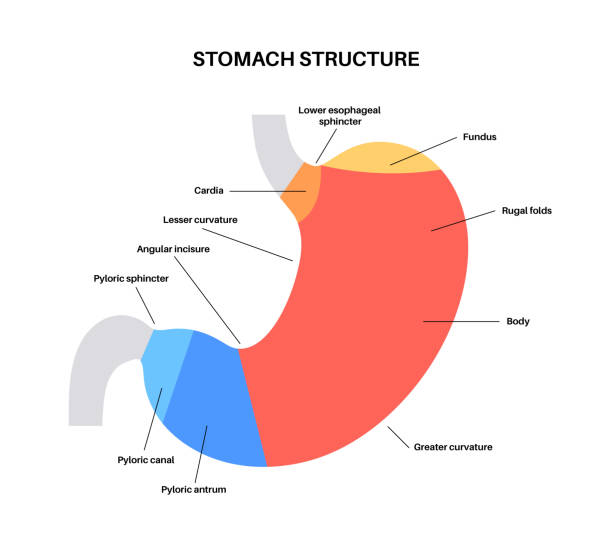
Structure of the Stomach:
- Muscular Walls:
- The stomach has thick, muscular walls that contract to mix food with digestive juices. This process is called churning.
- The contractions help break down food mechanically into smaller pieces, increasing the surface area for digestive enzymes to act.
- Gastric Glands:
- The inner lining of the stomach contains gastric glands, which secrete gastric juice.
- Gastric juice is a mixture of hydrochloric acid (HCl), pepsin (a digestive enzyme), and mucus.
- Hydrochloric Acid (HCl):
- HCl creates an acidic environment in the stomach, which helps to kill bacteria and pathogens that may be present in food.
- The acid also provides the optimal pH for pepsin to function effectively.
- Pepsin:
- Pepsin is a protease enzyme that begins the digestion of proteins by breaking them down into smaller peptides.
- Pepsin is secreted in an inactive form called pepsinogen, which is activated by the acidic environment.
- Mucus:
- The stomach lining is protected by a layer of mucus, which prevents the stomach from digesting itself and protects against the corrosive effects of the acid.
Function of the Stomach:
- Mechanical Digestion:
- The stomach's muscular walls mix and churn food, breaking it down into a semi-liquid form known as chyme.
- Chemical Digestion:
- Gastric juice, containing HCl and pepsin, starts the chemical breakdown of proteins into smaller peptides.
- The acidic environment helps denature proteins, making them easier to digest.
- Temporary Storage:
- The stomach serves as a temporary storage site for food, releasing it gradually into the small intestine for further digestion and absorption.
- Protection:
- The stomach's acidic environment helps kill harmful bacteria and pathogens that may be ingested with food.
The Stomach in the Digestive System:
- After food is swallowed, it enters the stomach from the oesophagus through a valve called the lower oesophageal sphincter.
- Food is then mixed with gastric juices in the stomach.
- The partially digested food (chyme) is gradually released into the duodenum (the first part of the small intestine) through another valve called the pyloric sphincter.
Note
The stomach plays a crucial role in the digestive process, ensuring that food is properly broken down and prepared for absorption in the small intestine. Its ability to combine mechanical and chemical digestion makes it an essential component of the digestive system.