Responses to cholera epidemics (OCR GCSE History A (Explaining the Modern World)): Revision Notes
📚Revision Notes
Responses to cholera epidemics
Note
Cholera was a particularly deadly disease during the Industrial Revolution. With four major outbreaks throughout the mid-19th century and having claimed tens of thousands of lives, it got nicknamed "King Cholera."
Cholera epidemics were caused and spread by dirty and contaminated water. This was largely due to the fact that raw sewage was being dumped into the Thames at unprecedentedly high rates.
That same water from the river was also the main drinking source. Therefore, major water pollution combined with a lack of medical knowledge and expertise on cholera made it an impossible disease to tackle all the way up until Dr John Snow in 1854 discovered the true cause of cholera – water.
<img src="https://simplestudy-assets-prod.s3.eu-west-1.amazonaws.com/assets/backend/uploads/manually-styled-note-images/52e4d983-7ab3-4249-91ea-20a84fc50db1.png" width="1746" height="1392" alt="Illustration from Punch, "A Court for King Cholera"" />
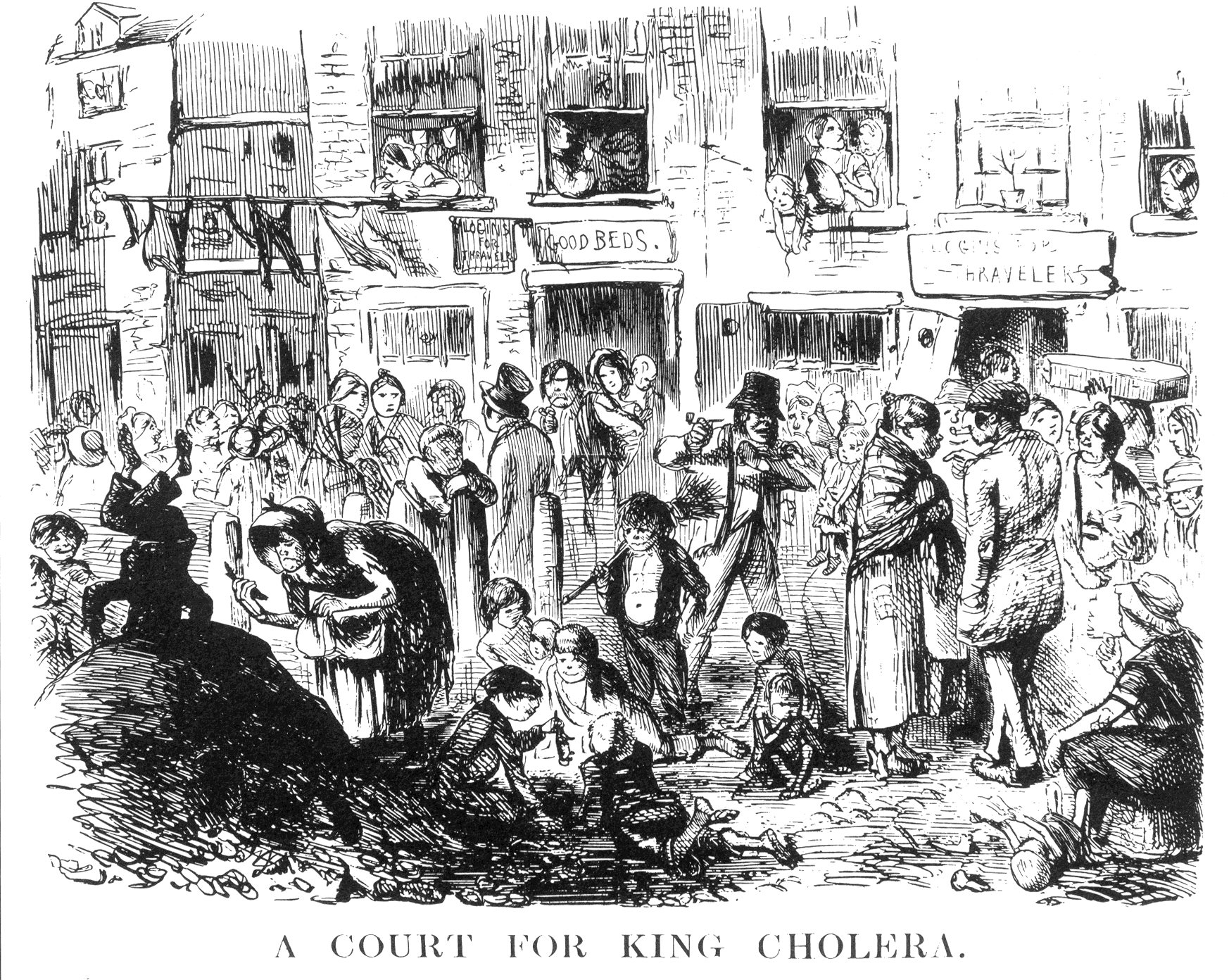
Illustration from Punch, "A Court for King Cholera"
Timeline overview of cholera epidemic in England and Wales
1831-32: First cholera epidemic which resulted in about 32,000 deaths. Many believed that the disease was a divine-given vicious catastrophe in the lives of the poor.
1842: Reformer Edwin Chadwick published his Report on the Sanitary Conditions of the Labouring Population of Great Britain.
1848-49: Second cholera outbreak which caused 53,000 deaths.
The first Public Health Act was passed which created the General Board of Health in London.
1853-54: Third cholera epidemic which killed 20,000 people.
1858: Parliament had to stop meeting because of the bad smell of the River Thames. This became known as the Great Stink.
1865-66: The fourth cholera outbreak caused about 15,000 deaths.
1872: The second Public Health Act was passed which created sanitary authorities.
1875: The third Public Health Act set up Local Boards of Health.
Note
It was in 1831 when cholera was first recorded in England. Like the Black Death, they believed that it came via the sea through trading. Cholera causes vomiting and diarrhoea, which resulted in death within hours from dehydration. One of the most prominent theories behind the cause of this disease was 'corrupted air or bad smell', later known as miasma theory.
When a cholera epidemic broke out in 1831, it was suggested that about 32,000 people died across the UK. In Wales, the towns of Merthyr, Swansea, Holywell and Denvig were affected.
In 1848, another cholera epidemic broke out, which badly affected the smaller towns of Cardiff, Carmarthen and Neath.
By 1854, the third cholera epidemic caused the deaths of about 20,000 people.
John Snow experienced a number of cholera outbreaks. He established that cholera was waterborne by mapping out cases in Broad Street, Soho and London, which led to a single contaminated well.
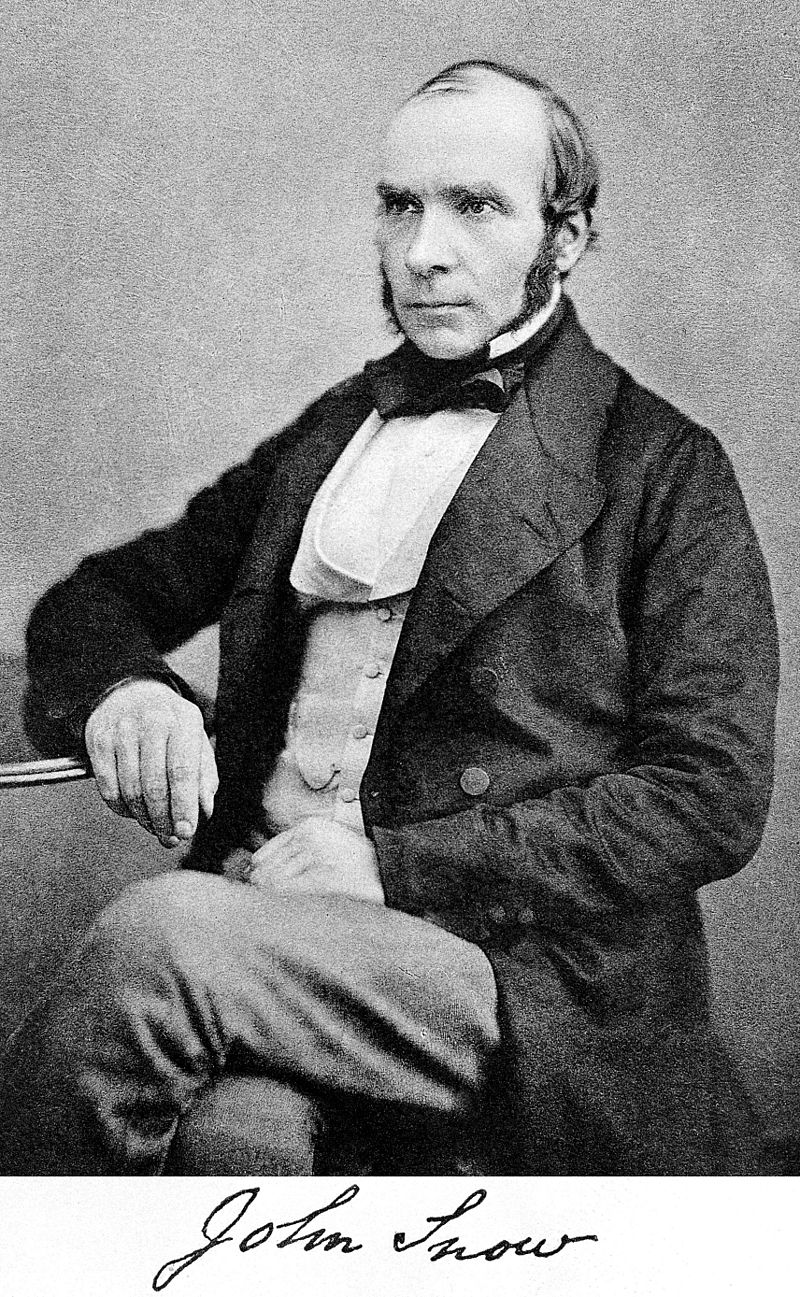
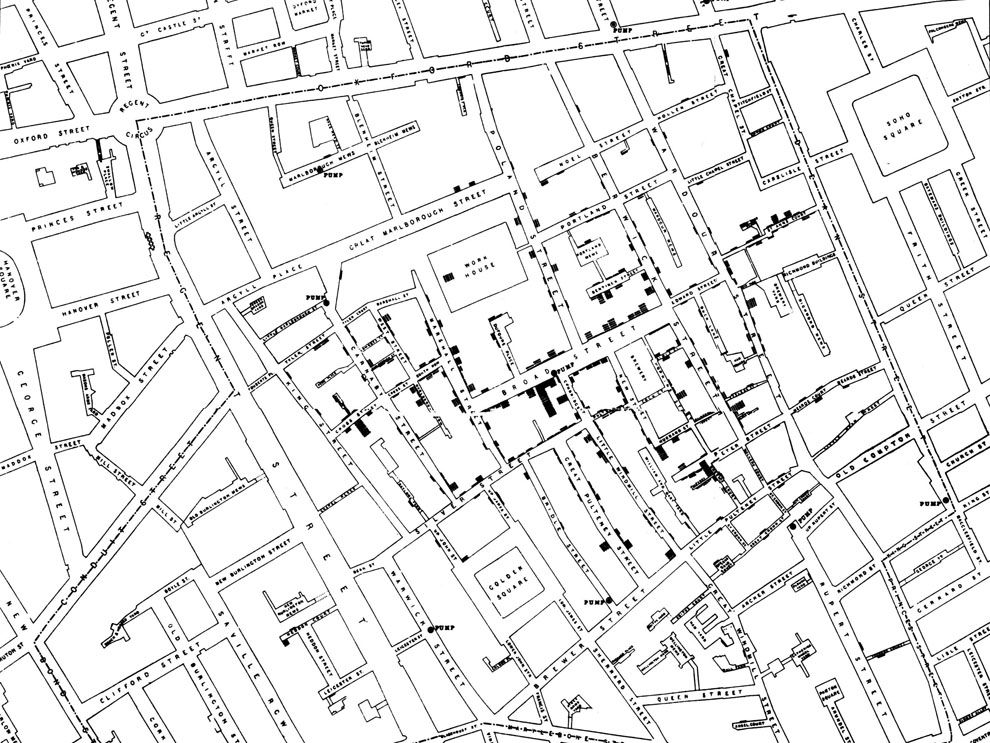
Cholera epidemic mapping in London by John Snow
In August 1849, the paper On the Mode of Communication of Cholera published by Snow detailed that the cause of cholera was contaminated water. By 1854, the third cholera epidemic caused the deaths of about 20,000 people.
Note
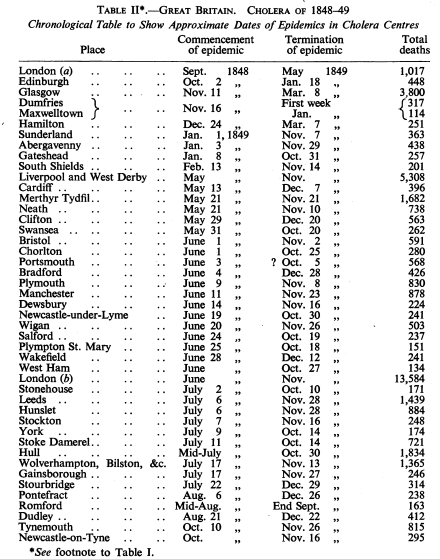
Take a closer look! Examine the tables detailing the number of deaths during the first two cholera outbreaks in Great Britain
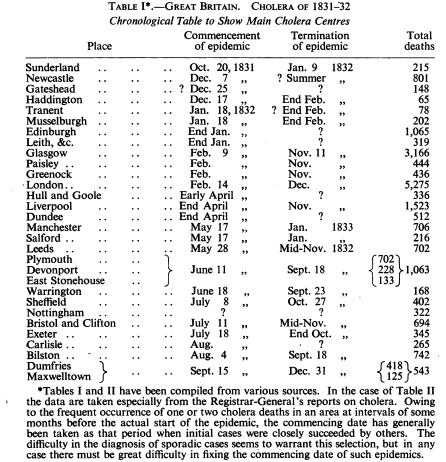
Immediate responses to the 1832 cholera outbreak
- In 1832, the Bishop of London prohibited clergies from bringing people who died of cholera to church before internment.
- Upon arrival, trading ships were put in quarantine for five days.
- Since the first outbreak took place in Southwark, a crowded borough of peasants, members of the upper class believed that they will be spared and that the disease was confined to the ill-fed and ill-clothed people.
- In London, some doctors argued that only the poor were vulnerable to the disease since they were known to be heavy drinkers.
- The City Board of Health ordered the boiling or burning of the victims' clothing. While rooms used by patients were fumigated.
- Many vendors sold quack preventives such as tinctures, powders, seeds and syrups.
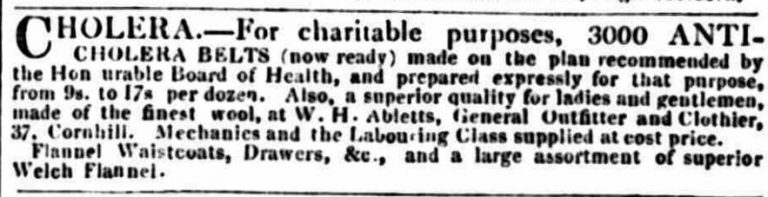
Cholera prevention advertisement published in The Atlas, 1832
Immediate responses to the 1849 cholera outbreak
- Many believed that cholera was caused by bad smells coming from garbage.
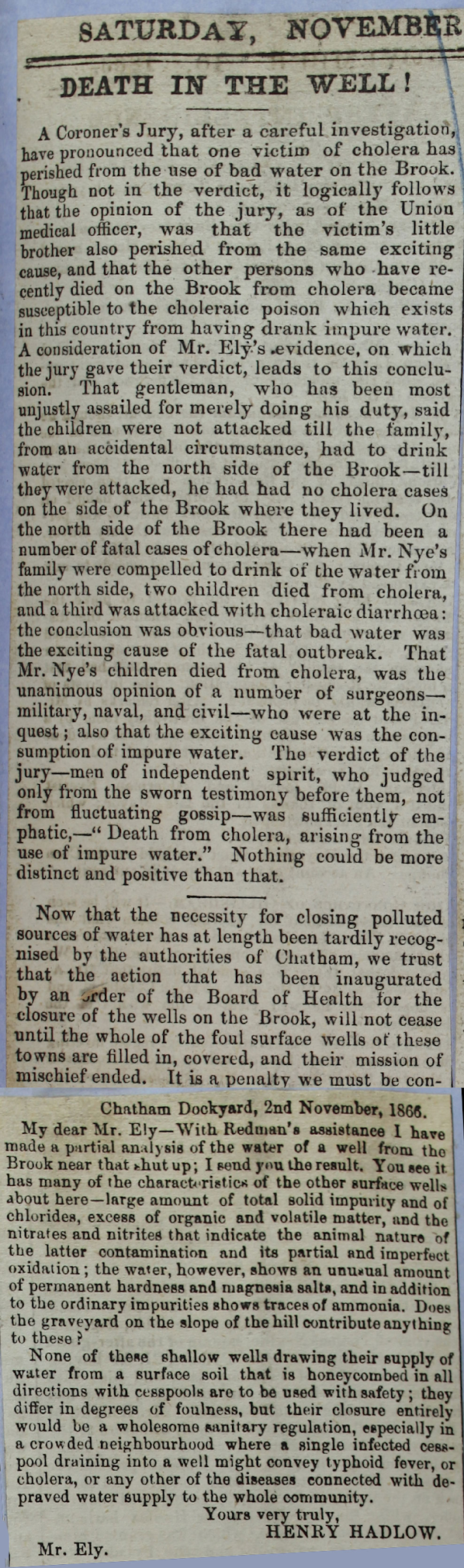
Extracts from a newspaper, the Chatham News, dated 10 November 1866, about an inquest held into a death caused by cholera near the Brook
Note
Read the article and infer its significance for the cholera outbreak in 1866
- Again, members of the wealthy class believed that they would not be affected.
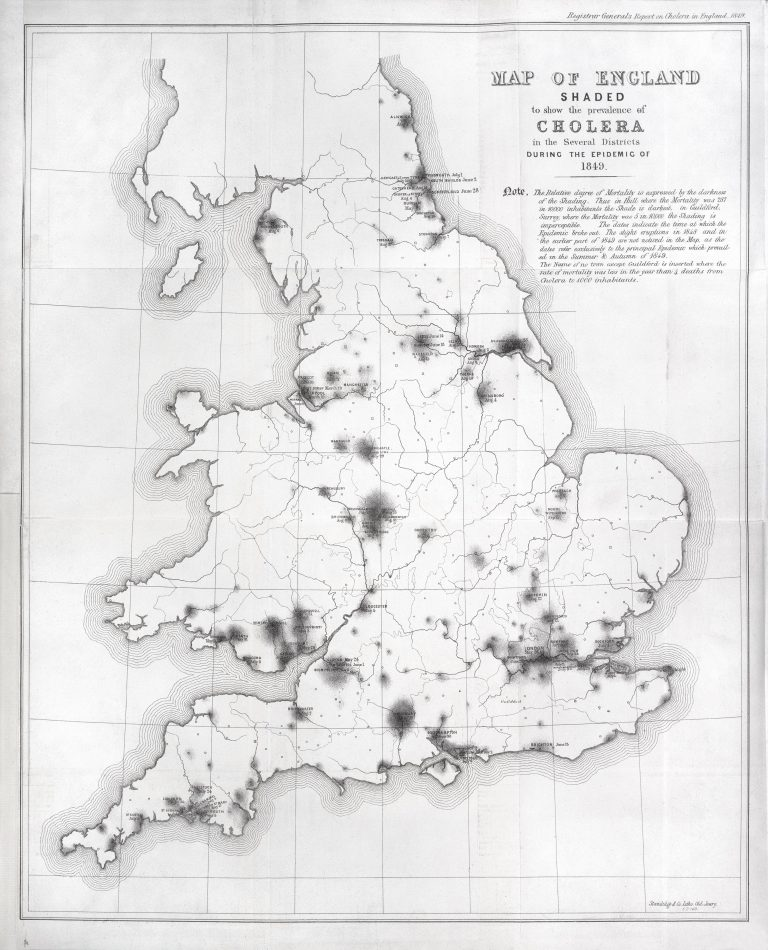
Map showing the prevalence of cholera in 1849