Controlling Arousal for Performance in Sport (OCR GCSE Physical Education): Revision Notes
📚Revision Notes
Controlling Arousal For Performance In Sport
| Technique | Explanation | Application |
|---|---|---|
| Mental rehearsal | A technique used by many elite performers. It involves mentally practising a skill or movement before physically doing it • During the warm-up you may prepare mentally and physically for the activity • During an event the performer goes through a sequence or skill they are about to perform in their mind. It helps clarify the skill & improve confidence | A bobsleigh driver will visualise the route down the track prior to the race. This will mentally prepare for each twist and turn on the way down A rugby player will go through the skill and sequence before taking a penalty kick. This can improve confidence |
| Visualisation/imagery | This can be used in various ways: • You can visualise yourself playing with a successful outcome • You can visualise yourself in a stress-free environment to reduce anxiety so optimal performance can be achieved | A footballer may visualise where the ball going to travel into the goal before a penalty kick. An archer may visualise themselves in a stress-free environment to reduce anxiety before shooting |
| Deep breathing | If over aroused breathing can become shallow, deep breathing techniques can help reduce arousal. They should concentrate on taking long deep breaths | Before a basketball player has a free throw they may focus on their breathing to reduce anxiety before taking the shot |
| Positive self-talk | It is easy to think of negative thought during a match this can have a negative effect on performance. One way of preventing this is by saying encouraging things to yourself | A tennis player who is getting beat may prevent negative thoughts by saying encouraging things such as: • "come on you can do this" • "I can beat them" • "Be patient, don't rush" |
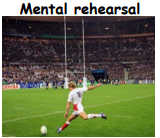
A football player
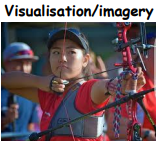
An archery player
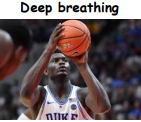
A basketball player
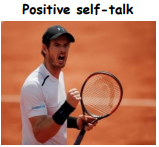
A tennis ball player