Biodiversity, Human Activity, and Conservation (Leaving Cert Biology): Revision Notes
📚Revision Notes
Biodiversity, Human Activity, and Conservation
What is biodiversity?
Biodiversity describes the incredible variety of life that exists in any given area. Scientists often refer to it as the "web of life" because it shows how all living things work together to maintain life and ecological balance on Earth. The more variety we have in species, genes, and ecosystems, the healthier our planet becomes for all forms of life.
Note
The concept of biodiversity encompasses not just the number of different species, but also how these species interact with each other and their environment to create stable, functioning ecosystems.
The three levels of biodiversity
Understanding biodiversity requires looking at three different levels:
Species diversity refers to the number of different species living in a particular area. This includes all plants, animals, fungi, and microorganisms.
Genetic diversity involves the variety of genes within each species. This genetic variation helps species adapt to environmental changes and survive challenges.
Ecosystem diversity encompasses the range of different habitats and ecological communities in an area, from forests to grasslands to wetlands.
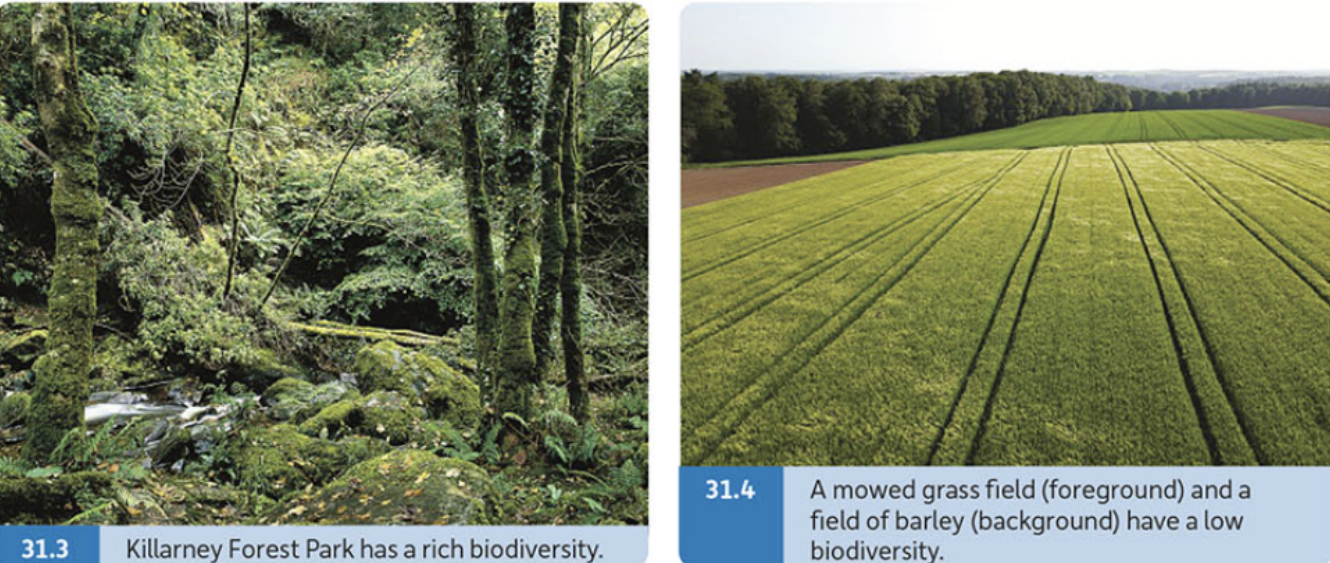
The image above perfectly illustrates the difference between high and low biodiversity ecosystems. Natural environments like forests support many different species, while agricultural landscapes typically have much lower biodiversity.
Note
Each level of biodiversity is interconnected - genetic diversity within species supports species diversity, while diverse species create diverse ecosystems. Loss at any one level can cascade to affect the others.
Biodiversity loss in Ireland
Ireland faces a significant biodiversity crisis. Research shows that the country has lost approximately half of its biodiversity since 1970. This dramatic decline affects multiple aspects of our natural heritage.
Important
Ireland's Biodiversity Crisis - Key Statistics:
- The majority of habitats are declining
- Over half of our native plants face threats
- About half of our wild animals are in decline
- Of Ireland's 31,000 native species, more than 20% face extinction risks
Major factors causing biodiversity loss
Several human activities contribute to Ireland's biodiversity decline:
Changes in land use represent the primary threat. Activities like deforestation, house building, and intensive agriculture destroy natural habitats where species live and reproduce.
Overpopulation occurs when too many people or animals live in an area, leading to overuse of resources like overfishing and overhunting.
Pollution harms the environment through excessive use of pesticides, fertilisers, and plastics. These substances contaminate soil, water, and air, making it difficult for species to survive.
Climate change affects rainfall patterns and weather systems as the planet warms. Some species cannot adapt quickly enough to these changing conditions and face local extinction.
Invasive species are non-native organisms introduced to ecosystems where they don't naturally belong. These species often outcompete native species for resources, causing population declines.
Note
These factors rarely act in isolation - they often work together to compound their negative effects on biodiversity. For example, climate change can make ecosystems more vulnerable to invasive species, while pollution can weaken species' ability to adapt to changing conditions.
Impact of biodiversity loss
The consequences of biodiversity loss extend far beyond environmental concerns, affecting multiple aspects of human life:
Environmental impacts include ecosystem disruption, reduced soil quality, decreased water purification capacity, higher extinction risks, and reduced ability to recover from disasters like climate change and disease outbreaks.
Economic impacts affect agriculture through reduced crop production due to fewer pollinators, decreased soil quality, declining fish populations, reduced income from eco-tourism, loss of clean air and water services, and fewer opportunities to discover new medicines.
Social impacts reduce our connection to nature, create fears about environmental decline, limit access to natural recreational areas, increase health risks, and generally diminish quality of life.
Cultural impacts include weakening our connection to history, folklore, and traditions, losing traditional farming knowledge, reduced access to herbal medicines and treatments, and breaking our spiritual connection with the land.
Important
The interconnected nature of these impacts means that biodiversity loss creates a cascading effect - environmental damage leads to economic losses, which in turn affect social wellbeing and cultural heritage. Protecting biodiversity is therefore essential for human welfare as well as environmental health.
The effects of human activity on species diversity
Human activities can have both positive and negative effects on biodiversity:
Benefits of human intervention
Conservation areas like national parks help preserve habitats and enhance biodiversity by protecting natural environments from development.
Interventions such as reforestation and reintroducing native species can improve biodiversity in damaged ecosystems.
Sustainable farming methods, including organic farming and reducing pesticide use, help increase biodiversity in agricultural landscapes.
Sustainable fishing practices, such as using appropriate net sizes and avoiding overfishing, help maintain healthy fish populations.
Breeding programmes that reintroduce species to their natural habitats can help restore biodiversity.
Rewilding involves returning habitats to a more natural state through fencing, planting, and protection, which increases biodiversity.
Disadvantages of human activity
Deforestation for grazing, crop production, or road building significantly reduces biodiversity by destroying natural habitats.
Overpopulation increases demands on natural habitats, leading to their destruction and biodiversity reduction.
Climate change means some species cannot adapt to rising temperatures and changing weather patterns, resulting in biodiversity loss.
Pollution from excessive pesticide and fertiliser use, plus waste dumping, leads to disease, death, and biodiversity loss.
Overexploitation through excessive hunting or fishing causes population declines and possible extinctions.
Invasive species introduction often results in native species decline as non-native species compete for resources.
Conservation
Conservation represents the wise management and protection of the environment to maintain biodiversity and prevent extinctions. This approach recognises that modern humans significantly impact nature and must take responsibility for preservation.
We extract vast quantities of resources from nature - fish from seas, plants for food, timber for construction, and we alter environments for development. However, the current extinction rate exceeds any previous period in Earth's history, creating a duty to protect our natural heritage for future generations.
Note
Conservation is not about stopping all human activity, but rather about finding sustainable ways to meet human needs while protecting the natural world. This balance is essential for long-term human survival and wellbeing.
The benefits of conservation
Effective conservation programmes provide multiple advantages:
- Limits biodiversity loss by protecting species and habitats from further decline
- Prevents extinctions by maintaining viable populations of threatened species
- Maintains natural balance by preserving ecosystem relationships and functions
- Ensures future utility by keeping species available for potential medical, agricultural, or scientific discoveries
- Provides enjoyment through opportunities to observe and visit diverse natural areas
- Respects life by acknowledging that humans have no right to eliminate other species
Note
Many conservation benefits have economic value that often exceeds the costs of protection. For example, ecosystem services like water purification, pollination, and climate regulation provide billions of dollars worth of benefits annually.
The carrying capacity in an ecosystem
The carrying capacity describes the maximum population size that available resources in an ecosystem can support. This concept helps us understand natural limits on population growth.
Every ecosystem has a finite carrying capacity - the maximum number of individuals of any particular species that the environment can sustain long-term. When populations exceed carrying capacity, resources become scarce, leading to competition, starvation, and population decline back to sustainable levels.
Example
Understanding Carrying Capacity in Practice
Consider a forest ecosystem that can support 100 deer based on available food and shelter. If the deer population grows to 150, competition for resources intensifies. Some deer may starve, others may be more vulnerable to predation or disease. Eventually, the population will decline back towards the sustainable level of 100 deer.
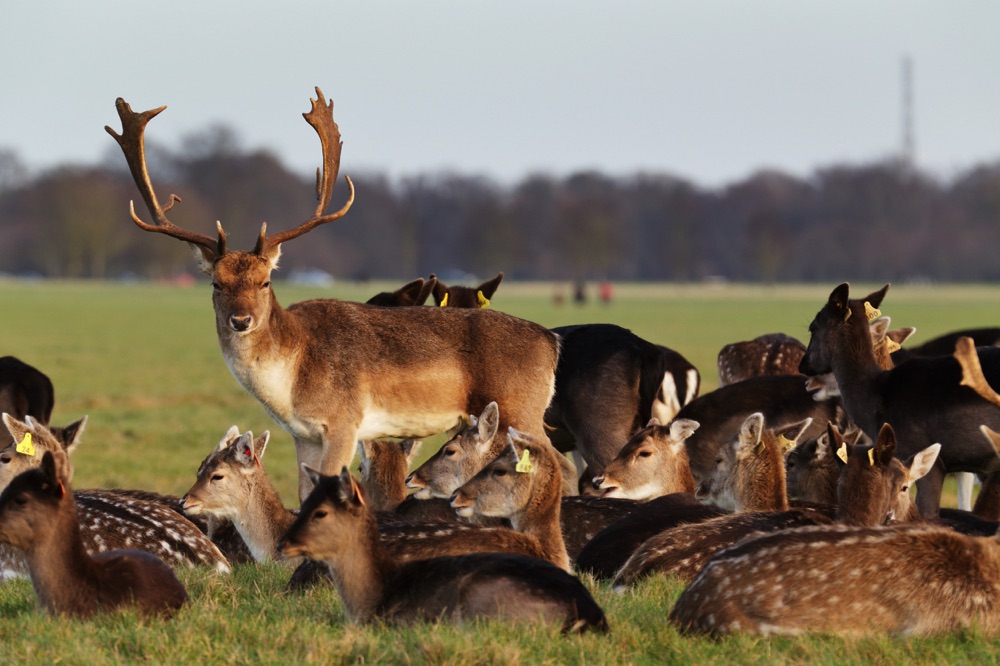
Understanding carrying capacity helps conservationists manage wildlife populations and plan sustainable human development that doesn't overwhelm natural systems.
Summary
Key Points to Remember:
-
Biodiversity operates at three levels: species diversity (different types of organisms), genetic diversity (genetic variation within species), and ecosystem diversity (variety of habitats)
-
Ireland has lost half its biodiversity since 1970, with major causes including land use changes, pollution, climate change, overpopulation, and invasive species
-
Human activities can both help and harm biodiversity - conservation efforts, sustainable practices, and rewilding can restore ecosystems, while deforestation, pollution, and overexploitation cause decline
-
Conservation is essential for maintaining Earth's biodiversity and provides benefits including preventing extinctions, maintaining natural balance, and preserving resources for future generations
-
Every ecosystem has a carrying capacity that limits how many organisms it can support, making sustainable management crucial for long-term species survival