The Alimentary Canal: The Liver (Leaving Cert Biology): Revision Notes
📚Revision Notes
The Alimentary Canal: The Liver
- Mouth
- Oesophagus
- Stomach
- Small intestine
- Liver
- Pancreas
- Large intestine
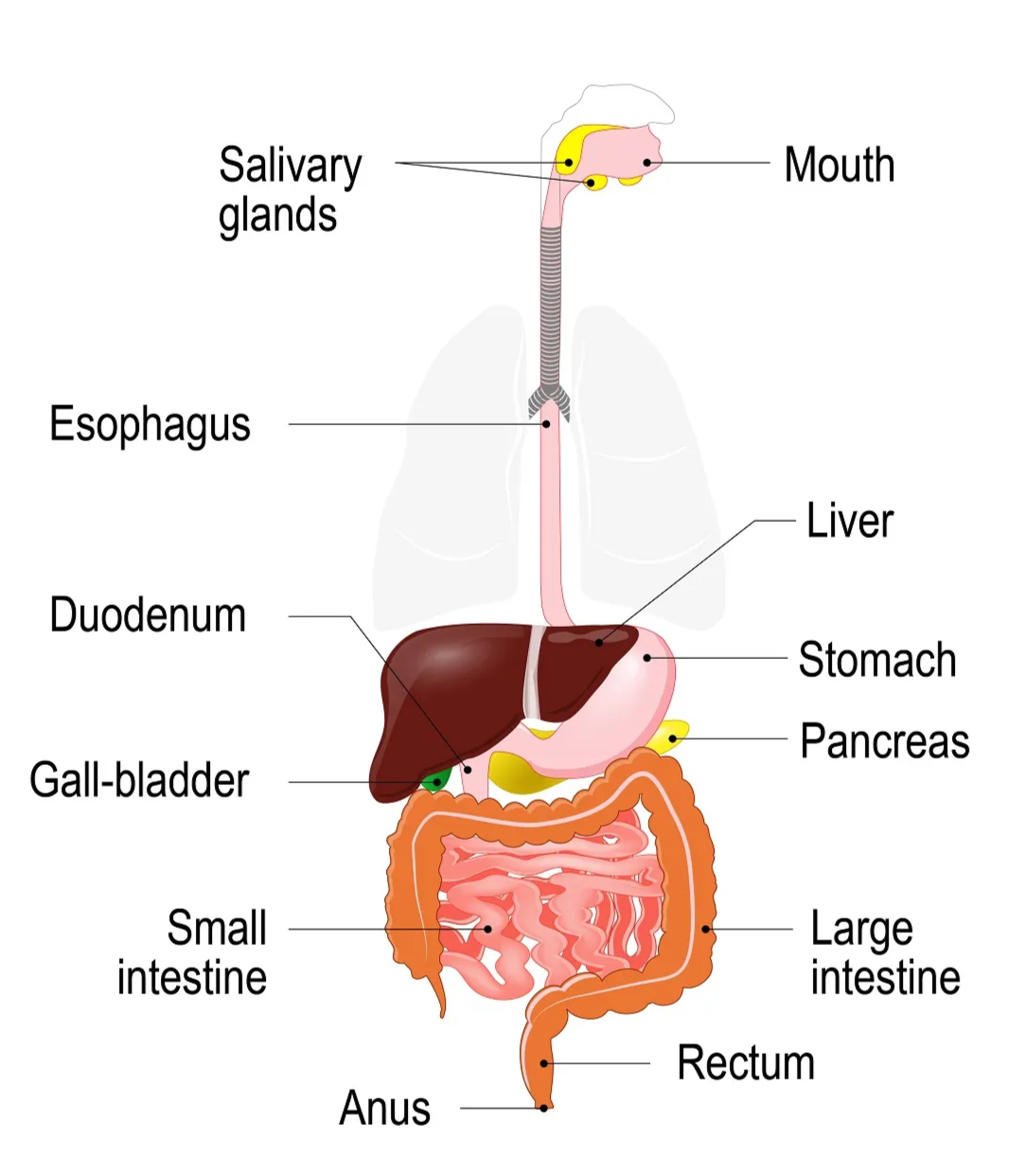
5. Liver
- The liver is supplied with blood by two major vessels:
- Hepatic artery (oxygenated blood).
- Hepatic portal vein (blood rich in nutrients from the intestines).
- Blood exits the liver through the hepatic vein.
Functions of the Liver
Functions of the liver include;
- Deamination: Breaks down excess amino acids into urea.
- Breaks down old red blood cells into haemoglobin and bile pigments.
- Producing bile.
- Removes cholesterol (used to make bile).
- Converts glucose to glycogen and stores it.
- Stores vitamins and minerals.
- Converts excess carbohydrates to fat.
- Produces heat to warm the blood and maintain appropriate body temperature (homeostasis).
- Forms plasma proteins, such as clotting proteins.
Note
Homeostasis: the maintenance of a constant internal environment.
Bile
- The liver secretes bile into the duodenum.
- Bile is a yellow-green liquid formed from the breakdown of red blood cells. It is NOT an enzyme.
| Bile is… | A liquid formed from the breakdown of red blood cells. |
|---|---|
| Composed of | • Water
• Bile salts
• Bile pigments | | Made in | The liver | | Stored in | The gall bladder | | Released into | The duodenum through the bile duct. |
The functions of bile are to;
- Emulsifies fats: Breaks large fat blobs into smaller particles, increasing the surface area for enzyme activity.
- Neutralises stomach acid (chyme): Bile contains the base sodium hydrogen carbonate. This neutralises the acid in chyme. This is vital as the acid would eat away at the wall of the small intestine causing ulcers.