The Alimentary Canal: The Pancreas (Leaving Cert Biology): Revision Notes
📚Revision Notes
The Alimentary Canal: The Pancreas
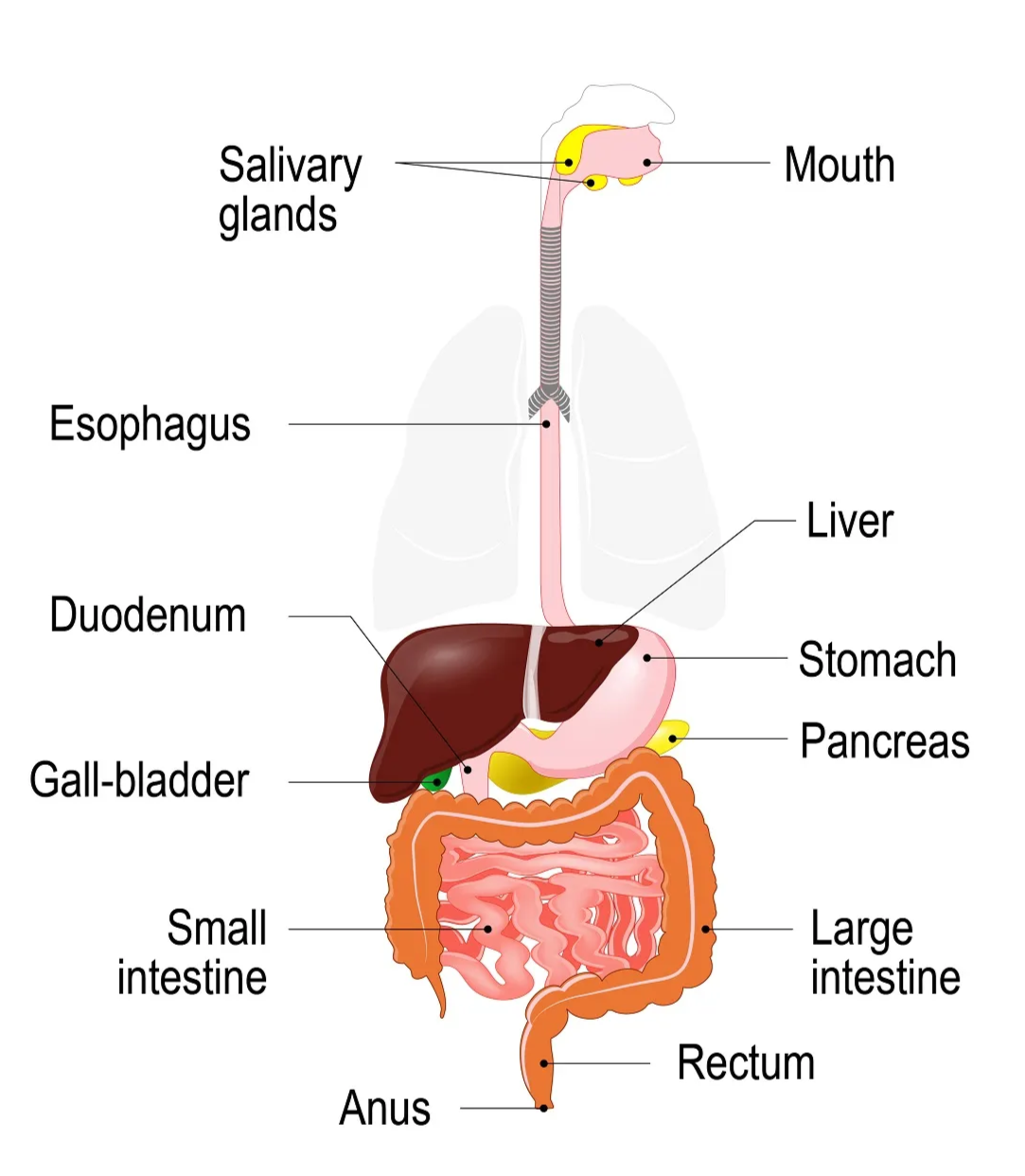
- Mouth
- Oesophagus
- Stomach
- Small intestine
- Liver
- Pancreas
- Large intestine
6. The Pancreas
The pancreas functions as both an endocrine and exocrine gland:
- Endocrine function: Secretes hormones such as insulin into the bloodstream to regulate blood sugar levels.
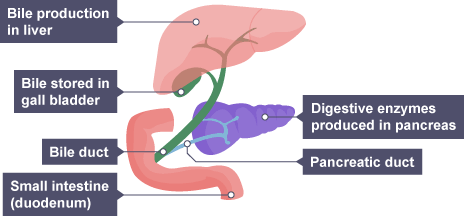
- Exocrine function: Produces and releases digestive enzymes into the duodenum.
Note
Exocrine glands are glands that release their products into ducts or tubes, e.g. sweat glands.
Note
Endocrine glands are ductless glands. They release hormones into the bloodstream, e.g. pituitary gland.
The pancreas releases two enzymes into the duodenum:
- Pancreatic amylase: Converts starch into maltose.
- Pancreatic lipase: Breaks down fats into fatty acids and glycerol.
Digestive Enzymes
The optimum temperature for these enzymes is 37°C (body temperature).
| Enzyme | Produced by | Optimum pH | Substrate | Product |
|---|---|---|---|---|
| Amylase | Salivary glands/pancreas | 7-8 | Starch | Maltose |
| Pepsin | Stomach lining | 2 | Protein | Peptides |
| Lipase | Pancreas | 7-8 | Fat | Fatty acids and glycerol |
Note
Insulin is produced in the islets of Langerhans in the pancreas.