Sex Linkage and Incomplete Dominance (Leaving Cert Biology): Revision Notes
📚Revision Notes
Sex Linkage and Incomplete Dominance
What is sex linkage?
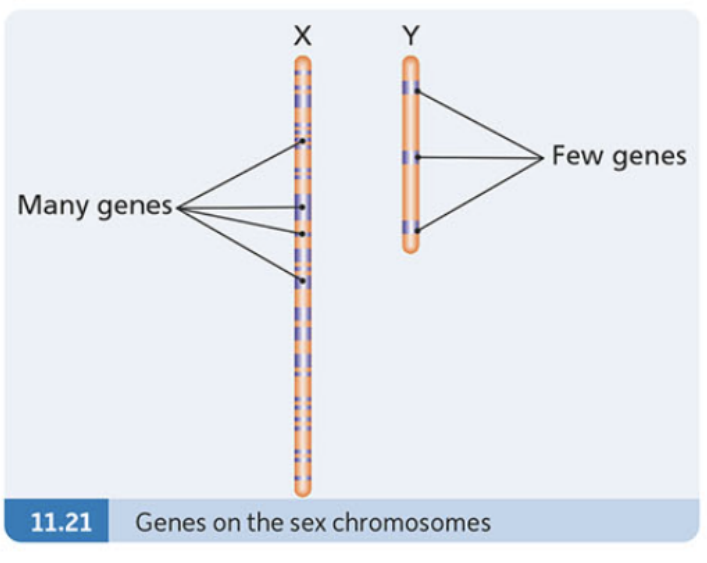
Sex linkage occurs when a characteristic is controlled by a gene located on one of the sex chromosomes. Understanding this concept requires knowing the key differences between X and Y chromosomes in humans.
Note
The X chromosome is much larger than the Y chromosome and contains many more genes. This size difference is crucial for understanding inheritance patterns.
The X chromosome carries numerous genes that control various traits, while the Y chromosome contains relatively few genes. This means that most sex-linked traits are actually X-linked traits.
Why sex-linked traits affect males more often
Males have one X chromosome and one Y chromosome (XY), while females have two X chromosomes (XX). This difference creates an important pattern in inheritance. When a recessive allele for a trait is located on the X chromosome, males are much more likely to express that trait than females.
Important
Key Difference: Females need two copies of a recessive allele to show the trait (one on each X chromosome), but males only need one copy because they have just one X chromosome. If a male inherits an X chromosome carrying a recessive allele for a sex-linked trait, he will definitely express that trait since there's no corresponding allele on the Y chromosome to mask it.
This explains why conditions like colour blindness and haemophilia are far more common in males than in females.
Examples of sex-linked characteristics in humans
Colour blindness
Colour blindness is one of the most common sex-linked traits, affecting the ability to distinguish between certain colours, particularly red and green.
The gene for normal colour vision is located on the X chromosome. Normal colour vision is dominant over colour blindness, which means:
- Females can have three possible genotypes:
- Homozygous dominant (normal vision)
- Heterozygous (normal vision but carrier)
- Homozygous recessive (colour blind - very rare)
- Males can only have two possible genotypes:
- Normal vision (dominant allele on X chromosome)
- Colour blind (recessive allele on X chromosome)
Example
Statistical Example: Colour Blindness Frequency
About 8% of males worldwide have some degree of colour blindness, while complete colour blindness in females is extremely rare. For a female to be colour blind, she would need to inherit the recessive allele from both parents, which is statistically much less likely.
Haemophilia
Haemophilia is a serious bleeding disorder caused by the absence of one or more proteins needed for proper blood clotting. People with haemophilia may experience prolonged bleeding even from minor cuts, and internal bleeding can occur in muscles and joints.
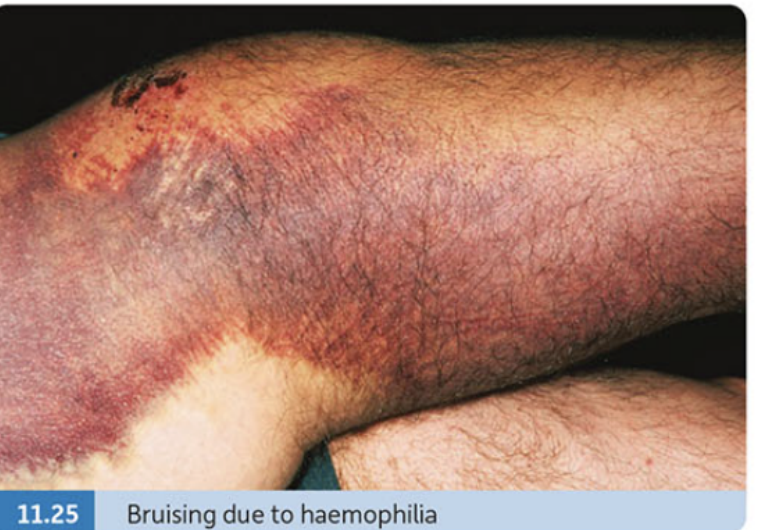
Like colour blindness, haemophilia follows an X-linked recessive inheritance pattern. The allele for normal blood clotting is dominant, while the allele that causes haemophilia is recessive.
Example
Inheritance Pattern Example: Haemophilia Cross
When examining genetic crosses for haemophilia:
- A carrier mother (heterozygous) and normal father can produce offspring with various combinations
- Female children may be normal or carriers, but are unlikely to have haemophilia
- Male children have a 50% chance of having haemophilia if their mother is a carrier
- Males cannot be carriers - they either have normal clotting or have haemophilia
What is incomplete dominance?
Incomplete dominance represents a different type of inheritance pattern where neither allele is completely dominant over the other. Instead of one allele masking the expression of another, both alleles are expressed simultaneously in the heterozygous condition, creating an intermediate phenotype.
Note
This differs from complete dominance, where the dominant allele completely masks the recessive allele in heterozygotes. In incomplete dominance, the heterozygote shows a blended or intermediate characteristic.
Examples of incomplete dominance
Coat colour in cattle

In some cattle breeds, coat colour demonstrates incomplete dominance. When a red-coated animal is crossed with a white-coated animal, the offspring display a roan coat - a mixture of red and white hairs that gives an intermediate appearance.
Example
Genetic Cross Example: Cattle Coat Colour
The genetic basis works as follows:
- RR genotype produces red coat
- rr genotype produces white coat
- Rr genotype produces roan coat (intermediate phenotype)
Flower colour in snapdragons
Snapdragons provide a classic example of incomplete dominance in flower colour. When red-flowered plants are crossed with white-flowered plants, the offspring produce pink flowers.

Example
Genetic Cross Example: Snapdragon Flower Colour
The inheritance pattern follows these rules:
- RR genotype = red flowers
- Rr genotype = pink flowers (intermediate)
- rr genotype = white flowers
When pink-flowered plants (Rr) are crossed with each other, they produce offspring in a 1:2:1 ratio - one red : two pink : one white.
Expected ratios in incomplete dominance
When studying incomplete dominance, certain predictable ratios appear in genetic crosses:
F1 generation (first cross between pure-breeding parents):
- All offspring show the intermediate phenotype
- Example: Red × White = All pink flowers
F2 generation (when F1 individuals are crossed):
- Phenotypic ratio: 1:2:1
- Percentage breakdown: 25% : 50% : 25%
- Example: 25% red : 50% pink : 25% white flowers
Important
Characteristic Ratio Alert: This 1:2:1 ratio is characteristic of incomplete dominance and differs from the 3:1 ratio seen in complete dominance. The key difference is that all three genotypes (RR, Rr, rr) produce distinguishable phenotypes in incomplete dominance.
Understanding genetic crosses
When working with both sex linkage and incomplete dominance problems, Punnett squares become essential tools. These diagrams help predict the probability of different genotypes and phenotypes in offspring.
Note
Tips for Genetic Cross Problems:
For sex-linked traits, remember to:
- Include the sex chromosomes (X and Y) in your notation
- Show that males inherit their X chromosome from their mother
- Recognise that males cannot be carriers for X-linked traits
For incomplete dominance, remember to:
- Use consistent notation (like R for red, r for white)
- Show that heterozygotes have an intermediate phenotype
- Expect 1:2:1 ratios in F2 generations
Summary
Key Points to Remember:
-
Sex linkage occurs when genes are located on sex chromosomes, with X-linked traits being most common and affecting males more frequently than females
-
Males are more vulnerable to X-linked recessive traits because they only have one X chromosome, so a single recessive allele will be expressed
-
Incomplete dominance produces intermediate phenotypes in heterozygotes, where neither allele completely masks the other
-
Classic ratios help identify inheritance patterns: 1:2:1 for incomplete dominance F2 crosses, compared to 3:1 for complete dominance
-
Common examples include colour blindness and haemophilia for sex linkage, and flower/coat colours for incomplete dominance - these frequently appear in exam questions