Context (Leaving Cert Classical Studies): Revision Notes
📚Revision Notes
Context
About Sophocles and the play's origins
Sophocles stands as one of ancient Greece's most celebrated playwrights, ranking alongside Aeschylus and Euripides as the three master tragedians of Athens. Living from approximately 496 to 406 BC, Sophocles became renowned for creating intricate moral dilemmas and tragic protagonists whose personal flaws ultimately lead to their downfall.
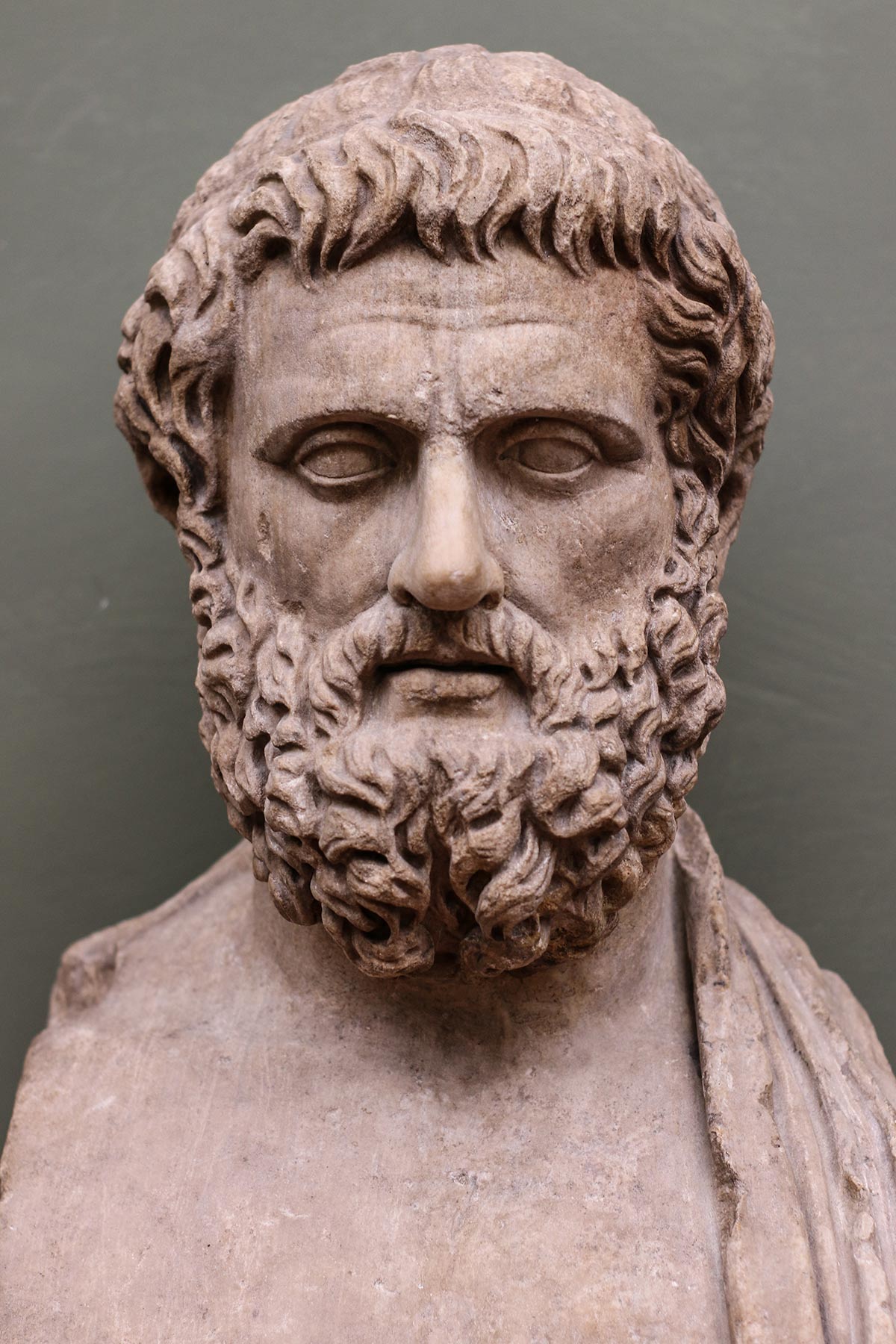
The play Antigone emerged around 441 BC, making it one of Sophocles' earliest works to survive to the present day. This powerful drama forms part of what scholars call the Theban cycle - a collection of plays that explore the cursed legacy of King Oedipus and the tragic events that befell his family line. Antigone specifically focuses on the aftermath of the deaths of Oedipus's twin sons, Eteocles and Polyneices, and the devastating consequences that follow.
Note
The Theban cycle represents a connected series of tragic plays that trace the multi-generational curse affecting the royal family of Thebes. Understanding this broader mythological context helps readers grasp why the characters in Antigone seem doomed to repeat patterns of conflict and suffering.
Mythological background and story setup
The events of Antigone unfold against the backdrop of a bitter civil war in Thebes. After their father Oedipus's death, his two sons Eteocles and Polyneices became locked in a deadly struggle for control of the throne. This fraternal conflict reached its tragic climax when both brothers killed each other in single combat, leaving Thebes without an heir.
In the wake of this catastrophe, their uncle Creon assumed power as the new ruler. Creon made a fateful decision that would set the entire tragedy in motion: he declared Eteocles a hero deserving of proper burial rites, but branded Polyneices a traitor whose body must remain unburied as a warning to others. This decree directly violated ancient Greek religious customs, which held that all dead must receive proper burial to find peace in the afterlife.
Important
The denial of burial rites was considered one of the most severe violations of divine law in ancient Greek culture. The Greeks believed that without proper burial, the deceased could not cross the river Styx and would be condemned to wander as restless spirits for eternity.
Antigone, sister to both fallen warriors, finds herself caught between two powerful forces - her duty to the state as represented by Creon's law, and her religious obligation to honour the dead. When she chooses to defy Creon's edict and bury Polyneices herself, declaring "I will bury him myself. It is noble to honour the dead," the central conflict of individual conscience versus state authority begins to unfold.
Political and social context of fifth-century Athens
Sophocles composed Antigone during a particularly significant period in Athenian history, when the city-state was experimenting with new forms of democratic governance under the leadership of Pericles. This political backdrop proves crucial for understanding the play's deeper meanings and the questions it raises about power, authority, and individual rights.
The emerging democracy in Athens brought with it intense debates about the proper limits of state power and the extent to which citizens should obey governmental authority. Through the conflict between Antigone and Creon, Sophocles explores these contemporary political tensions. Creon serves as a symbol of authoritarian rule - a leader who demands absolute obedience and places state security above all other considerations. In contrast, Antigone represents individual resistance and personal morality - someone willing to challenge unjust laws when they conflict with higher principles.
Note
The timing of Antigone's composition during Athens's Golden Age under Pericles meant that audiences were actively experiencing the tensions between individual freedom and civic responsibility that the play dramatises. These weren't abstract philosophical questions but lived political realities.
These characters would have resonated powerfully with Athenian audiences who were themselves grappling with questions about law, justice, and civic duty in their newly democratic society. The play forces viewers to consider whether there are circumstances where personal conscience should override political obedience.
Religious dimensions and divine law
Religion played a fundamental role in ancient Greek society, and the conflict between divine and human law forms the theological heart of Antigone. The Greeks believed deeply that the gods demanded proper burial rites for all deceased individuals, regardless of how they had lived or died. Failure to provide these rites was thought to dishonour the dead and invite divine punishment.
Antigone appeals consistently to this divine law, arguing that the gods require her to bury her brother despite Creon's prohibition. As she powerfully states: "It was not Zeus who made this law, nor Justice who dwells with the gods." She positions herself as defending eternal, sacred principles that transcend any earthly ruler's commands.
Creon, meanwhile, insists that human law - specifically obedience to state authority - must take precedence over family loyalties or religious obligations. He views Antigone's defiance as a dangerous challenge to civil order that could undermine his entire government.
Important
Hubris - the dangerous pride that leads mortals to challenge divine will - represents a central warning in Greek tragedy. The Chorus throughout the play frequently emphasises Zeus's supreme authority and warns against this fatal flaw that brings down tragic heroes.
The Chorus throughout the play frequently emphasises Zeus's supreme authority and warns against hubris - the dangerous pride that leads mortals to challenge divine will. This religious framework adds weight to the moral questions the play raises and reflects genuine Greek concerns about maintaining proper relationships with the gods.
Gender roles and women's place in society
Antigone's defiance gains additional significance when considered against the backdrop of women's extremely limited roles in ancient Athenian society. Women were generally expected to remain silent, obedient, and confined to domestic spaces. They had virtually no political voice and were legally dependent on male relatives throughout their lives.
In this context, Antigone's bold challenge to Creon - a male ruler and her uncle - would have appeared shocking and transgressive to the original audience. Her willingness to speak out publicly, defy authority, and accept the consequences of her actions represented a dramatic departure from accepted feminine behaviour.
Note
The contrast between expected feminine roles and Antigone's bold actions would have been particularly striking to Athenian audiences, where women had fewer legal rights than in many other Greek city-states. Sophocles uses this gender tension to amplify the play's themes of authority and resistance.
Sophocles uses Antigone's character to explore women's voices and agency in ways that were relatively unusual for his time. Through her, he examines what might happen when traditional gender expectations conflict with moral imperatives, and whether women might possess their own forms of courage and wisdom that complement or challenge male authority.
Theatrical and festival context
Antigone was originally performed as part of the City Dionysia, Athens's most important religious festival honouring the god Dionysus. During this annual celebration, playwrights competed against each other by presenting trilogies of tragedies, with audiences judging which works deserved prizes.
This festival context meant that audiences approached tragic performances both as religious ritual and civic discourse. The Chorus of Theban elders serves as a crucial intermediary between the action and the spectators, representing ordinary citizens' perspectives on the unfolding events. They express fear, caution, and sometimes sympathy for Antigone, helping audience members process the moral complexities of the story.
Sophocles follows established tragic conventions throughout the play, including the use of messenger speeches to report violent deaths (such as Haemon's suicide and Eurydice's death) that occur offstage. These formal elements would have been familiar to audiences and helped frame their understanding of the dramatic action.
Note
The religious and competitive context of the City Dionysia meant that tragic performances served multiple functions: honouring the gods, entertaining citizens, and providing a forum for exploring contemporary political and moral issues. This multi-layered purpose explains the play's complex blend of mythological, political, and philosophical themes.
Central themes emerging from context
The various contextual factors discussed above combine to generate several major themes that run throughout Antigone. The fundamental conflict between divine and human law creates the play's central tension, forcing both characters and audiences to consider which authority deserves ultimate loyalty.
The theme of obedience versus conscience emerges directly from the political climate of democratic Athens, where citizens were learning to balance individual judgement with civic responsibility. Both Antigone and Creon display forms of hubris and stubbornness that contribute to the tragic downfall, suggesting that extremism in either direction - whether religious or political - can lead to destruction.
The legacy of family curses also haunts the action, as Oedipus's children seem doomed to repeat patterns of conflict and suffering that stretch back generations. This theme reflects Greek beliefs about fate and the ways that past actions continue to influence present circumstances.
Literary and historical significance
Antigone has maintained remarkable relevance throughout the centuries since its composition, often being reinterpreted as a political allegory about resistance to tyranny and oppression. During various historical periods, readers and audiences have found in Antigone's story a powerful statement about the rights of individuals to oppose unjust authority.
The play significantly influenced later philosophical and political thinkers. The philosopher Hegel, for instance, viewed the conflict between Antigone and Creon as representing the eternal tension between individual rights and state power - a theme that continues to resonate in modern democratic societies.
Example
Historical Impact: Civil Rights Movement
Martin Luther King Jr. and other civil rights leaders frequently referenced Antigone's story when justifying acts of civil disobedience. They argued, like Antigone, that when human laws conflict with higher moral principles, individuals have not only the right but the duty to resist unjust authority through peaceful non-compliance.
Contemporary discussions about civil disobedience, law and justice often reference Antigone as a foundational text for understanding when and how individuals might legitimately resist governmental authority. The questions Sophocles raises about conscience, duty, and moral courage remain as relevant today as they were in ancient Athens.
Remember!
Summary
Key Points to Remember:
-
Sophocles wrote Antigone around 441 BC during Athens's democratic experiment under Pericles, making the play's political themes particularly relevant to contemporary audiences.
-
The central conflict between divine and human law reflects both mythological traditions and real religious beliefs about proper burial rites and divine authority.
-
Antigone's defiance of traditional gender roles would have shocked ancient audiences and demonstrates Sophocles' interest in exploring women's moral agency.
-
The play was performed at religious festivals where audiences expected both spiritual significance and civic debate, making it function as both ritual and political discourse.
-
The enduring relevance of themes around civil disobedience, individual conscience, and resistance to authority explains why Antigone continues to resonate with modern readers and political movements.