Annealing (Leaving Cert Engineering): Revision Notes
📚Revision Notes
Annealing
What is annealing?
Annealing is a heat treatment process used to soften materials, particularly steel. Materials scientists use this technique to manipulate steel properties by controlling heating and cooling rates. The process makes materials more workable for further manufacturing processes.
Note
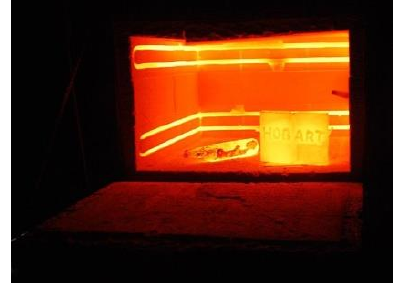
The industrial furnaces used in annealing reach extremely high temperatures, creating the intense heat needed for effective heat treatment of steel components. These specialised furnaces are designed to maintain precise temperature control throughout the entire process.
The annealing process
Annealing follows a specific sequence that transforms the material's internal structure. Understanding each step is crucial for achieving the desired material properties.
Example
Worked Example: Complete Annealing Process
Step 1: Heating
- Heat the steel component to approximately 2/3 of its melting temperature
- This temperature is carefully controlled in industrial ovens
- The high temperature prepares the material for structural changes
Step 2: Soaking
- Allow the material to soak at the target temperature
- Soaking spreads heat evenly throughout the entire component
- This ensures uniform temperature distribution before cooling begins
Step 3: Slow cooling
- Turn off the oven and leave the component inside
- The material cools extremely slowly within the closed oven
- This controlled cooling rate is crucial for achieving the desired properties
Important
The slow cooling rate is the defining characteristic of annealing that distinguishes it from other heat treatment processes. Rapid cooling would produce entirely different material properties.
What happens during annealing?
Recrystalisation
Recrystalisation occurs during the annealing process. This involves the formation of a completely new grain structure within the steel. The process works as follows:
- New grains start very small
- The extremely slow cooling rate gives grains time to blend together
- Grains gradually grow larger during the cooling period
- The result is a large, unstressed grain structure
Note
The recrystalisation process is what gives annealed steel its characteristic properties. The slow cooling allows atoms to rearrange into the most stable configuration, reducing internal stresses that may have built up during previous manufacturing processes.
Final properties
The annealing process produces steel with specific characteristics:
- Soft material that deforms easily
- Ductile properties allowing shaping without breaking
- Easy to work with using cold working processes
- Suitable for bending, hammering, twisting, and stretching
Applications of annealing
Annealing is particularly valuable when steel components require further cold working. The soft, ductile material produced by annealing makes manufacturing processes much more effective.
Cold working processes include:
- Bending operations
- Hammering and forging
- Twisting and forming
- Stretching and drawing
Note
Without annealing, attempting these cold working processes on hard steel would likely result in cracking, breaking, or incomplete forming. The annealing process essentially "prepares" the steel for these subsequent manufacturing steps.
Exam tips
Important
Critical Points for Examinations:
- Remember the 2/3 rule for heating temperature
- Emphasise slow cooling as the key difference from other heat treatments
- Link recrystalisation to grain structure changes
- Connect annealing results to cold working applications
Remember!
Summary
Key Points to Remember:
- Annealing softens steel by heating to 2/3 melting temperature and cooling slowly
- Soaking ensures even heating throughout the component
- Recrystalisation creates new grain structures during the cooling process
- Slow cooling produces large, unstressed grains resulting in soft, ductile material
- Annealed steel is ideal for cold working processes like bending and hammering