Hardening (Leaving Cert Engineering): Revision Notes
📚Revision Notes
Hardening
What is hardening?
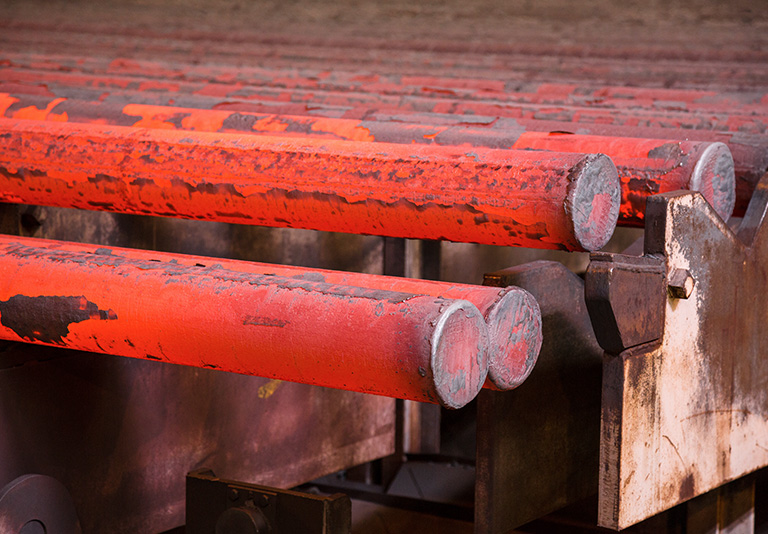
Hardening is a heat treatment process used to increase the hardness and strength of steel components. This process involves heating steel to a high temperature and then cooling it rapidly to create a hard, wear-resistant surface. The hardening process is essential for manufacturing tools, cutting implements, and components that must withstand heavy wear and stress.
Important
The success of hardening depends on the carbon content of the steel - there must be sufficient carbon present for the process to work effectively. Without adequate carbon content, the steel cannot achieve the desired hardness levels.
The quench method
The quench method is the most common hardening technique. This process transforms the internal structure of steel to create maximum hardness.
Process steps
The quench hardening process follows these key stages:
- Heating phase: The steel component is heated to a very high temperature until austenite forms. Austenite is a specific crystal structure that can dissolve large amounts of carbon.
- Rapid cooling phase: The heated steel is quickly cooled by plunging it into a quench media such as water, oil, or brine (salty water). This rapid cooling is crucial - the material must not be allowed to cool slowly.
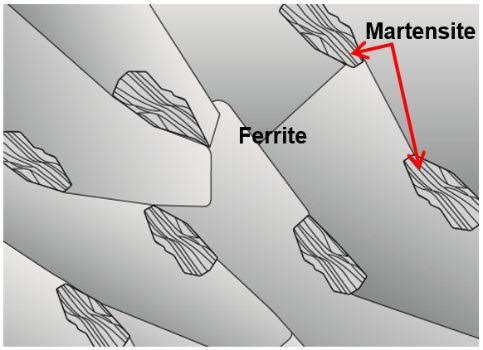
- Structural transformation: Due to the rapid cooling, the carbon atoms become trapped within the steel structure, forming martensite - a hard, needle-like crystal structure.
Understanding martensite
Martensite is the key to hardened steel's properties. This structure forms when carbon atoms cannot escape from the steel during rapid cooling, creating a strained crystal lattice that gives steel its extreme hardness.
Note
However, martensite also makes steel very brittle, which is why many hardened components require tempering afterwards to reduce brittleness.
Case hardening
Case hardening is used when steel components have low carbon content (less than 2%) but still need a hard surface. This method adds carbon to the outer surface while keeping the core relatively soft and tough.
Applications of case hardening
Note
When to use case hardening:
Case hardening is ideal for components that need:
- A hard, wear-resistant outer surface
- A tough, shock-resistant inner core
- Examples include machine gearbox components that must be hard-wearing yet tough enough to handle impact loads
Case hardening methods
There are three main case hardening techniques:
- Pack method: The component is surrounded by graphite powder and heated in an oven, allowing carbon absorption into the surface.
- Salt bath method: The component is immersed in a liquid solution rich in carbon and then heated to promote carbon absorption.
- Carburising method: An oxy-acetylene torch creates a carbon-rich flame that heats and deposits carbon onto the component surface.
Summary
Key Points to Remember:
- Hardening requires sufficient carbon content in the steel
- Rapid cooling is essential - slow cooling will not produce hardening
- Quench media can be water, oil, or brine depending on the required cooling rate
- Martensite formation is what gives hardened steel its properties
- Hardened steel is usually too brittle for direct use and often requires tempering
- Case hardening is used for low-carbon steels that need surface hardness
Summary
Essential Takeaways:
- Hardening increases steel hardness through rapid cooling after high-temperature heating
- The quench method creates martensite structure by trapping carbon atoms in the steel
- Case hardening adds carbon to low-carbon steel surfaces before hardening
- Rapid cooling is crucial - slow cooling prevents proper hardening
- Hardened components are often too brittle and require tempering to reduce brittleness