Introduction to Materials (Leaving Cert Engineering): Revision Notes
📚Revision Notes
Introduction to Metals and Alloys
What are metals and alloys?
Metals are essential engineering materials that offer a unique combination of properties making them incredibly valuable in industry. They possess high strength, ductility (ability to be drawn into wires), excellent thermal and electrical conductivity, and many provide strong resistance to corrosion. These properties make metals perfect for diverse applications across construction, transportation, electronics, and manufacturing.
Metals can be easily shaped and formed into various configurations through processes like casting, forging, and extrusion, which adds to their versatility in engineering applications.
Note
The versatility of metals in engineering applications comes from their unique ability to be processed through multiple manufacturing techniques while maintaining their essential properties. This makes them indispensable in modern industry.
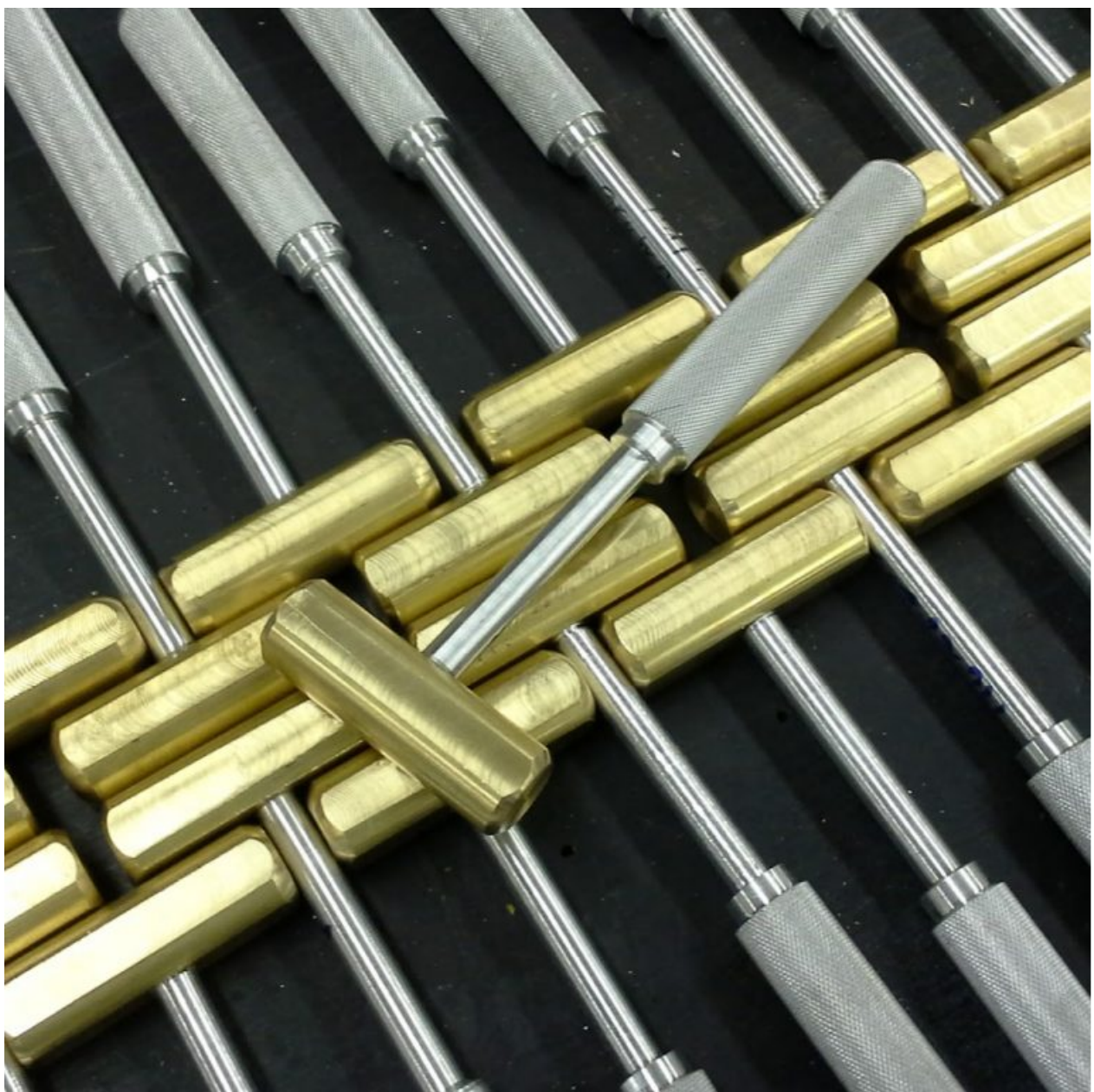
Alloys are mixtures created by combining a metal with either another metal or a non-metal element. The key function of creating alloys is to enhance the properties of the original metal - typically to increase strength or improve corrosion resistance. By mixing different elements, alloys can achieve unique property combinations that make them suitable for specific applications.
Important
Many common engineering materials are actually alloys rather than pure metals. For example, steel is an alloy of iron and carbon, while brass combines copper and zinc.
Ferrous metals
Ferrous metals are those that contain iron as their primary constituent element. The most common ferrous metals include carbon steel, alloy steel, stainless steel, cast iron, and wrought iron.
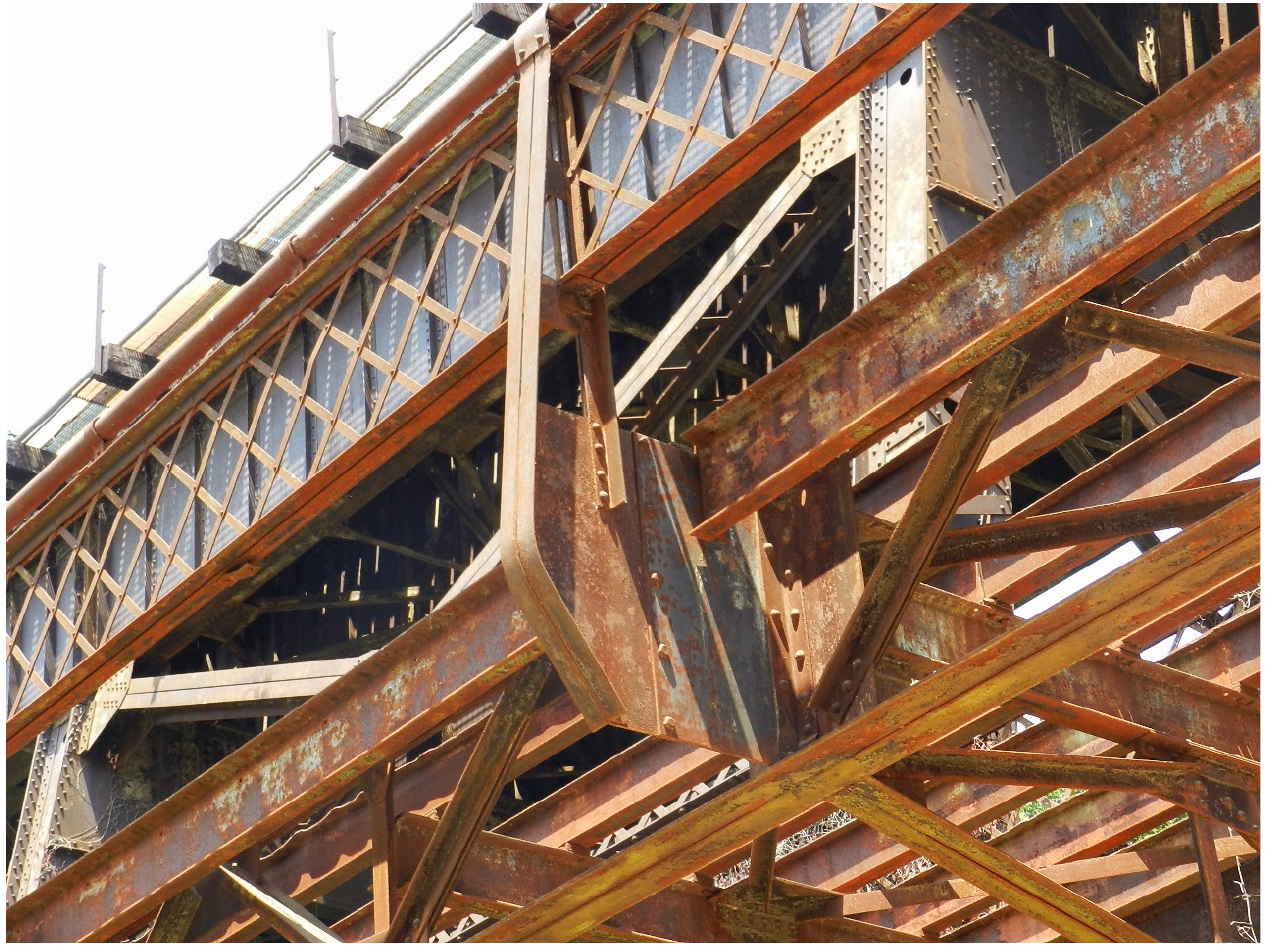
These materials are extensively used in engineering applications because of their high tensile strength, durability, and excellent resistance to wear and tear. Ferrous metals also possess magnetic properties and good conductivity, making them suitable for a wide range of applications including construction, automotive, machinery, and aerospace industries.
Important
Understanding the characteristics of ferrous metals is crucial for selecting the right material for specific engineering applications. The magnetic properties of ferrous metals can be both an advantage and a limitation depending on the intended use.
Nonferrous metals
Nonferrous metals are metals that do not contain iron as a major component. These metals offer different properties and applications compared to ferrous metals. Common examples include aluminium, copper, zinc, nickel, and titanium.
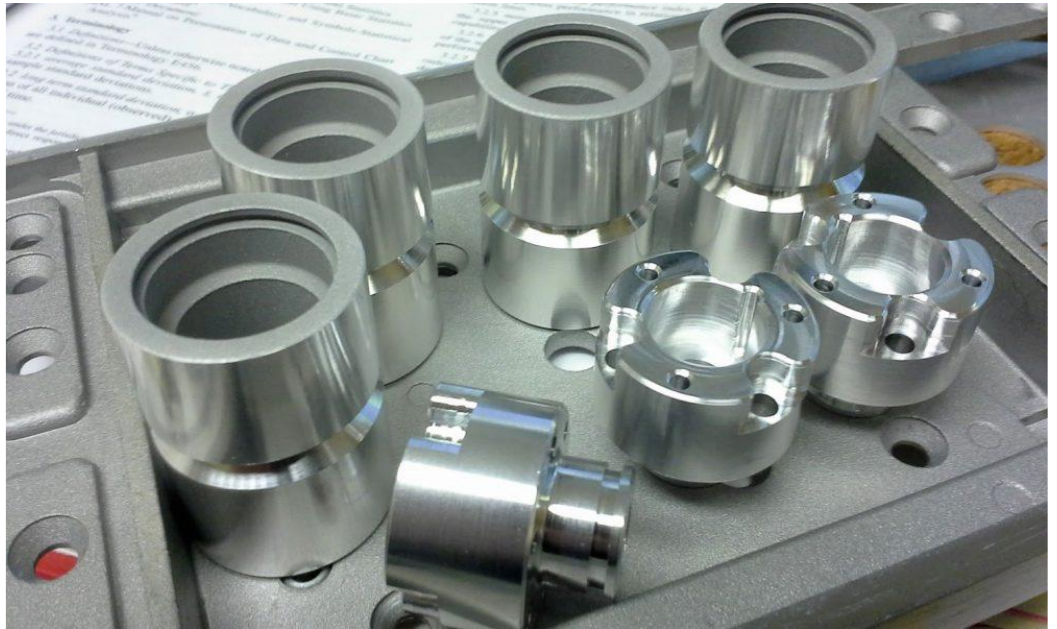
One of the most significant advantages of nonferrous metals is their corrosion resistance. Unlike iron-based metals, they do not rust, making them valuable in corrosive environments. Additionally, nonferrous metals are often lighter in weight, making them ideal for applications requiring high strength-to-weight ratios.
Aluminium is the most widely used nonferrous metal due to its strength, lightness, and corrosion resistance. It finds applications in aerospace, automotive, and construction industries.
Copper serves as an excellent electrical conductor, making it the preferred choice for electrical wiring and electronics applications.
Zinc is commonly used for die casting and for galvanising steel to protect it from corrosion.
Nickel and titanium are also important nonferrous metals in industry. Nickel offers strength, durability, and resistance to high temperatures and corrosion, making it suitable for aerospace and chemical industries. Titanium provides strength, light weight, and corrosion resistance, proving useful in aerospace, medical, and chemical applications.
Alloys
Understanding alloy strength
Alloys are mixtures of two or more elements, where at least one element is a metal. Many alloys consist of combinations of multiple metals.
Converting pure metals into alloys frequently increases the strength of the resulting product.
Example
Worked Example: Alloy Strength
Brass (an alloy of copper and zinc) demonstrates greater strength than either copper or zinc individually. This principle applies to most alloy combinations where the mixture outperforms the individual component metals.
Why alloys are stronger
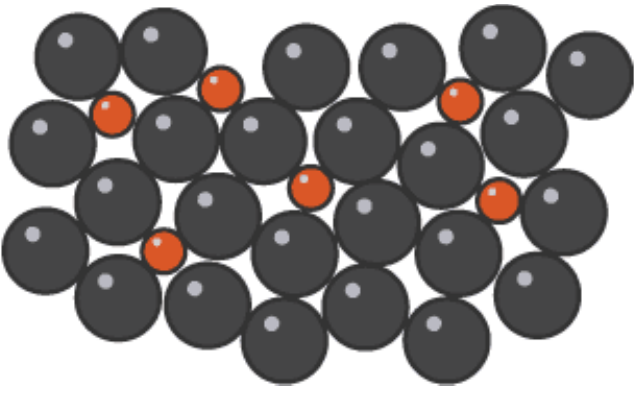
Pure metals have a regular lattice structure. When force is applied to a metal, layers of atoms can slide past each other. The easier it is for these layers to move, the more force is required and the stronger the metal becomes.
Note
When different metals are combined in alloys, the atoms are different sizes. This distorts the regular lattice structure, preventing layers of atoms from sliding over each other easily. This structural change makes alloys stronger than their individual component metals.
Alloy steels
Iron can be alloyed with various metals to produce different types of alloy steels. Each steel type has distinct properties depending on its composition:
Mild steel contains carbon and is malleable and ductile, making it useful for manufacturing car body parts because it can be easily pressed into shape. Although mild steel rusts, it can be protected through galvanising and painting.
Tool steel contains tungsten, making it hard and resistant to high temperatures. This makes it perfect for manufacturing drill bits that won't be damaged by the heat generated during drilling operations.
Stainless steel contains chromium, making it hard and resistant to rusting.
Uses of alloys
Alloys possess different properties compared to pure metals. For any specific application, engineers select alloys with the most suitable range of properties.
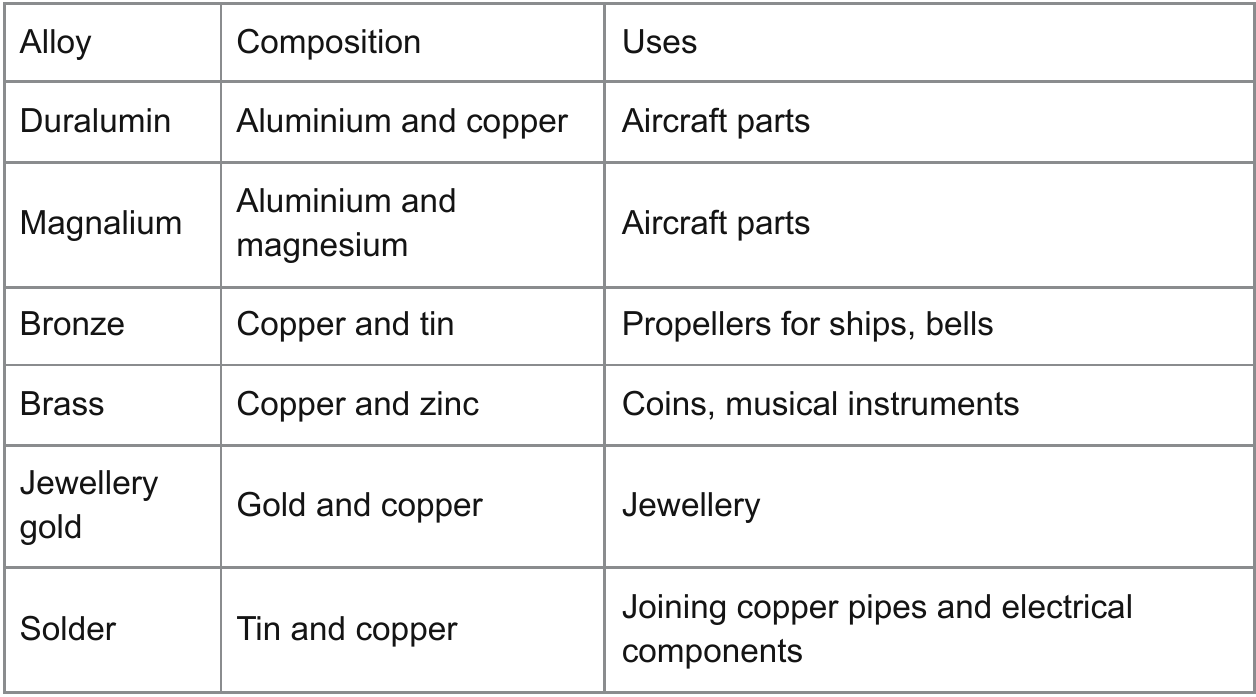
Aluminium and copper serve as the base metals for many useful alloys. The table above shows examples of common alloys containing these metals and their typical applications.
Aluminium and its alloys
Aluminium does not react with water because its surface is protected by a natural layer of aluminium oxide that provides corrosion resistance. Aluminium foil is used for food wrapping and storage because it doesn't react with food substances and is malleable, allowing it to be easily folded around food items.
Note
Aluminium has low density, making aluminium pieces relatively lightweight. The alloys duralumin and magnalium are stronger than pure aluminium while maintaining low densities, making them ideal for aircraft parts where weight reduction is essential.
Copper and brass
Copper and brass both resist corrosion and serve as good electrical conductors. Copper provides better conductivity than brass, making it the preferred choice for electrical wiring applications. Brass offers greater strength than copper.

Gold
Gold is a very soft and malleable metal that is also highly unreactive, giving it excellent corrosion resistance and allowing it to maintain its shine.
Example
Worked Example: Gold Applications
Space helmet visors are coated with a thin gold layer that is transparent enough for astronauts to see through but thick enough to reflect harmful sunlight. This demonstrates gold's unique optical and protective properties.
The gold used in jewellery is typically alloyed with other metals (often copper) to make the jewellery much stronger while preserving its ability to remain shiny.
Steel
Steel is a widely used alloy of iron and carbon, with carbon content typically ranging from 0.2% to 2.1% by weight. It is renowned for its high strength, durability, and versatility, making it popular across a wide range of applications including construction, manufacturing, and transportation.
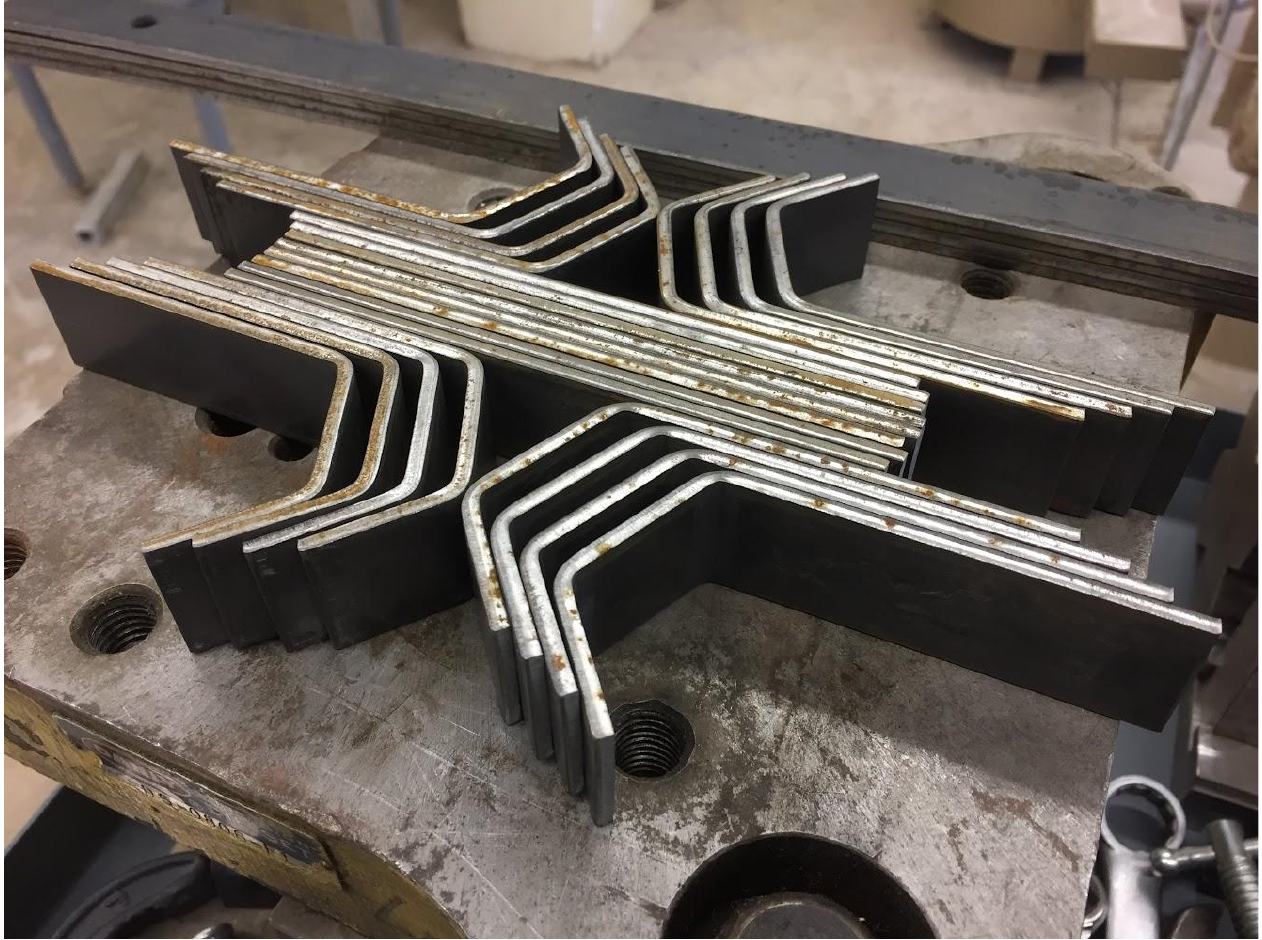
Steel can be produced in various forms including flat sheets, bars, tubes, and wire, and can be easily fabricated and shaped using techniques such as welding, cutting, and forging.
Note
The specific properties of steel can be adjusted through the addition of other elements such as manganese, nickel, and chromium, allowing for even greater versatility in its applications. This adaptability makes steel one of the most important engineering materials.
Categories of steel
There are several different categories of steel, each with distinct compositions and properties that make them suitable for various applications:
Carbon steel is the basic form of steel containing only carbon as the alloying element. This is the most common type of steel and finds use in a wide range of applications.
Alloy steel contains additional alloying elements besides carbon, such as manganese, chromium, nickel, or molybdenum. These elements are added to improve specific properties like strength or corrosion resistance.
Stainless steel contains at least 10.5% chromium, which provides its characteristic corrosion resistance. Stainless steel is commonly used where resistance to corrosion is important, such as in food and chemical processing industries.
Tool steel is designed for use in tools and dies, where hardness and wear-resistance are essential. Tool steel often contains additional alloying elements such as tungsten or cobalt to enhance its properties.
Summary
Key Points to Remember:
- Ferrous metals contain iron as their main element and are magnetic, strong, and widely used in construction and manufacturing
- Nonferrous metals do not contain iron, resist corrosion, and are often lighter than ferrous metals
- Alloys are stronger than pure metals because different-sized atoms distort the regular lattice structure, preventing layers from sliding easily
- Steel is an iron-carbon alloy that can be modified with additional elements to create different types with specific properties
- Common alloys like brass, bronze, and stainless steel combine metals to achieve properties that pure metals cannot provide alone