Magnetic Separation (Leaving Cert Engineering): Revision Notes
📚Revision Notes
Magnetic Separation
Magnetic separation is a physical method used to concentrate metal ores by separating magnetic materials from non-magnetic waste. This process is particularly effective for iron ore concentration, where valuable iron particles must be separated from unwanted materials like clay and rock.
Why magnetic separation is used
After mining, raw ore contains large quantities of waste materials that add unnecessary weight and cost during transportation. Magnetic separation helps reduce these costs by removing as much waste as possible before the ore moves to further processing stages.
Note
Benefits of Magnetic Separation
The main advantages include:
- Cost reduction in transportation
- Weight reduction of material to be processed
- Improved ore quality for subsequent refining steps
How magnetic separation works
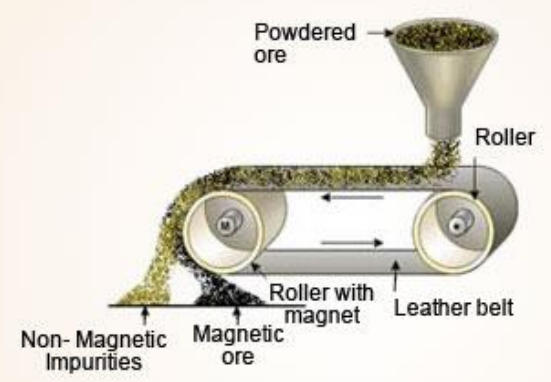
The magnetic separation process follows a systematic approach using specialised equipment to achieve effective separation.
Important
Key Principle: The success of magnetic separation depends on the difference in magnetic properties between valuable ore (iron) and waste materials (clay, rock). Iron's strong magnetic properties make it highly attracted to magnetic fields, while non-magnetic materials remain unaffected.
The process involves several key steps:
Example
Worked Example: The Magnetic Separation Process
Step 1: Crushing and preparation The mined ore is first crushed into small, uniform particles. This increases the surface area and ensures that magnetic and non-magnetic materials can be effectively separated.
Step 2: Conveyor transport The powdered ore is fed from a hopper onto a moving conveyor belt system. This belt transports the material past the separation equipment at a controlled speed.
Step 3: Magnetic separation At the end of the conveyor belt, a magnetised roller creates a strong magnetic field. As the ore passes over this roller:
- Magnetic particles (primarily iron ore) are attracted to the magnetic roller and pulled to one side
- Non-magnetic materials (clay, rock, and other impurities) are not affected by the magnetic field and fall away into a separate collection area
Step 4: Collection The separated materials are collected in different containers:
- Magnetic ore is collected on one side
- Non-magnetic waste materials fall into a separate container
Equipment components
The magnetic separation system relies on several interconnected components working together to achieve effective separation. Each component plays a crucial role in ensuring the process operates smoothly and efficiently.
Note
Essential Equipment Components
- Hopper: Feeds powdered ore into the system
- Conveyor belt: Transports material past the magnetic roller
- Standard roller: Supports the belt movement
- Magnetic roller: Creates the magnetic field for separation
- Leather belt: Provides smooth material transport
- Collection containers: Separate areas for magnetic ore and waste
Applications and effectiveness
Magnetic separation has proven to be one of the most cost-effective methods for ore concentration in the mining industry. The technique's success depends largely on the magnetic properties of the materials being processed.
Note
Primary Applications
Magnetic separation is most effective for:
- Iron ore concentration - the primary application
- Removing clay and rock impurities from metal ores
- Pre-processing before more complex metallurgical operations
This method works best when there is a clear difference in magnetic properties between the valuable ore and the waste materials.
Summary
Key Points to Remember:
- Magnetic separation uses magnetic forces to separate iron ore from non-magnetic waste materials
- The process involves crushing, conveying, and magnetic attraction using specialised rollers
- Iron particles are attracted to the magnetic roller while clay and rock fall away
- This method reduces transportation costs by removing heavy waste materials early in the process
- The technique is most effective for iron ore concentration due to iron's strong magnetic properties