Metal Ore Extraction (Leaving Cert Engineering): Revision Notes
📚Revision Notes
Dredging
What is dredging?
Dredging is a mining method used to extract valuable metal ores from underwater locations such as riverbeds, lake bottoms, and sea floors. This technique is particularly effective when valuable materials have been washed downstream from their original locations and deposited in aquatic environments.
The process involves using specialised vessels to collect sediment and material from underwater surfaces, then processing this material to separate valuable ores from unwanted waste material.
Note
Dredging is especially valuable because it can access mineral deposits that would be impossible to reach through conventional land-based mining methods, making previously inaccessible resources economically viable.
How dredging works
Dredging operations follow a systematic approach to extract and process underwater deposits. The process is carefully coordinated to ensure efficient extraction while managing the challenging underwater environment.
Example
Worked Example: The Three-Phase Dredging Process
Phase 1 - Collection: The dredging vessel positions itself using spuds for stability, then deploys mechanical systems to collect sediment from the riverbed or sea floor.
Phase 2 - Processing: Collected material is transported to onboard wash-plants where valuable ores are separated from waste through mechanical sorting and washing.
Phase 3 - Disposal: Clean valuable ores are retained for further processing while waste material is safely returned to the water system.
- Collection phase: Dredging vessels position themselves over target areas and use mechanical systems to collect sediment from the bottom
- Processing phase: The collected material is processed on-board using wash-plants where valuable ores are separated from waste
- Disposal phase: Unwanted material is returned to the water while valuable ores are retained for further processing
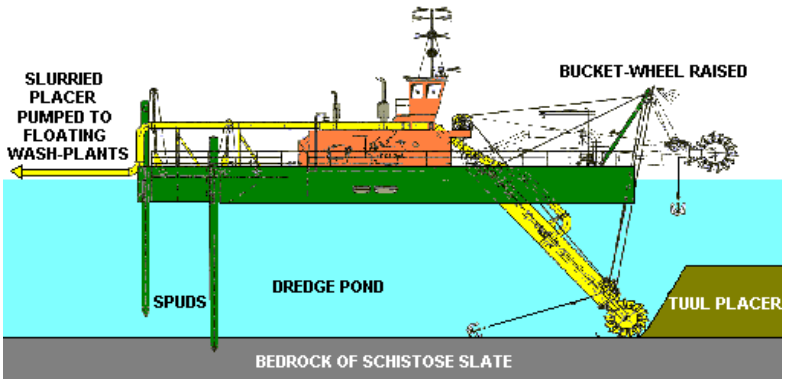
The technical diagram above shows the complete dredging operation, illustrating how the vessel extracts material from the bedrock layer and processes it on board.
Dredging equipment and setup
Modern dredging operations rely on several key components that work together to create an efficient extraction system. Each piece of equipment serves a specific purpose in the overall operation.
Spuds: These are vertical support posts that anchor the dredging vessel in position during operations. They prevent the ship from drifting while extraction takes place.
Note
Spuds are essential for maintaining precise positioning over target deposits. Without proper anchoring, the dredging vessel would drift with currents, making accurate extraction impossible.
Bucket-wheel dredging system: This is the main extraction mechanism that can be raised and lowered to reach different depths. It mechanically scoops up sediment from the underwater surface.
Wash-plants: These are onboard processing facilities where the collected material is sorted and valuable ores are separated from waste sediment.
Pumping systems: These transport the slurried material from the extraction point up to the vessel for processing.
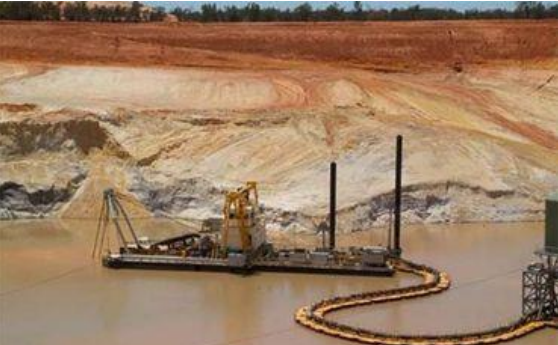
This image shows a real dredging operation in progress, with the floating platform positioned in a flooded mining area and processing equipment visible.
Applications of dredging
Dredging is particularly useful for extracting placer deposits - these are concentrations of valuable minerals that have been naturally sorted and concentrated by water action over time. The natural sorting process makes these deposits especially valuable targets for dredging operations.
Note
Placer deposits form when flowing water naturally separates heavy valuable minerals from lighter rock materials. Over thousands of years, this process concentrates valuable materials in specific underwater locations, making them ideal targets for dredging extraction.
Common materials extracted through dredging include:
- Gold particles washed down from mountain sources
- Tin deposits in coastal areas
- Sand and gravel for construction
- Rare earth minerals in river systems
Environmental considerations
While dredging can be an effective extraction method, it creates significant environmental challenges that must be carefully managed. The underwater nature of the operation means that environmental impacts directly affect aquatic ecosystems.
Important
Environmental impact assessment is mandatory for most dredging operations. The disruption to aquatic ecosystems can have long-lasting effects that extend far beyond the immediate extraction site.
Water quality impact: The dredging process disturbs sediment, creating muddy water conditions that reduce visibility and oxygen levels for aquatic life.
Ecosystem disruption: The mechanical disturbance of river or sea beds destroys habitats for fish, plants, and other aquatic organisms.
Siltation: Fine particles released during dredging can settle in new locations, potentially blocking sunlight needed for underwater plant growth.
Note
Modern dredging operations often include environmental mitigation measures such as sediment containment systems and water quality monitoring to minimise ecological damage.
These environmental impacts mean that dredging operations often require careful environmental assessment and monitoring.
Advantages and limitations
Understanding both the benefits and constraints of dredging is essential for evaluating its suitability for specific mining projects. The technique offers unique capabilities but also faces significant challenges.
Advantages:
- Can access valuable deposits in underwater locations
- Less visual impact on landscape compared to open-pit mining
- Can process large volumes of material efficiently
- Suitable for extracting dispersed valuable materials
Note
The reduced visual impact makes dredging more socially acceptable in populated areas where large open-pit mines would face community opposition.
Limitations:
- Significant environmental impact on aquatic ecosystems
- Limited to relatively shallow water depths
- Weather-dependent operations
- High setup and operational costs for equipment
Important
Weather dependency is a critical limitation - storms, high winds, and rough water conditions can halt operations for extended periods, significantly impacting project timelines and costs.
Remember!
Summary
Key Points to Remember:
- Dredging extracts valuable ores from underwater locations like riverbeds and sea floors
- Spuds are vertical support posts that keep dredging vessels stable during operations
- Wash-plants on board the vessel separate valuable materials from waste sediment
- Environmental impact is a major concern due to water pollution and ecosystem disruption
- Placer deposits are the main target - valuable materials concentrated by natural water action