Tension (Tensile Force) (Leaving Cert Engineering): Revision Notes
📚Revision Notes
Tension (Tensile Force)
Understanding forces in materials
Materials fail when specific forces act upon them beyond their capacity to resist. Forces vary in both their strength and the way they act on materials. Different materials respond differently to various types of forces - some materials handle certain force types well whilst struggling with others. The key challenge in engineering is finding the best material for each specific application.
Note
Engineering Material Selection
The critical task for engineers is matching material properties to the specific forces and conditions the component will experience during its service life.
What is tensile force?
Tensile force develops when opposing forces act to stretch or pull a material apart, creating a pulling effect. This type of force tries to separate the material by pulling it in opposite directions.
When materials experience tensile forces, they are being stretched. The material's ability to resist this stretching without breaking determines its suitability for applications involving tension.
Note
Understanding the Pulling Effect
Think of tensile force as a tug-of-war scenario where forces pull from opposite ends of a material, trying to stretch it until it eventually breaks apart.
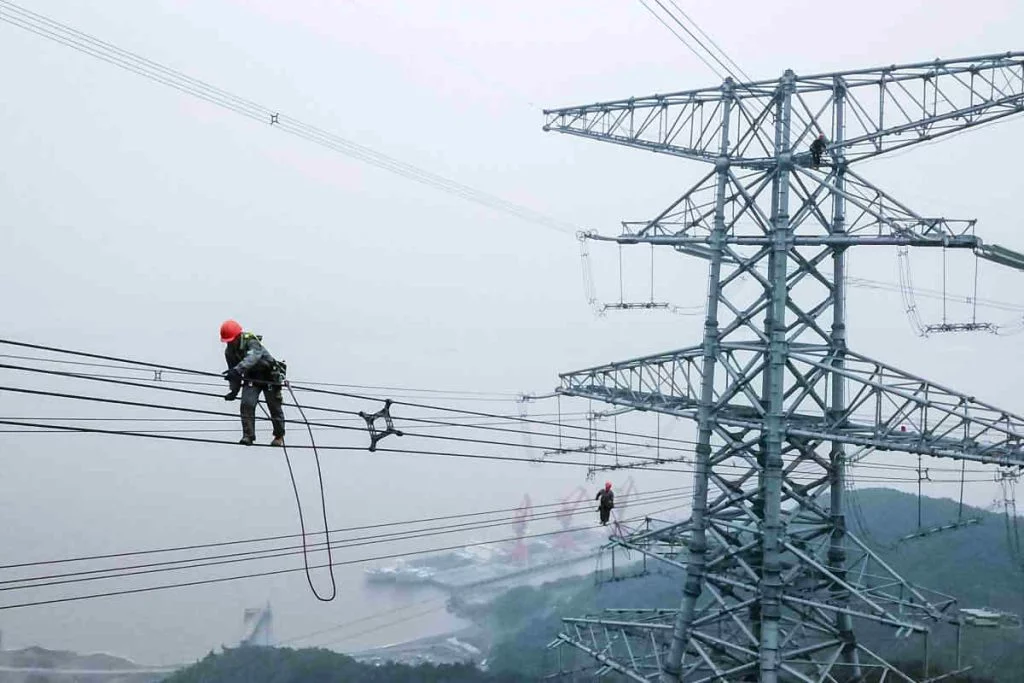
How materials respond to tension
Materials with good tensile strength
Steel demonstrates excellent resistance to tensile forces. This property makes steel ideal for applications where materials must withstand pulling forces without breaking. Steel's strong molecular bonds allow it to handle significant tensile loads before failure occurs.
Materials with poor tensile strength
Concrete performs very poorly under tensile forces and tends to fracture easily, even when subjected to relatively small tensile loads. The material's structure makes it vulnerable to cracking when stretched, which limits its use in tension applications.
Important
Critical Material Limitation
Concrete's poor tensile strength is why it's almost never used alone in structural applications involving tension. This limitation must be considered in all concrete design applications.
Applications of tensile force knowledge
Understanding tensile behaviour guides material selection in engineering:
Example
Practical Applications of Tensile Strength Knowledge
- Load-bearing cables on cranes use steel because of its excellent tensile strength, allowing them to lift heavy loads safely
- Construction projects avoid using concrete alone in applications involving tension
- Material selection must consider the primary forces the component will experience during its service life
Material failure under tension
When tensile forces exceed a material's capacity, the material will fracture or break. This failure occurs when the internal bonds within the material cannot resist the pulling forces any longer. Engineers must ensure materials can handle expected tensile loads with appropriate safety margins.
Important
Safety in Engineering Design
Material failure under tension can be catastrophic. Engineers must always design with safety margins to prevent failure even under unexpected loads.
Remember!
Summary
Key Points to Remember:
- Tensile forces create a pulling effect that tries to stretch materials apart
- Steel has excellent tensile strength, making it suitable for cables and tension applications
- Concrete is very poor in tension and fractures easily under pulling forces
- Material selection must match the expected force types in the application
- Understanding tensile behaviour prevents material failure in engineering designs