Atomic Bonding (Leaving Cert Engineering): Revision Notes
📚Revision Notes
Atomic Bonding
Fundamental principles of atomic bonding
Atoms follow a basic rule when forming bonds with other atoms. All atoms desire to have 2 electrons in their first shell and 8 electrons in their second, third, fourth and subsequent shells. This is known as achieving a stable electron configuration. Atoms will bond with other atoms to fill their outer shells and become more stable.
Important
The 2-8 Rule: This fundamental principle governs all atomic bonding. Atoms will always try to achieve 2 electrons in their innermost shell and 8 electrons in all outer shells to reach maximum stability.
States of matter
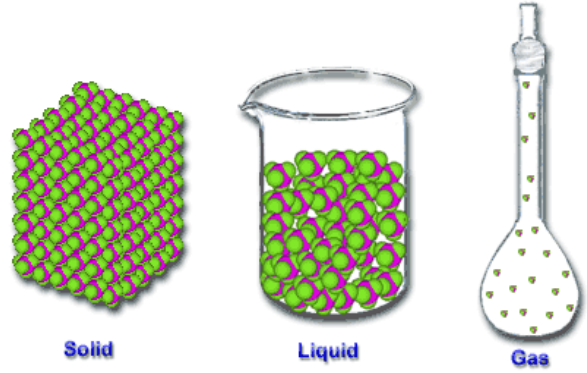
Materials exist because millions of atoms bond together in different ways. The strength and type of bonding determines what state of matter is formed.
Solids are created when atoms are very closely packed together. The strong bonds between atoms mean they cannot move freely, creating rigid structures like steel, timber, or plastic.
Liquids form when atoms are able to roll over each other with ease but still remain attracted to one another. Water is a common example of this state.
Gases are produced when atoms are attracted to each other but not strictly bound together. The atoms can move freely with large spaces between them.
Note
The arrangement and movement of atoms determines whether a material exists as a solid, liquid, or gas. Temperature and pressure can change these states by affecting how strongly atoms are bonded together.
Types of atomic bonding
There are three different ways atoms can bond to create materials:
- Covalent bonding
- Ionic bonding
- Metallic bonding
Covalent bonding
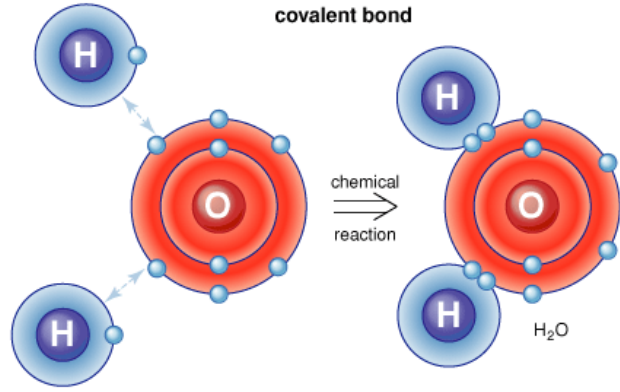
Covalent bonding occurs when two or more atoms share electrons from their outer shells to satisfy the requirement of filling their outer shell completely.
Example
Worked Example: Water Molecule (H₂O)
- Hydrogen atoms have 1 electron in their outer shell but need 2 electrons to be stable
- Oxygen has 6 electrons in its outer shell but needs 8 to be stable
- By sharing their outer electrons, both oxygen and hydrogen can fill their outer shells
- This creates a stable H₂O molecule through electron sharing
This type of bonding is very strong and difficult to break down. Covalent bonds are also known as primary bonds due to their strength.
Ionic bonding
Ionic bonding is a weaker type of bond that occurs when ions are created. An ion is a charged atom that can be either negatively or positively charged.
All atoms naturally have a balance of protons and electrons. When an atom loses one or more electrons, it becomes positively charged. When an atom gains electrons, it becomes negatively charged.
Example
Worked Example: Table Salt (NaCl)
Step 1: Initial electron configuration
- Sodium: 1 electron in outer shell (needs 7 more to fill, or easier to lose 1)
- Chlorine: 7 electrons in outer shell (needs 1 more to be stable)
Step 2: Electron transfer
- Sodium gives up its single outer electron → becomes positively charged (Na⁺)
- Chlorine gains that electron → becomes negatively charged (Cl⁻)
Step 3: Attraction
- The oppositely charged ions (Na⁺ and Cl⁻) attract each other through electrostatic forces
- This creates the ionic bond in table salt
The positively and negatively charged ions now have a natural electrostatic attraction to each other, creating the ionic bond.
This bond is called a secondary bond and can be broken down with the addition of heat, unlike the stronger covalent bonds.
Metallic bonding
Metallic bonding is common in metals, as the name suggests. Looking at the periodic table, metals tend to have many electrons and multiple outer shells compared to most other atoms.
When an electron is far away from the nucleus, the force of attraction between the electron and nucleus becomes quite weak. This allows the electron to break free from its atom easily.
Note
In metals, the distance between outer electrons and the nucleus is so great that these electrons can easily break free and move around freely within the metal structure.
In metals, this creates a "sea of delocalised electrons" - free-floating electrons surrounded by positively charged metal atoms. This delocalised electron structure gives metals their ability to conduct electricity and heat, as conductivity is defined as the flow of heat or electricity through the movement of electrons.
Summary
Key Points to Remember:
- Atoms bond to achieve stable electron configurations following the 2-8 rule
- Covalent bonds share electrons and are very strong (primary bonds)
- Ionic bonds transfer electrons creating charged ions that attract (secondary bonds)
- Metallic bonds create a sea of delocalised electrons, giving metals conductivity