Crystal Structures (Leaving Cert Engineering): Revision Notes
📚Revision Notes
Crystal Structures
Crystal structures are fundamental to understanding how metals behave and perform in engineering applications. This topic covers the main types of crystal arrangements found in metals.
What are crystal structures?
A crystal is any material that exists in a solid state where the atoms are arranged in a crystalline organised and patterned layout. Metals have crystalline structures which can sometimes change when heat is applied. Understanding these structures helps explain why metals have certain properties like strength and ductility.
Note
The arrangement of atoms in a crystal structure directly affects the metal's properties and behaviour during processing and use. This relationship between atomic arrangement and macroscopic properties is one of the key principles in materials science.
Types of crystal structures
There are three main crystal structures commonly found in metals:
- Body Centred Cubic (BCC)
- Face Centred Cubic (FCC)
- Close Packed Hexagonal (CPH)
Each of these structures has distinct characteristics that influence the metal's mechanical properties and behaviour.
Body centred cubic (BCC)
This arrangement is based on an imaginary cube and consists of 9 atoms in total. The atoms are positioned at each of the 8 corners of the cubic structure, with one additional atom at the centre or body of the structure.
BCC is considered a loose packed structure and can be found in steel known as ferrite. This relatively open structure affects how easily atoms can move past each other within the metal.
Note
The loose packing in BCC structures means there are larger spaces between atoms compared to other crystal structures. This arrangement influences how the metal responds to stress and deformation.
Face centred cubic (FCC)
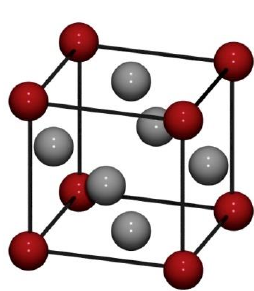
The atomic arrangement in FCC is still based on a cube but is more closely packed than BCC. There is an atom located at each corner of the cubic structure, plus an additional atom positioned at the centre of each face of the imaginary cube.
FCC structures contain a total of 14 atoms and can be found in steel at elevated temperatures, where it is known as austenite. The closer packing of atoms in this structure gives different mechanical properties compared to BCC.
Note
The transformation from BCC ferrite to FCC austenite occurs when steel is heated above approximately 723°C. This structural change is fundamental to heat treatment processes in steel manufacturing.
Close packed hexagonal (CPH)
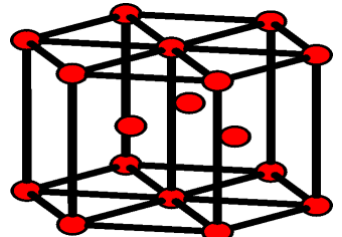
The Close Packed Hexagonal structure is based on an imaginary hexagonal prism. 7 atoms are located at each end face of the prism, with 3 more atoms separating the two end faces. This gives the structure a total of 17 atoms.
Important
CPH is a very close packed structure and can be found in brass. The high level of atomic packing in this arrangement contributes to specific material properties, making it one of the most efficiently packed crystal structures in metals.
Slip in metals
Slip in metals refers to a situation where layers or rows of atoms within the atomic structure can slide over each other. When slip is allowed to occur, it produces a ductile material - one that can easily be stretched without breaking.
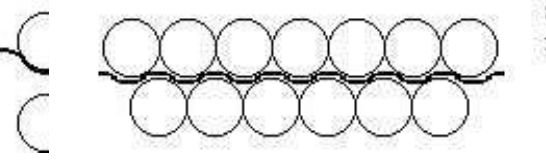
FCC and CPH structures have tightly packed arrangements, which means slip can occur easily. In contrast, BCC has a loose packed structure that does not enable slip to occur as readily.
Important
This difference in slip behaviour explains why some metals are more ductile than others. The ability for atomic layers to slide past each other is directly related to the crystal structure's packing efficiency and the availability of slip planes.
Summary
Key Points to Remember:
- BCC has 9 atoms and is loosely packed (found in ferrite steel)
- FCC has 14 atoms and is more closely packed (found in austenite steel)
- CPH has 17 atoms and is very closely packed (found in brass)
- Slip in tightly packed structures (FCC, CPH) makes metals ductile
- Crystal structure directly influences material properties such as strength, ductility, and deformation behaviour