The Heat Budget (Leaving Cert Geography): Revision Notes
📚Revision Notes
The heat budget
What is Earth's heat budget?
Earth's heat budget refers to the balance between energy coming into our planet and energy leaving it. This energy balance system explains why different regions of Earth experience varying temperatures and helps us understand the complex climate systems that govern our planet.
Note
Understanding how this energy budget works is essential for explaining why some areas are hot while others remain cold, and why certain regions experience dramatic temperature changes throughout the year.
How solar energy drives the heat budget
The sun serves as Earth's primary energy source, providing virtually all the energy that drives our planet's climate systems. Each day, Earth receives an enormous amount of energy from the sun in the form of solar radiation.
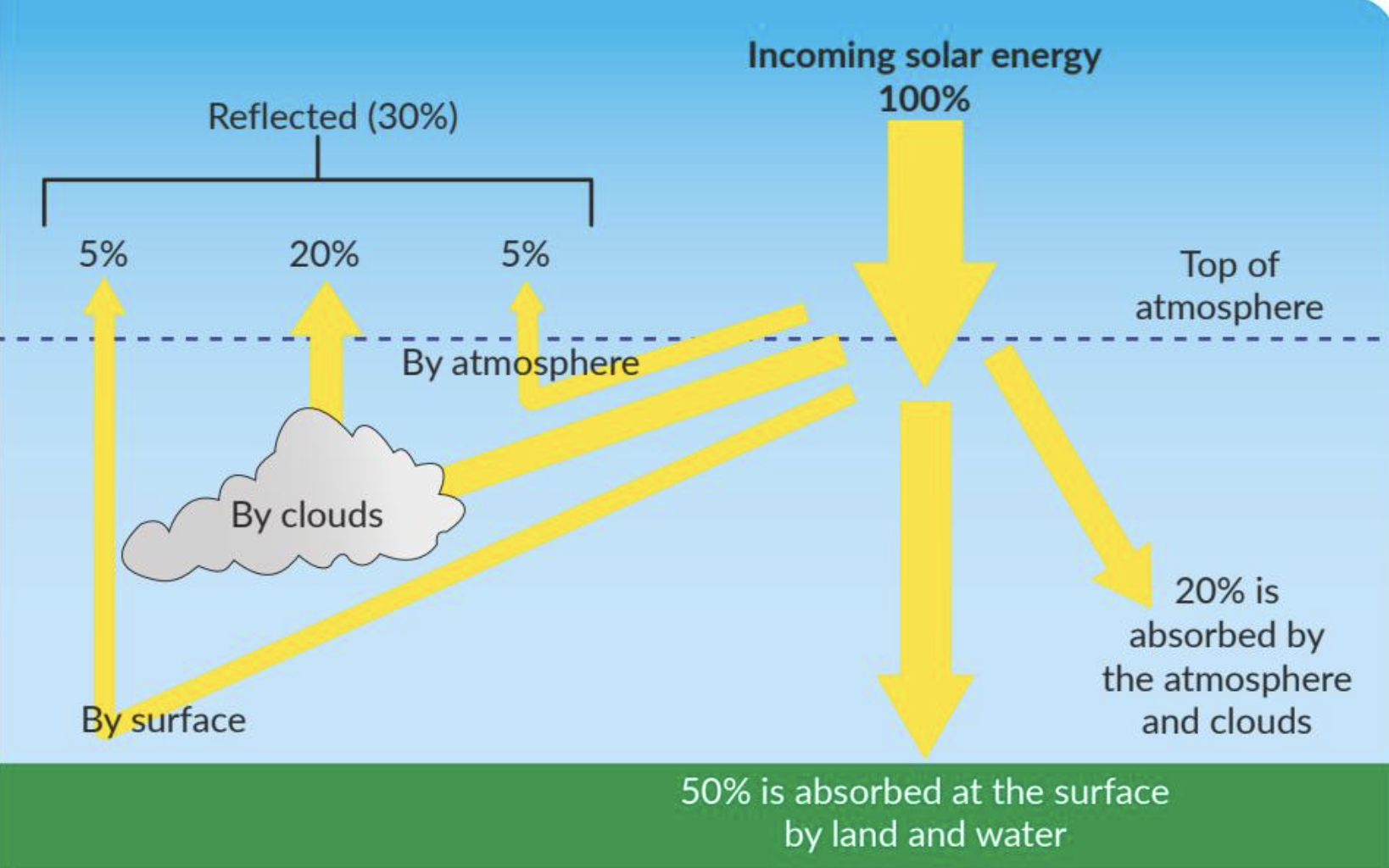
Solar radiation consists of visible light, ultraviolet radiation, and infrared radiation. When this incoming solar energy reaches Earth's surface, it encounters different materials that respond in distinct ways.
Energy absorption and reflexion
When solar radiation hits Earth's surface, two main processes occur:
Important
Absorption: Dark surfaces like forests and oceans absorb more solar energy, converting it into heat. These surfaces warm up more quickly and retain more energy.
Reflection: Light-coloured surfaces such as ice, snow, and deserts reflect more solar energy back to space. These surfaces absorb less energy and tend to remain cooler.
This difference in absorption and reflexion explains why polar regions with extensive ice cover remain cold, while tropical regions with dark ocean surfaces and dense vegetation become much warmer.
Heat redistribution processes
Once solar energy has been absorbed and converted to heat, Earth redistributes this energy through three main processes:
Example
The Three Heat Transfer Processes:
Conduction: Heat transfers through solid materials by direct contact. This occurs when warmer ground heats the air directly above it.
Convection: Heat moves through fluids like air and water. Warm air rises whilst cooler air sinks, creating circulation patterns that distribute heat vertically and horizontally.
Radiation: Earth emits energy back to space in the form of infrared radiation. This outgoing energy is crucial for maintaining the planet's energy balance.
Maintaining energy balance
Earth maintains a stable climate by balancing incoming solar energy with outgoing infrared radiation. The absorbed solar energy warms the planet's surface, which then emits infrared radiation back to space.
This energy balance prevents Earth from continuously heating up or cooling down. When incoming energy equals outgoing energy, Earth's average temperature remains relatively stable over long periods.
Note
The atmosphere and clouds play important roles in this balance by absorbing some incoming solar radiation and trapping some outgoing infrared radiation, helping to regulate Earth's temperature.
Remember!
Summary
Key Points to Remember:
- Earth's heat budget balances incoming solar energy with outgoing infrared radiation
- Dark surfaces absorb more energy whilst light surfaces reflect more energy back to space
- Heat redistribution occurs through conduction, convection, and radiation processes
- This energy balance system explains global temperature variations and climate patterns
- The sun provides virtually all energy driving Earth's climate systems