Cereals (Leaving Cert Home Economics): Revision Notes
📚Revision Notes
Cereals
Structure of wheat grain
Understanding the structure of wheat grain is fundamental to appreciating how different cereal products are made and their nutritional value. A wheat grain consists of three main components, each with distinct characteristics and nutritional benefits.
Important
Wheat grain consists of three primary parts: bran, endosperm, and germ. Each part contains different types of proteins, fats, carbohydrates, vitamins, and other nutrients.
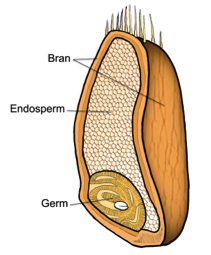
Bran
The bran forms the outer protective layer of the wheat grain. This fibrous coating is packed with essential nutrients that support digestive health and overall wellbeing.
Composition:
- Rich in dietary fibre, which aids digestion
- Contains B vitamins (B1, B2, B3, and B6) for energy metabolism
- Provides antioxidants that protect against cell damage
- Source of trace minerals including iron, zinc, copper, and magnesium
Note
The high fibre content helps prevent digestive problems and contributes to the texture and nutritional quality of wholemeal products.
Endosperm
The endosperm represents the largest portion of the wheat grain, accounting for approximately 83% of the total weight. This central part provides the main energy source from the grain.
Composition:
- Primarily contains carbohydrates in the form of starch
- Rich in proteins, particularly gluten
- Small amounts of vitamins and minerals
- Very low fat content
Note
When milled, the endosperm becomes white flour. The gluten proteins give wheat-based doughs their elasticity and strength, making them ideal for bread production.
Germ
The germ serves as the embryo of the wheat seed and contains concentrated nutrients needed for plant growth.
Composition:
- High in B vitamins and vitamin E
- Contains beneficial plant compounds (phytonutrients)
- Rich in healthy unsaturated fats
- Good source of high-quality protein
Important
The germ would develop into a new wheat plant if allowed to sprout. In refined flour production, it's often removed to extend shelf life, but this reduces nutritional value significantly.
Nutritional value of cereals
Cereals provide essential macronutrients and micronutrients that support various bodily functions. Understanding their nutritional profile helps explain why they form the foundation of healthy diets worldwide.

Protein content
Cereals contain varying amounts and types of proteins that contribute to daily protein requirements.
Key points:
- Wheat is particularly rich in gluten, essential for bread-making processes
- Rice and maize contain different protein types that are less elastic than wheat proteins
- Cereal proteins are incomplete as they lack certain essential amino acids like lysine
- Combining cereals with legumes creates a complete protein source
Carbohydrate composition
Carbohydrates form the primary macronutrient in cereals, serving as the body's main energy source.
Types found:
- Complex carbohydrates (mainly starch) provide sustained energy release
- Dietary fibre supports digestive health and helps prevent chronic diseases
- Small amounts of simple sugars
Note
The fibre content aids digestion, helps prevent constipation, and may reduce the risk of heart disease and diabetes.
Fat content
Most cereals are naturally low in fat, making them suitable for various dietary approaches.
Characteristics:
- Generally very low fat content throughout the grain
- The germ contains more fat, particularly beneficial unsaturated fats
- Essential fatty acids present in the germ support heart health
- Low-fat nature makes cereals ideal for weight management
Vitamins and minerals
Cereals provide important micronutrients, particularly when consumed as whole grains.
Main nutrients:
- B vitamins (B1, B2, B3, folic acid) essential for energy metabolism and nervous system function
- Iron, magnesium, phosphorus, and zinc for various physiological processes
- Whole grains retain significantly more nutrients than refined versions
Health benefits and dietetic value
Regular consumption of cereals, particularly whole grain varieties, offers numerous health advantages that support long-term wellbeing.
Weight management
Cereals can play a valuable role in maintaining healthy body weight through several mechanisms.
Benefits:
- High fibre content promotes feelings of fullness, reducing overall calorie intake
- Complex carbohydrates provide sustained energy without rapid blood sugar spikes
- Low fat content supports calorie control
- Versatile ingredient in balanced meal planning
Cardiovascular health
Research consistently shows that whole grain cereals contribute to heart health in multiple ways.
Note
Protective effects:
- Soluble fibre helps reduce LDL (bad) cholesterol levels
- May contribute to lower blood pressure readings
- Antioxidants in whole grains protect against oxidative damage
- Regular consumption associated with reduced heart disease risk
Diabetes management
Cereals, especially whole grain varieties, offer benefits for blood sugar control.
Mechanisms:
- Complex carbohydrates and fibre slow digestion, preventing rapid blood sugar spikes
- Lower glycaemic index compared to processed alternatives
- Helps maintain steady energy levels throughout the day
- Supports overall diabetes management when part of balanced diet
Digestive health
The fibre content in cereals provides substantial benefits for digestive system function.
Advantages:
- Promotes regular bowel movements and prevents constipation
- May reduce risk of colorectal cancer
- Supports healthy gut bacteria growth (prebiotic effect)
- Maintains overall digestive system health
Gluten-related considerations
Some individuals must avoid gluten-containing cereals due to medical conditions.
Important
Coeliac disease is a condition where people must avoid gluten-containing cereals like wheat, barley, and rye. Alternative grains include rice, maize, and gluten-free oats.
Guidelines for buying, storing, and cooking cereals
Proper selection, storage, and preparation of cereals maximises their nutritional value and ensures food safety.
Buying guidelines
Note
Types to consider:
- Whole grains contain the entire grain kernel and offer maximum nutritional benefits
- Refined grains have improved shelf life but reduced nutritional content
Quality indicators:
- Check packaging for intact, sealed containers to prevent contamination
- Look for clear expiration dates and nutritional information
- Consider organic options to avoid synthetic pesticides and fertilisers
- Evaluate health claims such as 'high in fibre or 'low fat'
Storage recommendations
Note
Optimal conditions:
- Store in cool, dry places away from direct sunlight
- Avoid high humidity areas to prevent mould growth
- Use airtight containers to maintain freshness and prevent pest infestation
Shelf life considerations:
- Whole grains have shorter shelf life due to higher oil content in the germ
- Refined grains last longer but offer less nutritional value
- Proper storage extends usability and maintains quality
Effects of cooking
Cooking transforms cereals in several important ways that affect both nutrition and palatability.
Starch changes:
- Heat causes starch grains to swell and absorb water (gelatinisation)
- This process makes cereals softer and easier to digest
- Results in improved texture and flavour development
Protein modifications:
- Heat causes gluten proteins to coagulate, important for bread structure
- Makes proteins easier to digest through denaturation
Important
Nutrient considerations:
- Some B vitamins are lost during cooking as they're not heat stable
- Water-soluble vitamins may leach into cooking water
- Using minimal water and avoiding overcooking helps preserve nutrients
Wheat processing and flour production
The transformation of wheat into various flour types involves sophisticated processing techniques that determine the final product's characteristics and nutritional profile.
Wholemeal flour production
Wholemeal flour retains all parts of the wheat grain, preserving maximum nutritional value.
Example
Production Process: Wholemeal Flour
Step 1: Screening - Removes impurities like stones and foreign materials to ensure quality
Step 2: Cleaning - Further purification using air currents and magnets removes dust and metallic particles
Step 3: Conditioning - Adding water achieves optimal moisture content for efficient milling
Step 4: Blending - Combining different wheat varieties creates desired flour characteristics
Step 5: Break rolling - Crushing wheat kernels separates bran, endosperm, and germ while producing coarse flour mixture
White flour production
White flour production involves additional steps to remove bran and germ, creating refined flour.
Example
Production Process: White Flour
Step 1: Sifting and purifying - Separates bran and germ from endosperm using size-based sorting
Step 2: Reducing rollers - Uses finer rollers to create smooth, uniform white flour texture
Step 3: Air classification - Employs air currents to separate particles by size and weight
Step 4: Addition of additives - Includes vitamins and minerals to replace nutrients lost during processing
Step 5: Packaging and labelling - Ensures product information and maintains quality during distribution
Important
Milling process significantly affects nutritional value. Removing bran and germ eliminates dietary fibre, B vitamins, and essential fatty acids, leaving mainly carbohydrate-rich endosperm.
Types of flour and cereal products
Different cereals produce various flour types and products, each with specific culinary applications and nutritional profiles.
Wheat flour varieties
All-purpose flour: Blend of hard and soft wheat varieties, suitable for most baking and cooking applications
Wholemeal flour: Contains entire wheat kernel, providing richer nutrient content and denser texture
Bread flour: High gluten content makes it ideal for yeast bread production
Other cereal flours
Note
Rye flour: Lower gluten content, used for traditional rye bread and sourdough
Barley flour: Often combined with wheat flour, adds nutritional value
Oat flour: Made from ground oats, naturally gluten-free but may be processed with wheat
Rice varieties
Long-grain rice: Produces firm, separate grains when cooked, ideal for pilafs and side dishes
Short-grain rice: Creates sticky texture, perfect for sushi and desserts
Brown rice: Retains bran layer, offering higher fibre and nutrient content than white rice
Speciality varieties: Include basmati (aromatic, long-grain) and arborio (Italian short-grain for risotto)
Other cereal products
Note
Oats: Available as rolled oats (flattened for quick cooking) and steel-cut oats (chopped for heartier texture)
Maize products: Include cornmeal for baking and popcorn for snacking
Barley products: Pearl barley (polished grains) for soups and barley malt for brewing
Summary
Key Points to Remember:
- Wheat grain consists of three parts: bran (fibre-rich outer layer), endosperm (starchy centre), and germ (nutrient-dense embryo)
- Whole grains provide significantly more nutrients and health benefits than refined alternatives
- Proper storage in cool, dry conditions using airtight containers maintains cereal quality and prevents contamination
- Cooking transforms starch through gelatinisation, making cereals more digestible and improving texture
- Different cereal types offer various culinary applications, from bread-making with high-gluten wheat to sticky rice for desserts