Pastry (Leaving Cert Home Economics): Revision Notes
📚Revision Notes
Pastry
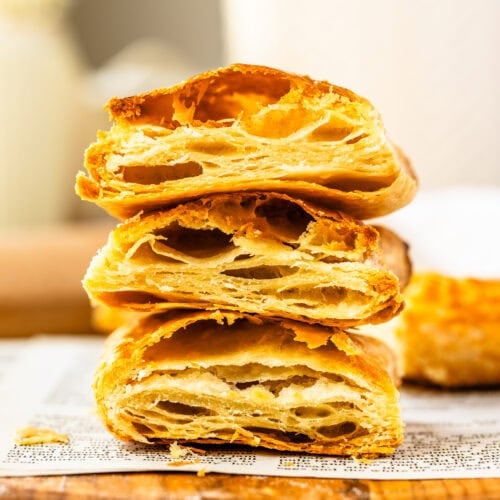
Types of pastry
Understanding different pastry varieties is essential for successful baking. Each type has unique characteristics that make it suitable for specific dishes and cooking methods.
Note
Mastering these eight main pastry types will give you the foundation to create a wide variety of baked goods, from simple pies to elaborate desserts.
Shortcrust pastry
This foundational pastry combines flour, fat, and water to create a crumbly texture. The fat is rubbed into the flour until the mixture resembles breadcrumbs before adding liquid. Shortcrust pastry works brilliantly for pies, quiches, and tarts where you need a sturdy base that won't become soggy.
Rich shortcrust pastry
Similar to basic shortcrust but enriched with sugar and egg yolks, this pastry offers extra richness and sweetness. The added ingredients make it perfect for sweet tarts and dessert bases where you want a slightly more tender, flavourful crust.
Suet pastry
Made using suet (beef or mutton fat) instead of butter or lard, this pastry creates a heavier texture. It's traditionally used in British cooking, particularly for steamed puddings like steak and kidney pudding, where the robust texture complements hearty fillings.
Rough puff pastry
This provides a quicker alternative to traditional puff pastry whilst still achieving some layered texture. Though less defined than proper puff pastry, it still creates light, flaky results perfect for pastries, pies, and tarts when time is limited.
Puff pastry
The most technical of all pastries, puff pastry achieves its signature light, flaky texture through repeated folding and rolling of dough with butter. This creates alternating layers that puff up dramatically during baking. It's essential for vol-au-vents, turnovers, and mille-feuille.
Flaky pastry
Similar to puff pastry but with larger, less defined layers. The preparation is simpler than puff pastry, making it more accessible for home cooks whilst still providing good rise and flakiness. It's commonly used for sausage rolls and pie toppings.
Choux pastry
Unique among pastries, choux is made by cooking butter, water, flour, and eggs together. This creates a light, airy pastry that puffs dramatically when baked due to steam formation. It's the foundation for éclairs, profiteroles, and choux buns.
Filo pastry
Consisting of paper-thin, unleavened dough layers, filo pastry is commonly used in Middle Eastern and Balkan cuisines. The ultra-thin sheets become crisp and golden when baked, making them perfect for dishes like baklava and spanakopita.
Preparation techniques
Successful pastry making relies on understanding key principles and techniques that ensure consistent results.
Important
Temperature control is crucial when making pastry. Always use cold ingredients and chilled utensils to prevent fat from melting prematurely, which would result in tough, greasy pastry.
Working with ingredients
Temperature control is crucial when making pastry. Always use cold ingredients and chilled utensils to prevent fat from melting prematurely, which would result in tough, greasy pastry. Accurate measurement ensures consistency between batches and helps achieve the proper texture every time.
Mixing and handling
Gentle mixing prevents overworking the dough, which develops too much gluten and creates tough pastry. The key is to mix just until the ingredients come together. After mixing, chill the dough before rolling to allow gluten to relax and prevent shrinkage during baking.
Rolling techniques
Roll pastry on a lightly floured surface to prevent sticking, but avoid using too much flour as this can affect the texture. Always roll from the centre outwards to maintain even thickness. This technique ensures your pastry cooks uniformly and looks professional.
Note
Professional Tip: Turning the pastry 90 degrees periodically while rolling helps maintain a round shape and even thickness throughout.
Baking considerations
Preheating your oven ensures even cooking from the moment the pastry goes in. Using baking sheets or parchment paper prevents sticking and makes removal easier. Bake until the pastry achieves a golden brown colour, which indicates proper cooking and optimal flavour development.
Resting and cooling
Allow pastry to rest before baking to minimise shrinkage - this is particularly important for pastry cases. After baking, cool pastries on wire racks to prevent sogginess caused by trapped steam.
Baking blind
Important
Baking blind is the technique of pre-baking a pastry crust without its filling. This prevents the pastry base from becoming soggy when cooked with wet fillings.
The technique of baking blind is essential for quiches, tarts, and pies where the filling doesn't need as much cooking time as the pastry base.
Example
Step-by-Step Baking Blind Process:
Step 1: Roll out your pastry and line it in a pie or tart tin
Step 2: Chill the pastry-lined tin to help prevent shrinkage during baking
Step 3: Line the pastry with baking paper or foil
Step 4: Fill with baking beans, rice, or dried pulses to maintain shape
Step 5: Bake the weighted pastry in a preheated oven until set but not fully coloured
Step 6: Remove the weights and paper, then continue baking until golden if required
Quality characteristics
Understanding what makes excellent pastry helps you identify successful results and troubleshoot problems.
Texture standards
Different pastries have distinct texture expectations. Shortcrust and flaky pastries should feel crumbly and tender when properly made. Puff and rough puff pastries need to be light and airy with clearly defined layers that separate easily. Choux pastry should feel light and hollow inside, whilst filo should be crisp and flaky.
Flavour profile
Well-made pastry has a pleasant buttery taste that complements rather than overwhelms the filling. It should never taste overly greasy or floury, which indicates problems with ingredient ratios or preparation technique.
Visual appearance
Properly baked pastry displays an even, golden brown colour that indicates thorough cooking and good flavour development. Blind-baked pastries should have no soggy areas on the bottom. Puff pastry should rise evenly without lopsided or collapsed areas.
Structural strength
Good pastry maintains its structural integrity, holding fillings securely without cracking or breaking. Choux pastry needs enough strength to puff up and maintain its shape throughout the cooking process.
Note
Quality Check: Good pastry should pass the four-point test: correct texture for its type, pleasant flavour, appealing appearance, and adequate structural strength.
Commercial vs homemade pastry
Understanding the trade-offs between commercial and homemade pastry helps you make informed decisions based on your needs and priorities.
Note
Benefits of commercial pastry:
- Significant convenience and time-saving
- Consistent quality and reliable results
- Wide variety available without mastering multiple techniques
- Longer shelf life than homemade alternatives
Note
Limitations of commercial pastry:
- May lack the rich flavour and perfect texture of homemade pastry
- Often contains preservatives and additives
- Higher cost compared to making from basic ingredients
- Less control over customisation (thickness, shape, specific ingredients)
The choice between commercial and homemade pastry often depends on balancing convenience against quality and considering factors like time constraints, skill level, and the importance of the final dish.
Summary
Key Points to Remember:
- Master the eight main pastry types and their specific uses - from basic shortcrust to delicate filo
- Temperature control is critical - always keep ingredients and equipment cold when making pastry
- Baking blind prevents soggy bottoms in tarts and quiches with wet fillings
- Good pastry has the right texture for its type, pleasant buttery flavour, golden colour, and structural integrity
- Commercial pastry offers convenience but may compromise on flavour and texture compared to homemade versions