Cheese (Leaving Cert Home Economics): Revision Notes
📚Revision Notes
Cheese
Nutritional and dietetic value
Nutritional value of cheese
Cheese provides excellent nutritional benefits as a concentrated dairy product. Understanding its nutritional profile helps explain why it's considered a valuable food source.
Types of protein
Cheese contains high-quality proteins that are essential for body maintenance and growth. The main proteins found in cheese are casein and whey proteins, which come directly from the milk used in production. These proteins are particularly valuable because they provide a complete set of essential amino acids that the human body cannot produce on its own.
Important
Casein and whey proteins are complete proteins that contain all essential amino acids needed for human health, making cheese an excellent protein source for growth, repair, and maintenance of body tissues.
Types of fat
The fat content in cheese varies depending on the type and production method. Most cheeses contain significant amounts of saturated fats, which should be consumed in moderation due to potential impacts on heart health. However, some cheeses, particularly those made from milk of grass-fed animals, may contain beneficial omega-3 fatty acids and other unsaturated fats.
Vitamins and minerals
Cheese serves as an important source of several key nutrients:
- Calcium: Essential for strong bones and teeth
- Vitamin B12: Crucial for red blood cell formation and neurological function
- Phosphorus: Works with calcium to maintain bone health
- Zinc: Supports immune system function
- Vitamin A: Important for vision and immune health
- Riboflavin: Helps with energy metabolism
- Vitamin K2: Supports bone and cardiovascular health
Dietetic value of cheese
Health benefits
Bone health: The high calcium content in cheese makes it particularly beneficial for maintaining strong bones and preventing osteoporosis, especially important during growth periods and later in life.
Satiety: The combination of protein and fat in cheese helps promote feelings of fullness, which can be useful for weight management when consumed as part of a balanced diet.
Dental health: Cheese consumption can stimulate saliva production, which helps neutralise acids in the mouth and reduce the risk of tooth decay.
Vegetarian nutrition: For those following vegetarian diets, cheese provides essential proteins and vitamins that might otherwise be obtained from meat sources.
Health considerations
Note
While cheese offers many nutritional benefits, it's important to be aware of potential health considerations when including it in your regular diet.
High saturated fat content: Regular consumption of high-fat cheeses may contribute to elevated cholesterol levels and increased risk of heart disease if consumed in excess.
Sodium content: Many cheeses are high in sodium, which can be problematic for individuals with high blood pressure or those trying to limit salt intake.
Lactose intolerance: People with lactose intolerance may experience digestive discomfort, though aged cheeses typically contain lower lactose levels and may be better tolerated.
Production of cheese
Understanding how cheese is made helps explain its nutritional properties and the variety of textures and flavours available. The cheese-making process involves several carefully controlled steps.
Steps in cheese production
1. Pasteurisation
The process begins with heating milk to approximately for 15 seconds to eliminate harmful bacteria. This step ensures food safety and extends the shelf life of the final product.
2. Adding starter cultures
Specific bacteria are introduced to the pasteurised milk to begin fermentation. These cultures convert the lactose in milk into lactic acid, which starts the acidification process necessary for curd formation.
3. Addition of rennet
Rennet, an enzyme traditionally obtained from animal sources, is added to coagulate the milk. This causes the milk proteins to form a gel-like structure, separating into solid curds and liquid whey.
4. Separation of curds and whey
The coagulated milk is separated into solid curds and liquid whey. This separation is fundamental to cheese production, as the curds form the basis of the final cheese.
Note
The separation of curds and whey is one of the most critical steps in cheese-making, as it determines the basic structure and texture of the final product.
5. Cutting the curd
The curd is cut into smaller pieces to increase surface area, allowing more whey to drain out and affecting the final moisture content of the cheese.
6. Draining
The whey is drained away, leaving the curds behind. The extent of draining influences the cheese's final texture and moisture level.
7. Scalding
The curds are gently heated to temperatures around to expel additional whey and firm up the curd structure.
8. Cheddaring
For certain cheese types like Cheddar, the curd is cut into slabs, stacked, and periodically turned. This process develops the characteristic texture and flavour of the cheese.
9. Milling into curd chips
The curd is broken down into smaller pieces called curd chips, preparing it for salting and further processing.
10. Adding salt
Salt is added for flavour enhancement and acts as a natural preservative. It also helps control moisture levels and bacterial activity in the cheese.
11. Pressing and shaping
The salted curds are placed into moulds and pressed to remove remaining whey and create the desired shape and density.
12. Ripening/ageing
The formed cheese is aged under controlled temperature and humidity conditions. This ageing process develops the characteristic flavours and textures of different cheese varieties.
13. Packaging and labelling
The finished cheese is packaged to protect it from contamination and moisture loss. Labels provide important information about ingredients, nutritional content, and expiry dates.
Cheese: buying, storing, uses, and cooking
Guidelines for buying cheese
Types of cheese
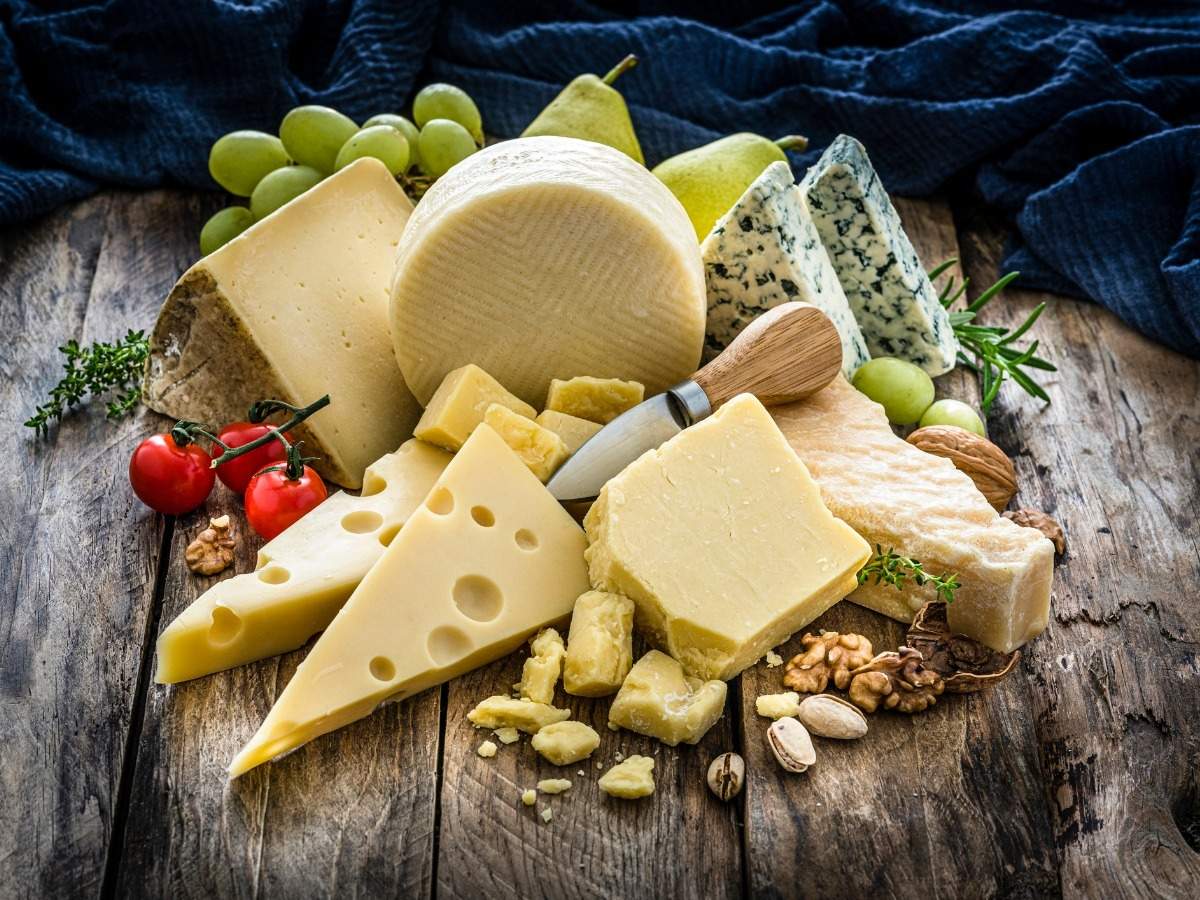
When selecting cheese, consider the different varieties available:
- Soft cheeses: Fresh and creamy textures
- Semi-soft cheeses: Moderate firmness with good melting properties
- Hard cheeses: Firm texture, often aged longer
- Blue-veined cheeses: Distinctive flavour from mould cultures
Choose based on intended use and flavour preference, ranging from mild to strong intensities.
Freshness and quality
Note
Tips for Selecting Quality Cheese:
Look for cheese that appears fresh without cracks or dry edges. Ensure packaging is intact and the cheese is properly protected. Check expiry dates and choose products with the longest shelf life if not using immediately.
Special considerations
Consider the origin of the cheese, as certain regions are renowned for specific varieties. Decide between artisanal cheeses, which may offer unique flavours, and commercial varieties, which provide consistency and availability.
Guidelines for storing cheese
Temperature and humidity
Store most cheeses in the refrigerator at temperatures between and . Cheese benefits from a humid environment, which can often be provided by storing in a vegetable drawer.
Packaging
Important
Proper Cheese Storage:
Wrap cheese properly in parchment or wax paper, followed by a loose layer of plastic wrap. Avoid airtight containers as they can promote moisture build-up and mould growth.
Handling leftovers
Rewrap cheese in fresh parchment paper after each use to prevent it from drying out or absorbing other flavours from the refrigerator.
Culinary uses of cheese
As a main ingredient
Cheese serves as the primary component in dishes such as cheese boards served with crackers, fruits, and nuts, or in grilled cheese sandwiches where melted cheese is the star ingredient.
In cooking and baking
Cheese is commonly used in melted form for dishes like fondue, pizza, and casseroles. In baking, it's incorporated into pastries, bread, and cheesecakes to add richness and flavour.
Flavour enhancer
Grated cheese works excellently as a topping for pasta, salads, and soups. It can also be used as stuffing in meats and vegetables to add flavour and richness.
Effects of cooking on cheese
Melting characteristics
Different cheeses melt at varying temperatures due to their fat and moisture content. Some cheeses, like mozzarella, are prized for their ability to stretch when melted, making them ideal for pizzas and similar dishes.
Texture changes
Heat softens cheese, making it suitable for spreading or incorporating into sauces. Some varieties, such as Parmesan, can develop a crispy, browned crust when cooked, adding textural interest to dishes.
Flavour development
Cooking can intensify cheese flavours and add complexity. Processes like roasting or grilling can introduce smoky, complex flavour profiles that enhance the overall taste of dishes.
Summary
Key Points to Remember:
- Cheese is an excellent source of complete proteins (casein and whey) and essential nutrients like calcium and vitamin B12
- The cheese-making process involves pasteurisation, adding cultures and rennet, separating curds and whey, and controlled ageing
- Store cheese in the refrigerator wrapped in parchment paper to maintain quality and prevent moisture loss
- Cooking changes cheese texture and can intensify flavours, with different varieties having unique melting properties
- Consider both nutritional benefits and potential health concerns like high saturated fat and sodium content when including cheese in your diet