Benedict Anderson (Leaving Cert Politics and Society): Revision Notes
📚Revision Notes
Benedict Anderson
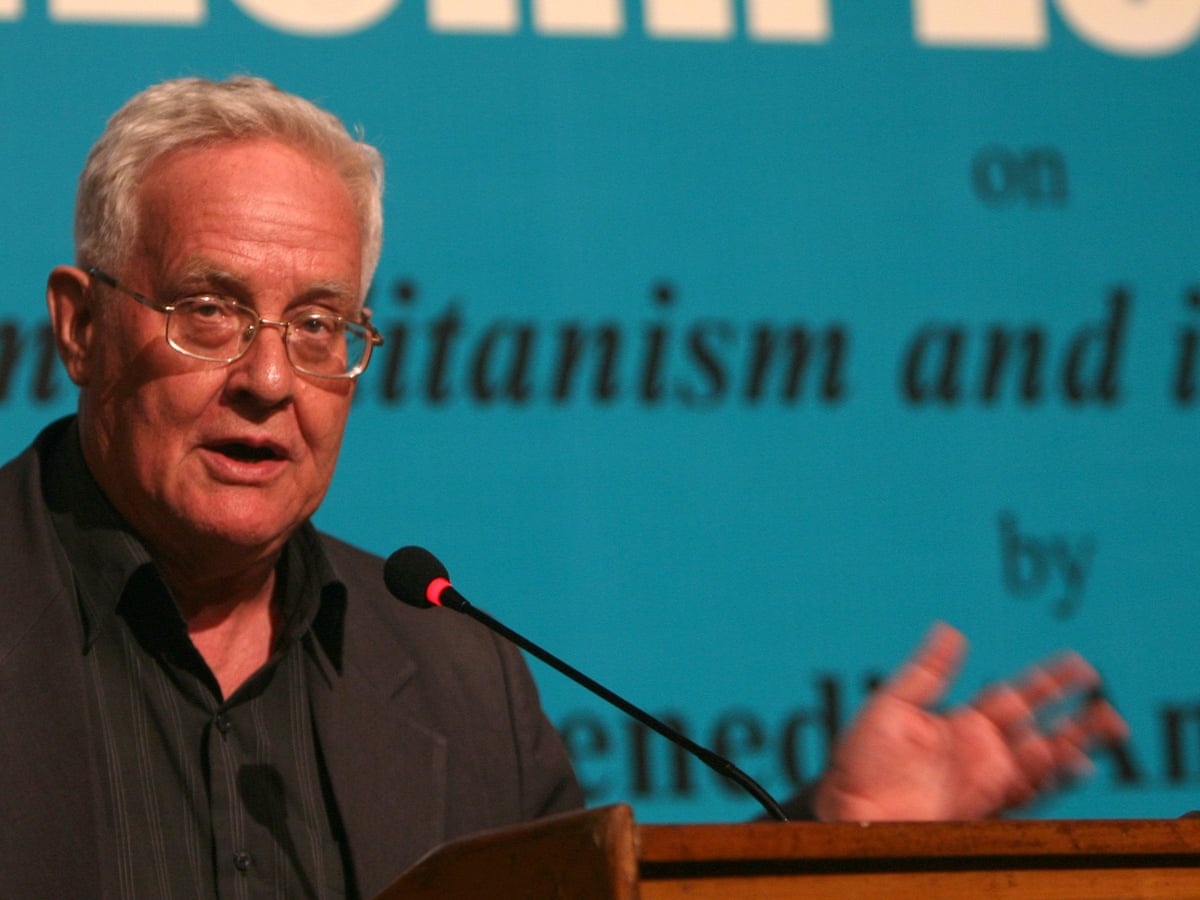
Benedict Anderson (1936-2015) was a political scholar and historian whose groundbreaking work fundamentally changed how we understand nationalism. His most famous book, Imagined Communities (1983), remains one of the most influential texts in political theory and continues to shape debates about national identity today.
Note
Anderson's work has been translated into over 30 languages and continues to be one of the most cited texts in political science, anthropology, and sociology. The concept of "imagined communities" has become foundational to understanding how modern nations form and maintain their identity.
Background and influences
Anderson's unique personal background significantly influenced his academic perspective. Born in China to an Irish father and English mother, he was educated at Eton College and Cambridge University. His cosmopolitan upbringing - living across multiple countries and cultures - gave him a distinctive outsider's perspective on nationalism.
Anderson described himself as "a kind of Eurasian...a person with mixed blood or mixed descent". This multicultural identity made him particularly interested in how people develop attachments to nations, especially when he admitted "this geography makes one uneasy, one always wants to feel one hundred per cent at home and for a long time I didn't feel at home anywhere".
His extensive research in Indonesia and South East Asia led him to develop what he called "inverted orientalism" - a deep sympathy for anti-imperialist nationalist movements in the developing world.
The challenge of defining nationalism
Anderson identified three key paradoxes that make nationalism difficult to define:
Important
The Three Paradoxes of Nationalism:
- Modern vs ancient: Nationalism is considered by historians to be relatively modern, yet many people think of their nation as ancient and eternal
- Universal vs distinctive: Nationalism is viewed as universal (everyone has a nationality), yet each nation is seen as utterly distinctive and different from others
- Powerful vs vague: Nationalism is such a powerful political force that people will die and kill for their nation, yet it remains philosophically vague and difficult to define
These paradoxes reveal why nationalism has been so difficult for scholars to understand and define consistently across different contexts.
Anderson's definition of nationalism
After reflecting on these paradoxes, Anderson offered his famous definition of nationalism as:
Important
Anderson's Definition of Nationalism:
"an imagined political community - and imagined as both inherently limited and sovereign"
This definition contains four crucial elements:
- Nation as imagined
- Nation as community
- Nation as limited
- Nation as sovereign
Nation as imagined
Anderson argued that nations are "imagined" because members of even the smallest nation will never know most of their fellow citizens personally. As he explained: "the members of even the smallest nation will never know most of their fellow-members, meet them, or even hear of them, yet in the minds of each lives the image of their communion".
This doesn't mean nations are fake or unreal. Anderson carefully distinguished between "imagined" and "imaginary" - while imaginary suggests fantasy, imagined implies creativity and genuine emotional connection.
Note
Anderson believed that "all communities larger than primordial villages of face-to-face contact are imagined". This insight helps us understand that the "imagined" nature of nations doesn't make them less real or meaningful to people.
People develop a sense of "abstract solidarity" with fellow nationals they will never meet, creating bonds that can be stronger than those with people they actually know.
Nation as community
Despite real inequalities and social divisions within nations, Anderson argued that "regardless of the actual inequity and exploitation that may occur, the nation is always conceived as a deep horizontal comradeship".
This sense of "fraternity" helps explain why people are willing to make enormous sacrifices for their nation. Anderson pointed to examples like war memorials, where people feel genuine emotional connections to unknown soldiers who died for the nation, demonstrating how nationalism creates powerful bonds across social divisions.
Nation as limited
Anderson wrote that nations are "imagined as limited because even the largest of them, encompassing perhaps a billion living human beings, has finite, if elastic, boundaries, beyond which lie other nations".
This means that even extreme nationalists don't dream of everyone in the world belonging to their nation. Nations have recognised boundaries that separate them from other nations, creating a sense of distinctiveness and belonging.
Nation as sovereign
Finally, nations are "imagined as sovereign because the concept was born in the age of Enlightenment and Revolution". Anderson was referring to the historical context of the late eighteenth and early nineteenth centuries, when traditional monarchical authority was challenged and the idea of popular sovereignty emerged.
Nationalism in former European colonies
Anderson's research focused particularly on how nationalism developed in former European colonies in the Americas. He challenged the assumption that nations had always existed, showing how descendants of European settlers became more self-aware of their distinct identity - they were European by blood but not by birth, and weren't viewed as truly European by their colonisers either.
Note
This historical analysis was groundbreaking because it showed that nationalism didn't originate in Europe as many scholars assumed, but actually developed first in the colonial Americas before spreading back to Europe.
This interaction between European settlers and native peoples led to the development of nationalist ideology that eventually spread westward from the Americas to Europe.
The role of media and print capitalism
Anderson emphasised the crucial importance of printing technology in creating national consciousness. The emergence of newspapers as a capitalist business meant that people across the nation engaged daily in reading common news content in a shared language.
The fact that millions of people could imagine others doing the same thing at the same time helped shape people's sense of shared national identity. Anderson argued that media created "shared experiences" that reinforced the idea of belonging to an imagined national community through sport, culture and the arts.
Important
Print Capitalism's Role: The daily ritual of reading newspapers created what Anderson called "simultaneity" - the knowledge that thousands of others were reading the same content at the same time. This shared experience was fundamental to developing national consciousness.
Anderson's perspective on nationalism
Anderson offered a nuanced view of nationalism that challenged common negative stereotypes. In a famous observation, he wrote:
Example
Anderson's Perspective on Nationalism:
"In an age when it is so common for progressive, cosmopolitan intellectuals (particularly in Europe?) to insist on the near-pathological character of nationalism, its roots in fear and hatred of the Other, and its affinities with racism, it is useful to remind ourselves that nations inspire love, and often profoundly self-sacrificing love. The cultural products of nationalism—poetry, prose fiction, music, plastic arts - show this love very clearly in thousands of different forms and styles."
This quote demonstrates Anderson's belief that nationalism should be understood as a source of genuine emotional attachment and cultural creativity, not merely as a destructive force.
Summary
Key Points to Remember:
- Benedict Anderson (1936-2015) revolutionised understanding of nationalism through his book Imagined Communities (1983)
- Nations are "imagined political communities" that are inherently limited and sovereign
- The "imagined" aspect doesn't mean nations are fake - people develop real emotional bonds with fellow nationals they'll never meet
- Print capitalism and newspapers were crucial in creating shared national consciousness by giving people common daily experiences
- Anderson viewed nationalism as inspiring "profoundly self-sacrificing love" rather than just fear and hatred, as shown through cultural products like poetry, music and art