The Compass (Grade 10 NSC Matric Physical Sciences): Revision Notes
📚Revision Notes
The Compass
What is a compass?
A compass is a navigation instrument designed to help you find direction by detecting magnetic fields. The compass consists of two main components: a magnetised needle and a pivot. The magnetised needle is a small piece of metal that has been made magnetic, and it sits on a pivot point that allows it to rotate freely in any direction.
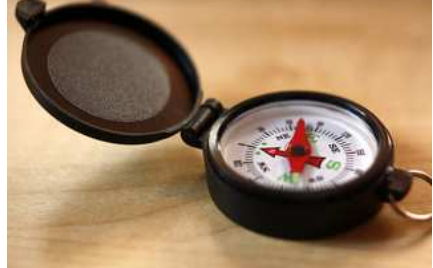
The compass works because the magnetised needle can turn without restriction, so when it encounters a magnetic field, it will automatically align itself to point in the same direction as that field. This makes the compass an essential tool for navigation and direction-finding.
Note
The magnetised needle must be completely free to rotate for the compass to work properly. Any friction or obstruction would prevent accurate alignment with Earth's magnetic field.
How does a compass work?
Understanding how a compass functions requires knowing about Earth's magnetic properties. Our planet acts like an enormous bar magnet, creating a magnetic field that extends far into space around us.
When you hold a compass, the magnetised needle inside responds to Earth's magnetic field. The needle will rotate on its pivot until it aligns with the direction of the magnetic field lines. Since Earth's magnetic field lines run from the magnetic south pole to the magnetic north pole, the needle consistently points toward magnetic north.
Important
Key Principle: The compass needle aligns with Earth's magnetic field direction. This happens automatically because magnetic objects naturally orient themselves along magnetic field lines when they are free to move.
Earth's magnetic field
Earth possesses two different sets of poles that are important to understand when using a compass:
Geographic poles vs magnetic poles
Geographic poles are the points where Earth's rotation axis meets the planet's surface. These are the "true" north and south poles that relate to Earth's daily rotation and are used for maps and navigation.
Magnetic poles are the points where Earth's magnetic field lines converge. These represent the north and south poles of Earth's giant magnetic field.
Here's the crucial point for compass users: the magnetic poles do not align exactly with the geographic poles. The magnetic north pole is located approximately away from the geographic north pole. This means your compass needle points to magnetic north, not true north.
Important
Magnetic Declination: This difference is called magnetic declination, and it's essential to account for this when using a compass for precise navigation. The exact declination varies depending on your location on Earth.
Earth's magnetic field characteristics
Scientists have discovered several fascinating facts about Earth's magnetic field:
- The magnetic field is generated by flowing liquid metals in Earth's outer core, which create electric currents
- The magnetic poles shift slightly over time
- Earth's magnetic field completely reverses direction approximately every 200,000 years
- The field extends far into space, creating a protective region called the magnetosphere
Navigation with compasses
Compasses have been used for navigation for centuries because they provide a reliable way to determine direction. Once you know where north is located, you can figure out any other direction (south, east, west, or points in between).
Historical significance
Note
Historical Context: The textbook mentions lodestone, a naturally magnetised form of iron oxide that was discovered to align itself in a north-south direction when suspended freely. This natural material became the foundation for early compass development and navigation.
Animal navigation
Many animals have evolved the ability to detect magnetic fields for navigation purposes.
Example
Natural Navigation Examples:
- Pigeons use magnetic fields for homing
- Bees navigate using Earth's magnetic field
- Monarch butterflies migrate thousands of miles using magnetic navigation
- Sea turtles return to birthplace beaches using magnetic cues
- Certain fish species orient themselves magnetically
These animals use Earth's magnetic field to orient themselves during migration and daily movement, demonstrating the biological importance of magnetic field detection.
Earth's magnetic field phenomena
Earth's magnetic field creates several important effects that extend beyond simple compass navigation.
Protection from space radiation
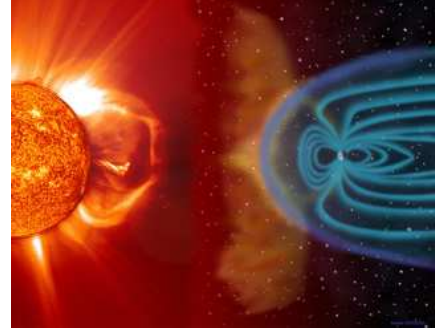
Earth's magnetic field provides crucial protection for life on our planet. The solar wind consists of high-energy charged particles (mainly protons and electrons) continuously streaming from the Sun toward Earth.
Note
Magnetic Protection: When these charged particles approach Earth, our magnetic field deflects them away from the planet's surface. This protection is vital because these high-energy particles could be harmful to living organisms. The region where Earth's magnetic field affects these particles is called the magnetosphere.
Aurora phenomena
One spectacular effect of Earth's magnetic field interaction with solar particles is the creation of aurorae - the Northern and Southern Lights (Aurora Borealis and Aurora Australis respectively).
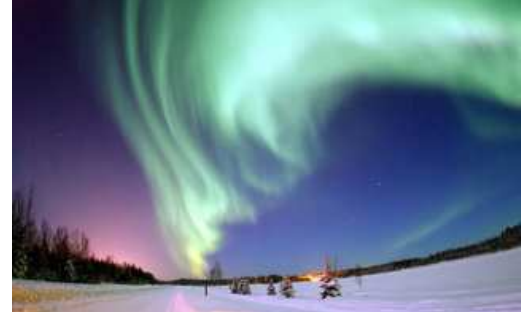
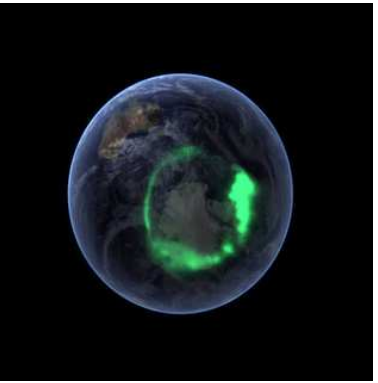
When charged particles from the solar wind manage to spiral along Earth's magnetic field lines toward the north and south poles, they can collide with particles in Earth's atmosphere. These collisions produce the beautiful red and green light displays that stretch across large portions of the sky in polar regions.
Note
Aurora Visibility: Since aurorae occur close to the magnetic poles, they are primarily visible from high northern latitudes (like Canada, Sweden, and Finland) and high southern latitudes, but not from locations like South Africa.
Summary
Key Points to Remember:
-
A compass contains a magnetised needle that rotates freely on a pivot and aligns with Earth's magnetic field direction
-
Earth has both geographic poles (rotation axis) and magnetic poles (magnetic field), which don't align exactly - they're about apart
-
Compasses point to magnetic north, not true north, so you need to account for magnetic declination in precise navigation
-
Earth's magnetic field protects us from harmful solar radiation by deflecting charged particles in the solar wind
-
The interaction between solar particles and Earth's magnetic field creates the beautiful aurora displays visible near the poles