Gametogenesis (Grade 12 NSC Matric Life Sciences): Revision Notes
📚Revision Notes
Gametogenesis
Introduction to gametogenesis
Gametogenesis refers to the biological process through which reproductive cells (gametes) are formed from specialised tissue called germinal epithelium found in the reproductive organs. This crucial process involves two distinct pathways: spermatogenesis in males and oogenesis in females. Both processes are essential for sexual reproduction and are closely linked to the hormonal changes that occur during puberty.
Note
The term "gametogenesis" literally means "gamete creation" - it encompasses all the biological processes involved in producing functional reproductive cells that can participate in fertilisation.
Puberty and sexual maturity
Puberty marks the developmental stage when individuals become capable of sexual reproduction. This period typically occurs between the ages of 11 to 15 years, although the exact timing varies from person to person. During puberty, significant hormonal changes trigger both gametogenesis and the development of secondary sexual characteristics.
The key hormonal players during puberty include testosterone in males and oestrogen plus progesterone in females. These hormones not only stimulate the production of gametes but also bring about the physical changes that distinguish adult males and females. For example, males experience deepening of the voice, facial hair growth, and muscle development, while females develop breasts and experience changes in body fat distribution.
Note
Individual variation in puberty timing is completely normal - some people may begin as early as 9 years old or as late as 16 years old. Genetic factors, nutrition, and overall health all influence when puberty begins.
Understanding puberty is important because it sets the stage for gametogenesis to begin. Without the hormonal triggers that occur during this time, the reproductive system would remain inactive and unable to produce functional gametes.
Spermatogenesis: male gamete production
Spermatogenesis is the specialised process through which male reproductive cells (sperm) are produced in the testes. This complex process occurs within structures called seminiferous tubules, where the germinal epithelium lines the inner walls. The entire process is regulated by testosterone, the primary male sex hormone.
The process of sperm production
The journey of sperm production begins with diploid cells in the germinal epithelium. These cells contain the full complement of chromosomes found in most human body cells. Through the influence of testosterone, these cells undergo meiosis, a special type of cell division that reduces the chromosome number by half.
Important
Meiosis is crucial for sexual reproduction because it ensures that when a sperm (with 23 chromosomes) fertilises an egg (with 23 chromosomes), the resulting offspring has the correct total of 46 chromosomes. Without this reduction division, chromosome numbers would double with each generation!
During meiosis, each diploid germinal cell divides to produce four haploid cells called spermatids, each containing only chromosomes. These spermatids then mature and develop into fully functional sperm cells. The resulting sperm will carry either chromosomes or chromosomes, determining the potential sex of any offspring.
Structure and function of sperm cells
Mature sperm cells have a distinctive structure perfectly adapted for their role in fertilisation. Each sperm consists of three main regions: the head, middle section, and long tail.
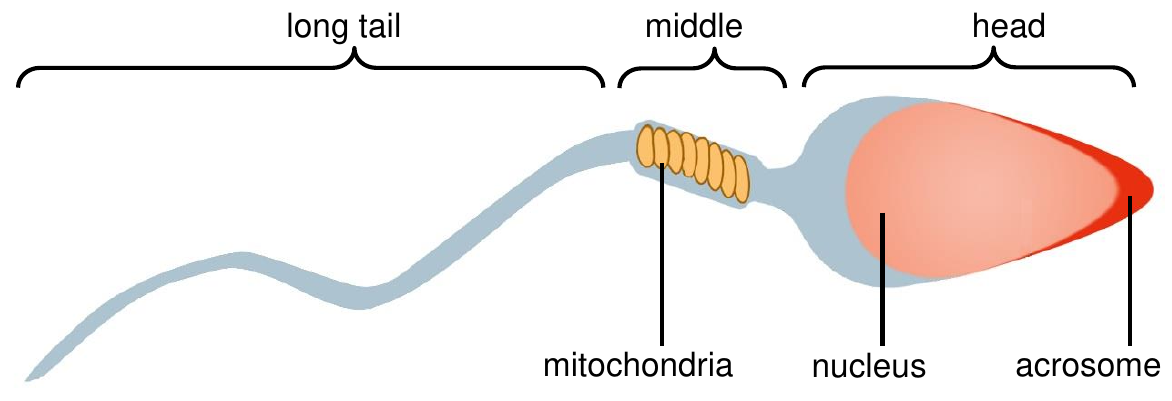
The head region houses the nucleus, which contains the genetic material (DNA) with either or chromosomes. At the very tip of the head sits the acrosome, a specialised structure packed with digestive enzymes. These enzymes are crucial for breaking down the protective layers surrounding an egg cell during fertilisation.
The middle section is densely packed with mitochondria, the cellular powerhouses that generate energy. This energy is essential for powering the sperm's movement as it travels through the female reproductive tract in search of an egg cell.
The long tail, or flagellum, acts as a propeller that allows the sperm to swim forwards through fluids. The coordinated beating of this tail enables the sperm to navigate the challenging journey from the male reproductive tract to the site of fertilisation.
Oogenesis: female gamete production
Oogenesis represents the process by which female reproductive cells (eggs or ova) develop in the ovaries. Unlike spermatogenesis, which produces millions of sperm continuously, oogenesis typically results in the release of just one mature egg approximately every 28 days during a woman's reproductive years.
The process of egg production
The process begins when diploid germinal epithelium cells () in the ovaries undergo mitosis to form structures called follicles. Each follicle contains a developing egg cell surrounded by supporting cells.
Approximately every 28 days, follicle stimulating hormone (FSH) triggers one follicle to continue its development. The egg cell within this selected follicle undergoes meiosis, producing four haploid cells. However, unlike in spermatogenesis, only one of these four cells develops into a functional egg cell. The other three cells degenerate and are absorbed by the body, as they are not needed for reproduction.
Important
This difference in gamete production is significant: males produce millions of sperm continuously throughout their adult lives, while females are born with all the egg cells they will ever have, and typically release only about 400 mature eggs during their entire reproductive lifetime.
The surviving egg cell contains chromosomes, giving it the haploid number of chromosomes. This ensures that when fertilisation occurs, the resulting embryo will have the correct diploid number of chromosomes.
Structure and function of egg cells
The mature human egg is significantly larger than a sperm cell and has a complex structure designed to support early embryonic development. The egg consists of several distinct layers, each with specific functions.
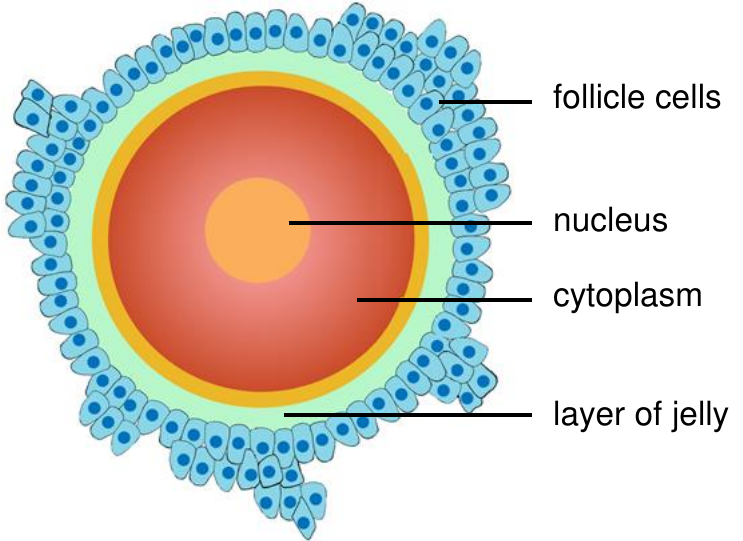
At the centre lies the nucleus, containing the genetic material with chromosomes. Surrounding the nucleus is a large amount of cytoplasm, which serves as a nutrient store for the developing embryo in the early stages after fertilisation.
The cytoplasm is enclosed by a protective jelly-like layer that helps cushion the egg and provides additional protection during the early stages of embryonic development. The outermost layer consists of follicle cells that originally supported the egg's development within the ovary. These cells continue to provide protection and nutrients even after the egg is released during ovulation.
This multi-layered structure reflects the egg's role not just in providing genetic material for the next generation, but also in nourishing and protecting the early embryo until it can establish its own support systems.
Summary
Key Points to Remember:
-
Gametogenesis is the production of sex cells (gametes) and includes both spermatogenesis (male) and oogenesis (female), both triggered by hormonal changes during puberty
-
Meiosis is crucial - it reduces chromosome numbers from diploid (46) to haploid (23), ensuring offspring have the correct number of chromosomes when sperm and egg combine
-
Sperm are built for movement - their streamlined structure with energy-producing mitochondria and a propelling tail allows them to swim towards the egg for fertilisation
-
Eggs are designed for nourishment - their large size and nutrient-rich cytoplasm provide everything needed to support early embryonic development
-
Production differs between sexes - males continuously produce millions of sperm, while females typically release just one mature egg per month during their reproductive years