Phototropism (Grade 12 NSC Matric Life Sciences): Revision Notes
📚Revision Notes
Phototropism
What is phototropism?
Note
Phototropism describes how plant parts grow in response to light coming from a specific direction. This fascinating response allows plants to orient themselves towards light sources, which is essential for their survival and growth.
When a plant stem receives light from one side only (called unilateral light), the stem will curve and grow towards that light source. This directional growth response is controlled by plant hormones called auxins.
How auxins control phototropic responses
Auxins are plant hormones produced at the growing tips of stems and shoots. These hormones play a crucial role in determining how plants respond to different lighting conditions.
When light comes from directly overhead
Note
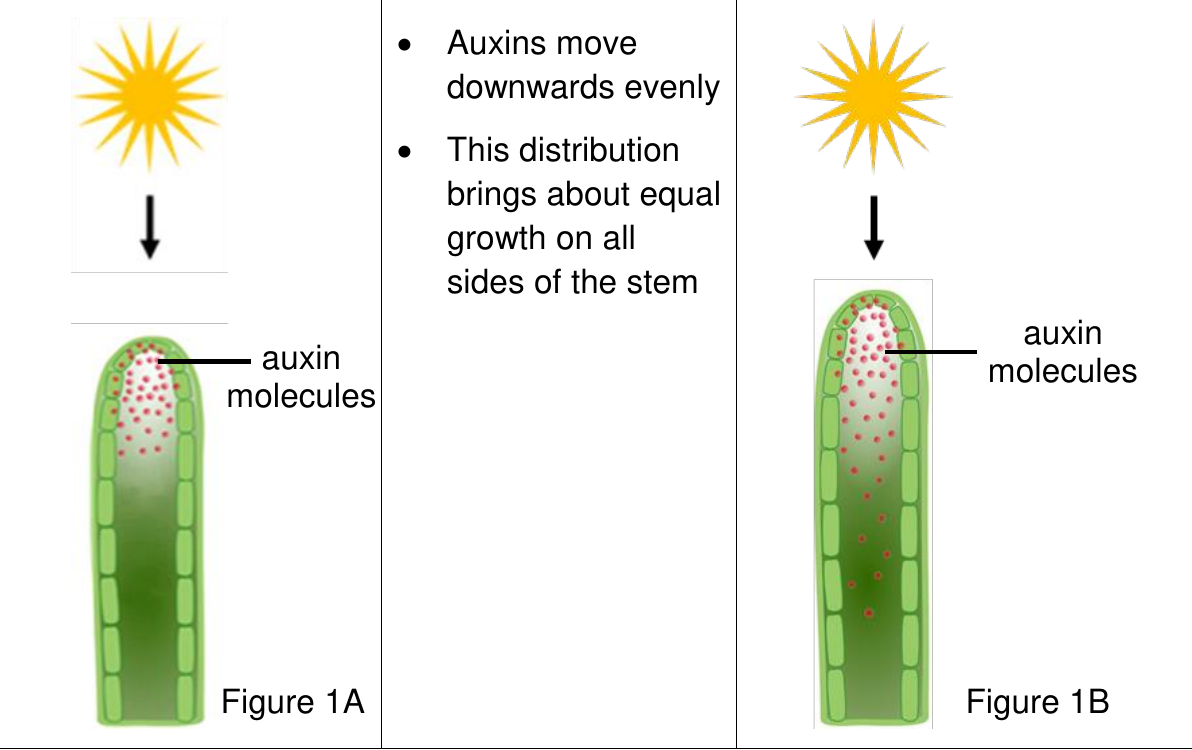
When sunlight shines directly from above, auxins are produced at the stem tip and move downward evenly throughout the stem. This balanced distribution of auxins results in equal growth on all sides of the stem, causing the plant to grow straight upward towards the light.
When light comes from one side (unilateral light)
The phototropic response becomes much more interesting when light comes from only one direction. Here's what happens step by step:
Note
The Phototropic Response Process:
- Auxin redistribution: Light affects auxin molecules by either destroying them or causing them to move away from the illuminated side
- Uneven auxin concentration: More auxins accumulate on the shaded (darker) side of the stem
- Differential growth: The higher concentration of auxins on the shaded side stimulates greater cell elongation on that side
- Bending response: Because the shaded side grows faster than the illuminated side, the stem bends towards the light source
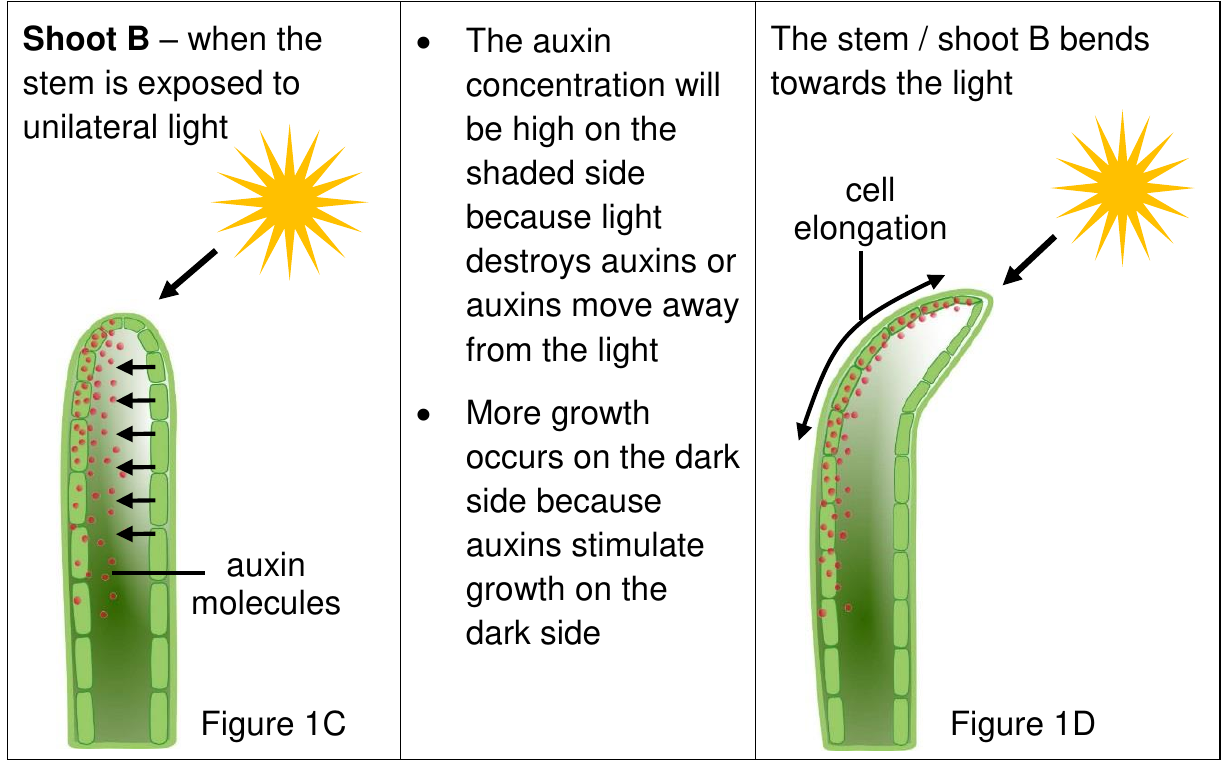
This mechanism ensures that the plant can redirect its growth to capture more light, even when the light source changes position.
Types of phototropic responses
Plants show different phototropic responses depending on which part we're looking at:
Note
Phototropic Response Types:
- Stems show positive phototropism: They bend and grow towards light sources
- Roots show negative phototropism: They grow away from light sources
This makes perfect sense when you think about it - stems need light for photosynthesis, while roots need to grow downward into the soil to find water and nutrients.
Why is phototropism beneficial for plants?
Phototropic responses provide several important advantages:
Note
Key Benefits of Phototropism:
- Better photosynthesis: By positioning leaves in favourable positions to receive maximum sunlight, plants can produce more glucose through photosynthesis
- Improved reproduction: Flowers that are properly positioned towards light are more easily noticed by pollinators
- Enhanced seed dispersal: Well-positioned plants have better opportunities for their seeds to be dispersed effectively
Experimental evidence for phototropism
Scientists have conducted clever experiments to prove that the growing tip of the plant is responsible for detecting light direction and controlling the phototropic response.
Example
Classic Phototropism Experiment:
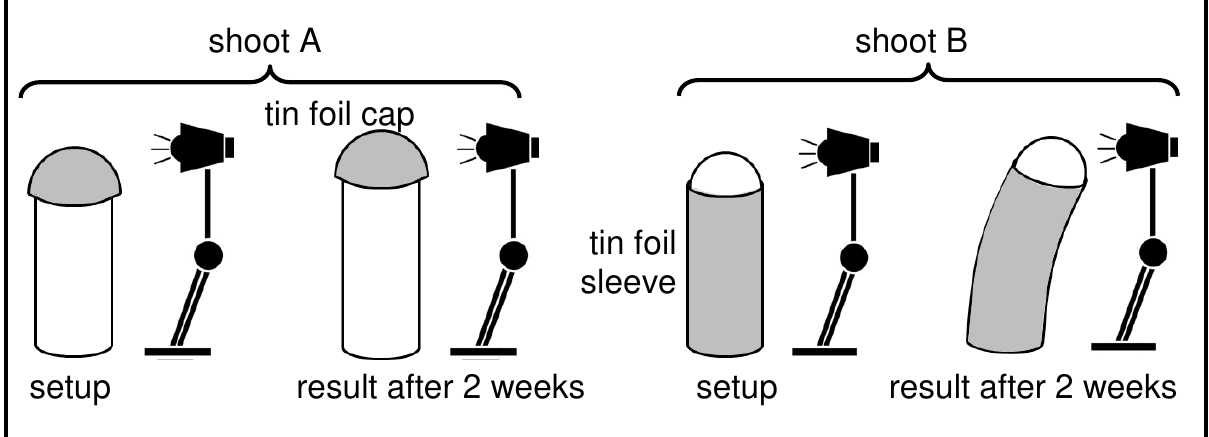
Researchers compared two identical plant shoots:
- Shoot A: Had its tip covered with a tin foil cap to block light detection
- Shoot B: Left uncovered as a control
Results after two weeks of exposure to light from one side:
- Shoot A (with foil cap): Continued growing straight up with no bending response
- Shoot B (control): Bent towards the light source as expected
Conclusion: This experiment demonstrates that the tip of the plant must be able to detect light in order for phototropism to occur.
When the tip is blocked, the plant cannot sense the direction of light and therefore cannot respond appropriately.
Common misconceptions to avoid
Important
Avoid These Common Mistakes:
-
Misconception: Plants bend towards light because light makes that side grow more
-
Reality: Plants bend because the shaded side grows more due to higher auxin concentration
-
Misconception: All parts of plants respond to light the same way
-
Reality: Stems are positively phototropic (grow towards light) while roots are negatively phototropic (grow away from light)
Remember!
Summary
Key Points to Remember:
- Phototropism is the directional growth response of plants to light stimuli
- Auxins are the key hormones that control phototropic responses by redistributing when exposed to unilateral light
- The shaded side of a stem grows faster due to higher auxin concentration, causing the stem to bend towards light
- Stems show positive phototropism (towards light) while roots show negative phototropism (away from light)
- The growing tip must be able to detect light for phototropism to occur, as proven by foil cap experiments