External and Internal Fertilisation (Grade 12 NSC Matric Life Sciences): Revision Notes
📚Revision Notes
External and Internal Fertilisation
What is fertilisation?
Fertilisation happens when male and female reproductive cells (gametes) join together to create a zygote, which develops into a new organism. This fundamental process can occur in two main ways in vertebrates: outside or inside the female's body. The location where fertilisation takes place has major implications for the survival strategies that animals use.
Note
The type of fertilisation strategy an animal uses affects everything from where they can live to how many offspring they produce and how much care those offspring will need to survive.
External fertilisation
External fertilisation takes place outside the female's body, typically in an aquatic environment. This method requires water as a medium for the sperm cells to swim and reach the egg cells.
Note
How External Fertilisation Works
Both males and females release their gametes directly into the water. The sperm must then swim through the water to find and fertilise the eggs. Because this happens in an open environment, huge numbers of gametes are released to increase the chances of successful fertilisation.
Characteristics of external fertilisation
Animals that use external fertilisation typically produce massive quantities of eggs and sperm.
Example
Real-World Example: Salmon Spawning
A single female salmon can release thousands of eggs during spawning. This strategy compensates for the high risk of gametes being lost or damaged in the external environment.

Important
Major Challenges of External Fertilisation
The developing embryos and young face high mortality rates because they are exposed to predators, environmental changes, and other dangers. Many eggs may never be fertilised, and those that are still face threats from the moment they begin developing.
Fish and amphibians are the main vertebrate groups that rely on external fertilisation. These animals have evolved specific behaviours and timing to maximise their reproductive success despite these challenges.
Internal fertilisation
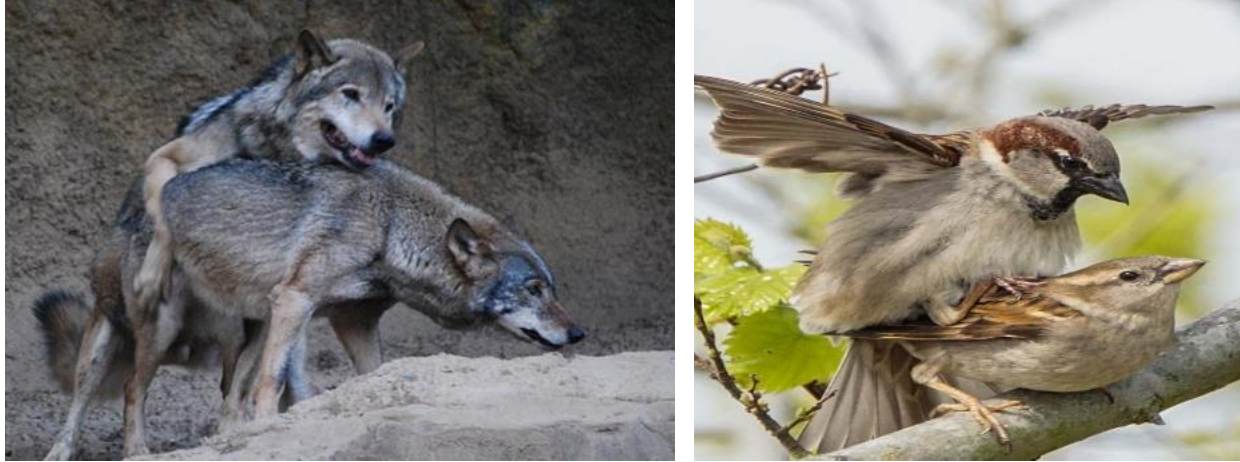
Internal fertilisation occurs inside the female's body, where sperm cells are delivered directly to the eggs. This method does not require water as a medium for fertilisation to occur.
Note
How Internal Fertilisation Works
Males transfer sperm into the female's reproductive system through specialised structures. The sperm then travel internally to reach the eggs, creating a much more controlled environment for fertilisation to take place.
Characteristics of internal fertilisation
Because fertilisation happens in a protected environment inside the female's body, fewer gametes are needed compared to external fertilisation. The eggs and developing embryos receive better protection from environmental hazards and predators.
Important
Key Advantages of Internal Fertilisation
This protection leads to significantly lower mortality rates among the young. The developing embryos may be further protected by hard shells (as in birds and reptiles) or by continued development inside the mother's body (as in most mammals). Many animals using internal fertilisation also provide extensive parental care after birth or hatching.
Reptiles, birds, and mammals are the main vertebrate groups that use internal fertilisation. This method allows these animals to reproduce successfully in terrestrial environments where water is not readily available.
Comparing external and internal fertilisation
The two fertilisation methods represent different evolutionary solutions to the challenge of reproduction:
Note
Water dependency: External fertilisation absolutely requires an aquatic environment, limiting these animals to water or very moist conditions during breeding. Internal fertilisation eliminates this requirement, allowing reproduction in dry terrestrial environments.
Note
Gamete production: External fertilisation requires the production of enormous numbers of eggs and sperm to overcome the low success rates in open water. Internal fertilisation allows animals to invest energy in producing fewer, higher-quality gametes since the success rate is much higher.
Note
Offspring survival: Externally fertilised eggs and young face high mortality rates due to exposure to predators, disease, and environmental hazards. Internally fertilised embryos enjoy much better protection, either through parental care, protective shells, or continued development inside the mother.
Note
Energy investment: While external fertilisation requires massive energy investment in gamete production, internal fertilisation shifts energy investment towards parental care and protection of fewer offspring.
Important developmental concepts
Understanding fertilisation methods helps explain different developmental strategies in vertebrates:
Yolk sac: This structure provides essential food reserves for developing embryos. In externally fertilised eggs, the yolk sac must contain enough nutrients for the entire development period since no additional nutrition comes from parents.
Precocial development: Young that hatch or are born well-developed, with open eyes and the ability to move and feed themselves independently. These offspring require minimal parental care and are common in animals with external fertilisation.
Altricial development: Young that hatch or are born in an underdeveloped state, unable to move, feed, or protect themselves. These offspring require extensive parental care and are more common in animals with internal fertilisation.
Parental care: The various ways parents protect, feed, and teach their young. This includes nest building, protection from predators, providing food, and teaching survival skills. The level of parental care directly impacts offspring survival rates and is generally higher in species with internal fertilisation.
Summary
Key Points to Remember:
-
External fertilisation requires water and produces many gametes with high mortality rates, while internal fertilisation needs no water and produces fewer gametes with better survival rates
-
Fish and amphibians typically use external fertilisation, whereas reptiles, birds, and mammals use internal fertilisation
-
The location of fertilisation affects everything from the number of offspring produced to the amount of parental care required
-
Precocial young are well-developed at birth/hatching while altricial young require extensive parental care
-
The yolk sac provides crucial nutrition for developing embryos, especially important in externally fertilised eggs