The Amniotic Egg (Grade 12 NSC Matric Life Sciences): Revision Notes
📚Revision Notes
The Amniotic Egg
Introduction to the amniotic egg
The amniotic egg represents a crucial evolutionary breakthrough that allowed vertebrates to successfully reproduce on land. This remarkable adaptation freed animals from their dependence on water for reproduction, enabling them to colonise terrestrial environments. Before this development, most animals had to return to aquatic environments to reproduce, but the amniotic egg provided a self-contained system that could support embryonic development in dry conditions.
Important
The amniotic egg was the key adaptation that allowed vertebrates to become truly terrestrial. Without this evolutionary innovation, land-dwelling reptiles, birds, and mammals as we know them today could not have evolved.
Structure and components of the amniotic egg
The amniotic egg is a complex structure that contains several essential components working together to support the developing embryo. Understanding each part and its function is key to appreciating how this adaptation revolutionised vertebrate reproduction.
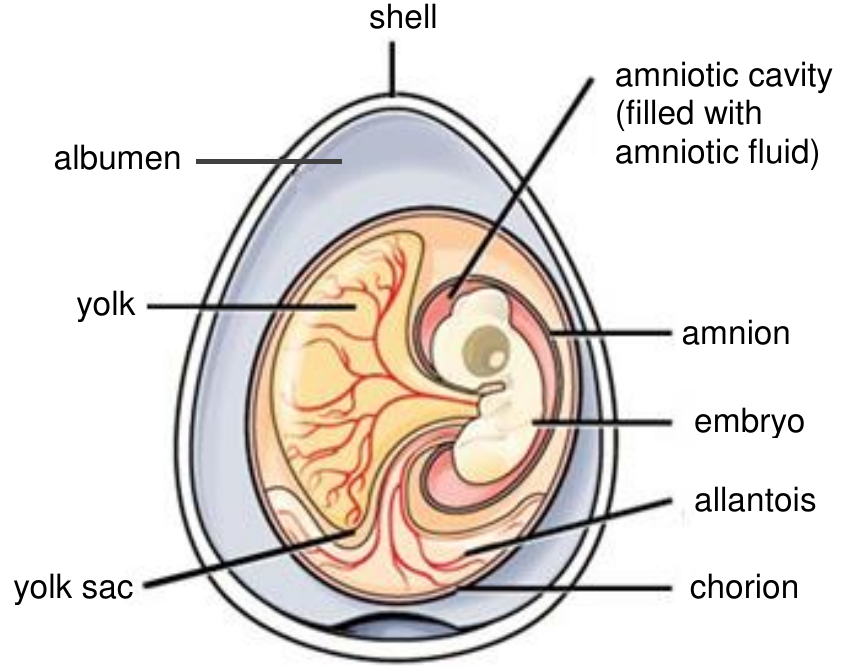
The developing embryo
At the centre of the amniotic egg lies the developing embryo, which will eventually grow into a fully formed organism. The embryo is surrounded by protective structures and membranes that create an ideal environment for its development.
Embryonic membranes
The amniotic egg contains three specialised embryonic membranes, each with distinct functions that support the growing embryo:
The amnion
The amnion forms a protective sac around the embryo and produces amniotic fluid. This fluid serves multiple critical functions:
- It acts as a shock absorber, cushioning the embryo against mechanical damage
- It helps regulate temperature, protecting the developing organism from harmful temperature fluctuations
- It prevents dehydration by maintaining a moist environment around the embryo
Note
The amniotic cavity filled with this fluid creates a miniature aquatic environment within the egg, essentially bringing the water environment that early vertebrates needed for reproduction into a portable, protective package.
The allantois
The allantois serves as the embryo's waste management and gas exchange system. Its primary functions include:
- Collecting and storing nitrogenous waste products produced by the developing embryo
- Facilitating the exchange of gases (oxygen and carbon dioxide) between the embryo and the external environment
Note
This membrane essentially acts as a primitive kidney and lung system for the developing organism, performing vital functions that will later be taken over by specialised organs.
The chorion
The chorion is the outermost embryonic membrane and plays different roles depending on the type of animal:
- In reptiles and birds (which have shelled eggs), the chorion enables gas exchange through the shell
- In mammals (which typically don't have shells), the chorion develops into part of the placenta, facilitating nutrient and waste exchange between mother and offspring
Important
The chorion's dual role demonstrates the evolutionary flexibility of embryonic membranes - the same structure can adapt to serve different reproductive strategies in different animal groups.
The yolk sac
The yolk sac contains the food reserves that nourish the developing embryo throughout its development. The amount of yolk present significantly affects the developmental strategy:
- Eggs with smaller yolk quantities typically result in offspring that hatch earlier but are less developed, requiring more parental care after hatching
- Eggs with larger yolk supplies support longer incubation periods, allowing offspring to develop more fully before hatching and reducing their dependence on parental care
Important
The yolk quantity represents an evolutionary trade-off: more yolk means longer development time but more independent offspring, while less yolk means quicker hatching but greater need for parental investment.
Additional structures
Albumen (egg white)
The albumen provides additional protein and water for the developing embryo, acting as an extra nutritional resource.
The shell
The hardened shell, whether calcareous (in birds) or leathery (in many reptiles), serves as the egg's primary defence system:
- It protects the developing embryo from physical damage and injury
- It prevents water loss while still allowing essential gas exchange to occur
- It provides structural support for the entire egg system
Note
The shell represents a remarkable engineering solution - it must be strong enough to protect the embryo, porous enough to allow gas exchange, yet weak enough for the fully developed animal to break through when ready to hatch.
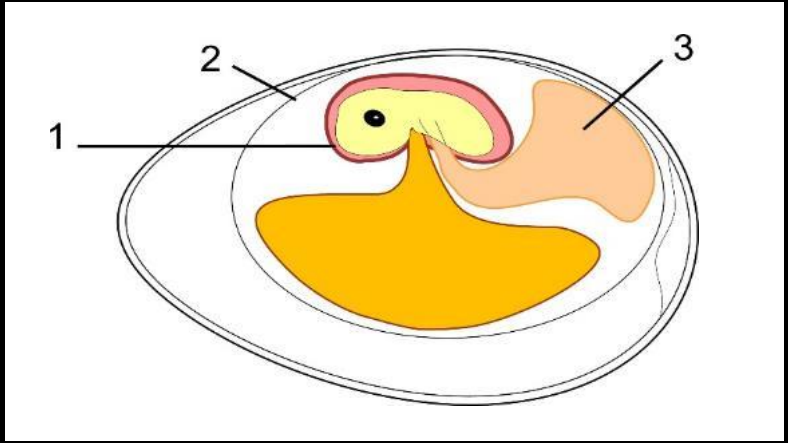
Evolutionary significance
The development of the amniotic egg was a game-changing adaptation that allowed vertebrates to fully exploit terrestrial environments. By creating a self-contained aquatic environment within a protective shell, these eggs eliminated the need for animals to return to water bodies for reproduction.
This independence from external water sources opened up vast new habitats and evolutionary possibilities for vertebrates, contributing to the incredible diversity of reptiles, birds, and mammals we see today.
Important
The amniotic egg demonstrates how evolution can solve complex environmental challenges through innovative biological engineering, creating portable life-support systems that have proven successful for millions of years.
Summary
Key Points to Remember:
- The amniotic egg was a major evolutionary adaptation that freed vertebrates from water-dependent reproduction
- The egg contains four key embryonic structures: the amnion (protective fluid-filled sac), allantois (waste removal and gas exchange), chorion (outer membrane for gas exchange), and yolk sac (food storage)
- The amnion creates a miniature aquatic environment within the egg, protecting the embryo from injury, temperature changes, and dehydration
- The amount of yolk determines how developed offspring are when they hatch and how much parental care they need
- This adaptation allowed vertebrates to successfully colonise land environments and led to the evolution of reptiles, birds, and mammals