The Reproductive Glands (Grade 12 NSC Matric Life Sciences): Revision Notes
📚Revision Notes
The Reproductive Glands
Introduction to reproductive glands
The reproductive glands play a crucial role in human biology by producing hormones that are essential for reproduction and the development of secondary sexual characteristics during puberty. These glands work as part of the endocrine system to regulate reproductive functions and sexual development in both males and females.
In females, the reproductive glands are the ovaries, while in males, they are the testes. Each of these glands produces specific hormones that have distinct functions in the body's reproductive processes.
Note
The reproductive system demonstrates the interconnected nature of the endocrine system, where multiple glands work together to coordinate complex biological processes.
Female reproductive glands - the ovaries
The ovaries are the female reproductive glands that function under the control of the pituitary gland. When follicle-stimulating hormone (FSH) is released from the pituitary gland, it stimulates the ovaries to produce their hormones. The ovaries produce two main hormones that work together to regulate the female reproductive system.
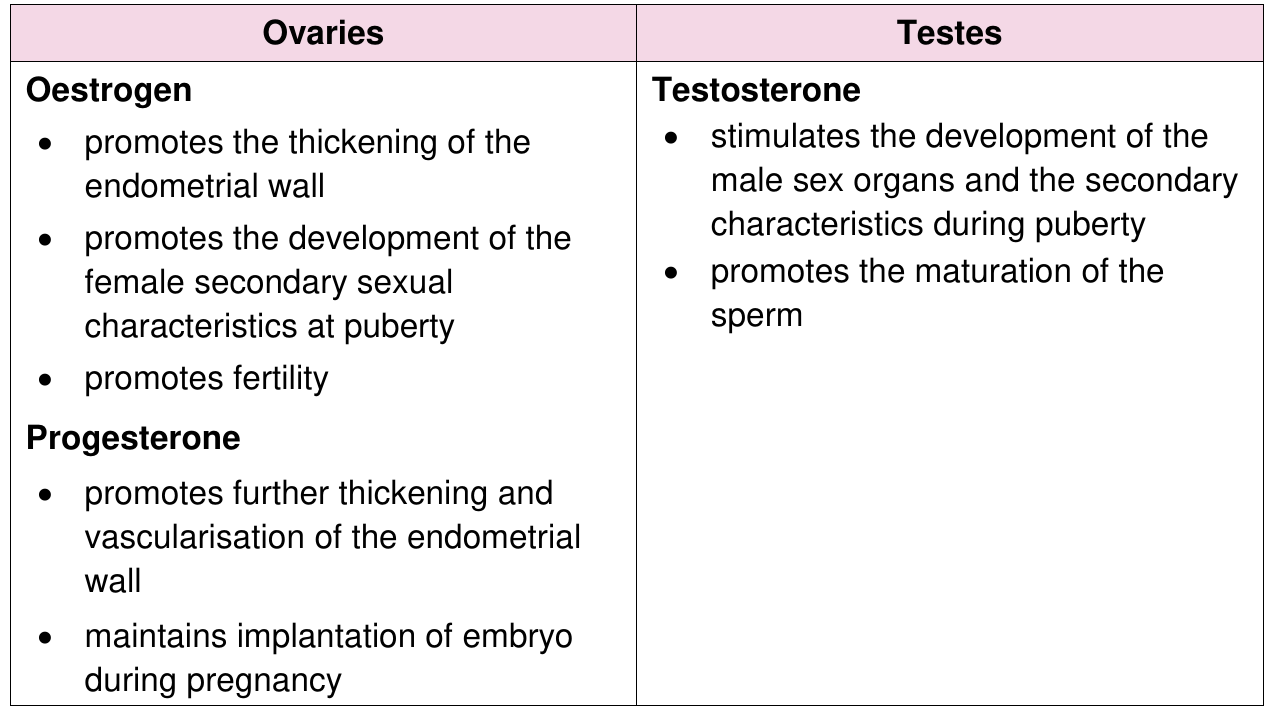
Oestrogen
Oestrogen is one of the primary female reproductive hormones produced by the ovaries. This hormone has several important functions in the female body:
- Endometrial development: Oestrogen helps thicken the lining of the uterus (endometrium), preparing it for potential pregnancy
- Secondary sexual characteristics: During puberty, oestrogen triggers the development of female secondary sexual characteristics such as breast development, widening of hips, and changes in body composition
- Fertility regulation: Oestrogen plays a key role in maintaining female fertility and reproductive capacity
Progesterone
Progesterone is the second major hormone produced by the ovaries. It works alongside oestrogen but has distinct functions:
- Further endometrial preparation: Progesterone causes additional thickening and increased blood vessel formation (vascularisation) in the endometrial lining
- Pregnancy maintenance: During pregnancy, progesterone is essential for maintaining the implantation of the embryo and supporting early pregnancy development
Example
Hormone Interaction Example: Preparing for Pregnancy
Step 1: FSH from the pituitary gland stimulates the ovaries Step 2: Oestrogen is released, thickening the endometrium Step 3: Progesterone is released, further preparing the endometrium with increased blood vessels Step 4: The endometrium is now ready for potential embryo implantation
Male reproductive glands - the testes
The testes are the male reproductive glands responsible for producing the primary male sex hormone. Within the testes, specialised cells called Leydig cells are responsible for hormone production. These cells secrete testosterone, which controls male reproductive functions and development.
Note
Unlike the ovaries which produce two main hormones, the testes primarily focus on producing one major hormone - testosterone - though they also produce small amounts of other hormones.
Testosterone
Testosterone is the main male reproductive hormone with several critical functions:
- Male organ development: Testosterone triggers the growth and development of male reproductive organs and secondary sexual characteristics during puberty, including voice changes, muscle development, and facial hair growth
- Sperm maturation: This hormone promotes the proper development and maturation of sperm cells, which is essential for male fertility
Important
Critical Distinction: Remember that FSH controls ovarian function, but testosterone production in males is controlled by luteinising hormone (LH) from the pituitary gland, not FSH.
Exam tips for NSC students
When studying reproductive glands, remember these key points for your exams:
- Hormone-gland relationships: Always connect each hormone to its specific gland (ovaries produce oestrogen and progesterone; testes produce testosterone)
- Function clarity: Be able to distinguish between the different functions of each hormone - don't confuse oestrogen and progesterone functions
- Control mechanisms: Remember that FSH from the pituitary gland controls ovarian function, showing the interconnected nature of the endocrine system
- Terminology precision: Use correct scientific terms like "endometrium" instead of just saying "uterus lining"
Important
Common Exam Mistakes to Avoid:
-
Misconception: Only one hormone controls all reproductive functions in each sex Reality: Females have two main reproductive hormones (oestrogen and progesterone) that work together
-
Misconception: Reproductive hormones only function during reproduction Reality: These hormones are essential for normal development during puberty and ongoing body maintenance
Summary
Key Points to Remember:
- The ovaries produce two hormones (oestrogen and progesterone) while the testes produce one main hormone (testosterone)
- FSH from the pituitary gland stimulates the ovaries, showing how different endocrine glands work together
- Each reproductive hormone has specific functions - oestrogen focuses on development and fertility, progesterone on pregnancy preparation and maintenance, and testosterone on male development and sperm production
- Reproductive glands are essential not only for reproduction but also for the development of secondary sexual characteristics during puberty
- Leydig cells in the testes are the specific cells responsible for testosterone production