Quality Management (HSC SSCE Business Studies): Revision Notes
📚Revision Notes
Quality Management
Quality management is a fundamental operations strategy that ensures businesses deliver products and services that meet customer expectations consistently. Understanding the different approaches to quality management will help you analyse how businesses maintain competitive advantage through operational excellence.
What is quality management?
Quality refers to the degree of excellence of a product or service and how well it fulfils its intended purpose. Quality management encompasses all the processes and systems a business implements to ensure its products or services are consistent, reliable, safe and fit for purpose.
Modern businesses typically adopt three complementary approaches to quality management:
- Quality control – identifying and correcting defects through inspection and testing
- Quality assurance – implementing systems to prevent defects before they occur
- Quality improvement – continuously enhancing processes and outcomes over time
Note
Each approach serves a distinct purpose in maintaining and improving product quality, and successful businesses often combine all three methods to create a comprehensive quality management system.
Quality control (QC)
Understanding quality control
Quality control (QC) is a reactive approach that involves conducting inspections at various stages of the production process to identify problems and defects. The goal is to catch issues before products reach customers, thereby reducing the number of faulty goods in the marketplace.
Implementing effective quality control requires several key steps:
- Establishing quality standards – The business must first define clear, measurable standards that products or processes must meet. These standards should apply consistently across all operations to ensure uniform quality.
- Designing appropriate tests – Once standards are set, the business develops specific tests and inspection methods to measure whether products meet those standards. These tests need to be reliable and repeatable.
- Setting quality targets – Predetermined benchmarks establish acceptable performance levels. For example, a manufacturer might set a target of no more than defective units.
- Taking corrective action – When products fail to meet standards, the business must investigate the causes and implement solutions to prevent recurrence.
Important
While quality control is essential for catching defects, it has significant limitations. Because it's reactive rather than proactive, QC identifies problems after they occur rather than preventing them. This means resources may be wasted on producing defective goods that must be reworked or discarded. Therefore, quality control works best when balanced with more proactive approaches like quality assurance.
Inspection methods
A common quality control technique is attribute inspection, which determines whether a product passes or fails specific criteria. This involves asking simple yes/no questions about product features:
- Does an electrical switch turn on and off properly?
- Does a door hinge open and close smoothly?
- Does a container have any leaks?
In service businesses, quality control may involve inspecting employee performance. For instance:
- Banks might assess teller accuracy, courtesy and transaction speed
- Retailers could monitor checkout operator scanning rates and customer service
- Restaurants may evaluate food presentation, taste and service timing
Note
Quality control effectiveness depends on having well-trained staff who understand and can apply quality standards throughout their work. Without proper training, even the best quality control systems will fail to deliver results.
Business example: Yakult Australia
Example
Business Application: Yakult Australia's Quality Control System
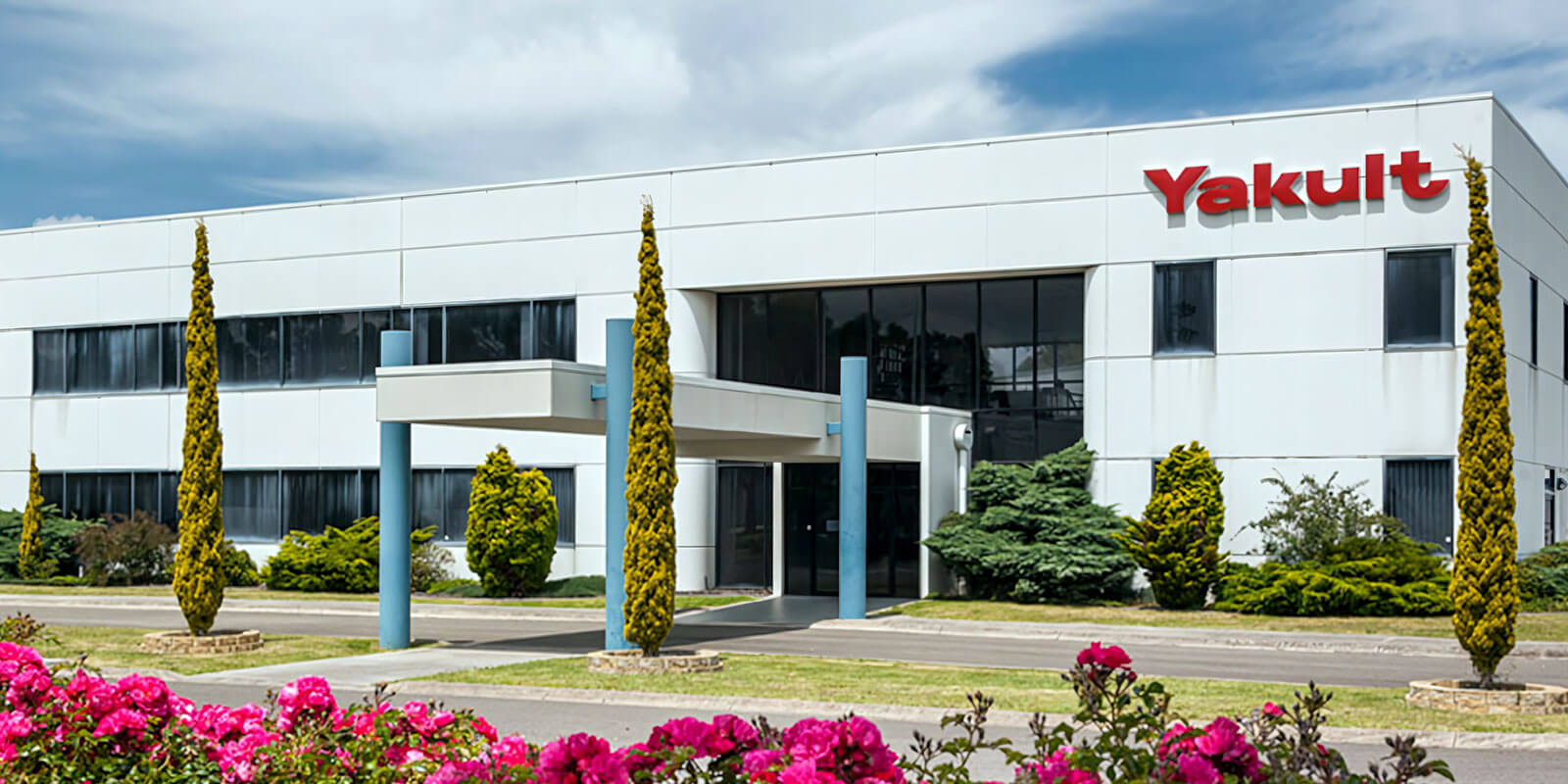
Yakult Australia demonstrates how manufacturing businesses implement comprehensive quality control systems. The company produces fermented milk beverages containing probiotic bacteria that support digestive health.
Yakult's quality management approach includes:
- International standards compliance – The company follows ISO 9001:2015 standards, ensuring it meets globally recognised food manufacturing requirements
- Regular auditing – All company procedures undergo frequent audits to verify compliance
- Random inspection – Production bottles are randomly checked for printing errors and seal quality
- Sample testing – Yakult samples are regularly collected and tested in an onsite quality control area for taste, composition and safety
This multi-layered approach ensures consistent product quality and demonstrates how quality control integrates with broader quality management systems.
Quality assurance (QA)
Understanding quality assurance
Quality assurance (QA) takes a proactive approach to quality by building systems that prevent defects from occurring in the first place. Rather than waiting to inspect finished products, quality assurance emphasises designing quality into products and processes from the start.
The key difference between quality control and quality assurance is timing and focus:
- Quality control is reactive – it finds and fixes problems after they occur
- Quality assurance is proactive – it prevents problems from happening
Two fundamental concepts underpin quality assurance:
Fitness for purpose refers to how well a product performs its intended function. A product with high fitness for purpose reliably does what it's designed to do, meeting customer expectations for performance, durability and utility. For example, waterproof boots should keep feet dry in wet conditions, and a refrigerator should maintain appropriate temperatures consistently.
Right first time is the principle that products should be manufactured correctly on the first attempt, without requiring rework. This approach:
- Reduces waste of time, materials and labour
- Lowers production costs
- Improves efficiency
- Enhances customer satisfaction
Note
When businesses achieve "right first time" production, they eliminate the need for inspection, rework and corrections, making operations significantly more efficient and cost-effective.
International quality standards
Globalisation has driven the development of universal quality standards that businesses worldwide can adopt. These standards ensure that products from different countries meeting the same certification achieve comparable quality levels.
The ISO 9001 series represents the most widely recognised international quality certification system. "ISO" stands for International Organisation for Standardisation, which develops and publishes these voluntary standards.
Benefits of ISO 9001 certification include:
- Enhanced credibility – Certification demonstrates commitment to quality to customers, suppliers and stakeholders
- Competitive advantage – Many businesses prefer or require suppliers to hold ISO certification
- Improved consistency – Standardised processes lead to more reliable outcomes
- Global compatibility – Products meeting ISO standards can compete effectively in international markets
- Systematic approach – Certification requires documented quality management systems
Note
The distinctive "five ticks" Quality Endorsed Company Standards Mark makes ISO 9001 certification easily recognisable, providing immediate visual confirmation of a business's quality credentials.
While ISO standards are voluntary, many businesses pursue certification to strengthen their domestic and international competitiveness, as customers increasingly expect suppliers to meet recognised quality standards.
Business example: Coco & Lucas' Kitchen
Example
Business Application: Coco & Lucas' Kitchen Quality Assurance
Coco & Lucas' Kitchen illustrates how Australian businesses can differentiate themselves through quality assurance focused on product design and ingredient selection. The company identified a market opportunity for high-quality, healthy ready-made meals for children aged to years.
The business built quality into its product design through:
Product features:
- Gluten and lactose free formulations
- All-natural ingredients with no preservatives
- No artificial flavours or colours
- Handmade production processes
- Australian meat content
- Recyclable packaging
- Non-genetically modified ingredients
- Over protein content
Production approach:
- Handmade preparation ensuring attention to detail
- Local ingredient sourcing supporting quality control
- Frozen products preserving nutritional value
- Purpose-designed packaging suitable for school lunches
This comprehensive approach to quality assurance earned Coco & Lucas' Kitchen recognition at the World Food Innovation Awards, including winning "Best new brand or business." The company's success demonstrates how designing quality into products from the outset creates competitive advantage, particularly when targeting specific market segments with particular needs (in this case, children with food intolerances).
Quality improvement (QI)
Understanding continuous improvement
Quality improvement (QI) represents the most proactive approach to quality management, emphasising ongoing enhancement of products, services and processes. Rather than simply maintaining current quality levels, quality improvement seeks to continuously raise standards over time.
Continuous improvement embodies the philosophy that no process is ever perfect – there are always opportunities to make operations more efficient, effective or customer-focused. This approach recognises that improvement can happen in two ways:
- Incremental improvements – Small, gradual enhancements made regularly over time. These might include minor adjustments to processes, small efficiency gains or modest product refinements.
- Breakthrough improvements – Major innovations or changes that dramatically enhance performance all at once. These might involve new technology, completely redesigned processes or revolutionary product features.
A critical element of successful continuous improvement is employee involvement. When businesses empower all staff members to identify improvement opportunities and suggest changes, several benefits emerge:
- Broader perspective – Employees working directly with processes often spot inefficiencies managers might miss
- Increased ownership – Staff who contribute ideas feel more invested in improvement outcomes
- Multiple improvements simultaneously – Engaging the entire workforce means many processes can be enhanced at once
- Cultural change – A focus on improvement becomes embedded in organisational culture
Important
Continuous improvement transforms quality management from something imposed by management into a shared responsibility across the organisation. This cultural shift is essential for long-term quality management success.
Six Sigma methodology
Six Sigma is a measurement-based approach to quality improvement that aims to achieve near-perfect operations through systematic defect elimination. Originally developed by Motorola in the mid-s, Six Sigma has been adopted by businesses worldwide seeking operational excellence.
The name "Six Sigma" refers to a statistical measure of variation. A process operating at Six Sigma produces only defective parts per million products, representing a perfection rate. This extraordinarily high standard requires rigorous process control and continuous monitoring.
Key features of Six Sigma:
- Statistical measurement – Uses data analysis to identify and measure process variations
- Systematic problem-solving – Follows structured methodologies to address quality issues
- Employee empowerment – Trains staff at all levels to contribute to improvement
- Whole-business commitment – Requires organisation-wide dedication to quality
- Continuous improvement focus – Treats quality enhancement as an ongoing process
The DMAIC process:
Important
The DMAIC Framework
Six Sigma employs a five-step problem-solving framework called DMAIC:
-
Define – Establish project goals that will satisfy customer requirements. Clarify what problem needs solving and what success looks like.
-
Measure – Identify Critical To Quality (CTQ) characteristics – those features most important to customers. Measure current production capabilities and processes, and assess risks.
-
Analyse – Investigate the root causes of defects. Use statistical tools to understand why problems occur and where variations arise.
-
Improve – Propose and implement solutions to reduce or eliminate defects. Test changes and verify improvements.
-
Control – Monitor process performance to ensure defects remain reduced or eliminated. Establish ongoing controls to maintain gains.
This structured approach ensures systematic problem-solving rather than ad-hoc fixes, leading to sustainable quality improvements.
Six Sigma training levels:
Businesses typically establish a hierarchy of trained personnel:
- Black belts – Expert project leaders who manage major improvement initiatives
- Green belts – Trained project leaders who work on smaller-scale improvements
- Yellow belts – Team leaders with basic problem-solving skills who support improvement projects
- Project champions – Managers who provide resources and support for improvement initiatives
Note
This training structure ensures businesses have the internal capability to drive continuous improvement without relying entirely on external consultants.
Business example: Boral
Example
Business Application: Boral's Six Sigma Implementation
Boral Limited, a major Australian construction materials and building products company, provides an excellent case study of Six Sigma implementation. With almost $5 billion in annual sales, over employees and operating sites, Boral needed systematic approaches to improve efficiency across its large-scale operations.
Implementation:
In , Boral introduced Six Sigma throughout its construction materials division across Victoria, New South Wales, the ACT and Tasmania. The company combined Six Sigma with lean management and continuous improvement principles.
Results achieved:
- First-year profit impact – The NSW business achieved $5 million in profit improvements during the first year of implementation
- Cost reduction identification – By , Boral identified $45 million worth of cost reduction opportunities
- Sustained benefits – The company predicted these improvements would deliver benefits over three years
- Ongoing commitment – Boral continues using Six Sigma alongside other improvement methodologies
Practical applications:
Boral's black belts investigated operational processes to identify problems and variations. Two specific examples illustrate Six Sigma in action:
Conveyor system blockages:
Problem – Unplanned production stoppages occurred when materials became trapped on conveyor systems, causing blockages and downtime.
Solution – The team installed early-warning equipment to detect potential blockages. They trained maintenance and operational staff in problem prevention and response. This substantially reduced unplanned downtime.
Concrete strength variation:
Problem – Analysis revealed inconsistent concrete strength after pouring from trucks.
Solution – Statistical analysis identified sources of variation in the pouring process. The team modified procedures to achieve more consistent results, improving product reliability.
As Boral's Six Sigma champion John Worden explained, "We look for sources of variation and identify ways to eliminate them or, if that is not possible, bring them under control." This approach exemplifies how Six Sigma methodology translates into practical operational improvements.
Tony Charnock, Regional General Manager, emphasised the ongoing nature of improvement: "Once you start making improvements, new ones keep presenting themselves." This reflects the continuous improvement philosophy central to quality management.
Exam guidance
Summary
Exam Strategy: Analysing Quality Management Questions
When analysing quality management in exam questions, consider:
For "explain" questions:
- Define the specific quality approach (QC, QA or QI)
- Describe how it works in practice
- Use business examples to illustrate your points
For "analyse" questions:
- Identify which quality approach is being used
- Examine how it addresses specific quality challenges
- Discuss advantages and limitations
- Link to business objectives like cost reduction or customer satisfaction
For "evaluate" or "assess" questions:
- Compare different quality management approaches
- Consider appropriateness for different business contexts
- Weigh up benefits against costs or challenges
- Make a judgment about effectiveness
- Support conclusions with evidence from case studies
Common command word requirements:
- Identify – Name the quality management approach
- Outline – Briefly describe key features
- Explain – Show how and why it works
- Analyse – Break down components and examine relationships
- Evaluate – Make judgments about effectiveness with supporting evidence
Always link quality management strategies to business objectives such as:
- Reducing costs through waste elimination
- Improving customer satisfaction and retention
- Enhancing competitive advantage
- Meeting legal and regulatory requirements
- Building reputation and brand value
Remember!
Key points
Summary
Essential Concepts to Remember:
- Quality management encompasses all processes ensuring product consistency, reliability, safety and fitness for purpose
- Quality control (QC) is reactive – it uses inspections to identify and correct defects after they occur
- Quality assurance (QA) is proactive – it builds quality into design and processes to prevent defects
- Quality improvement (QI) focuses on continuous enhancement through employee involvement and systematic methodologies
- Six Sigma aims for perfection ( defects per million) using the DMAIC process (Define, Measure, Analyse, Improve, Control)
- Successful businesses typically combine all three approaches (QC, QA and QI) for comprehensive quality management
Key terms
Summary
Critical Terminology:
- Quality management – processes ensuring consistency, reliability, safety and fitness of purpose
- Quality control (QC) – inspections at production stages to identify defects
- Quality assurance (QA) – systems ensuring standards are achieved in production
- Continuous improvement – ongoing commitment to enhancing goods and services
- Fitness for purpose – how well a product performs its intended function
- Right first time – manufacturing products correctly on first attempt without rework
- ISO 9001 – internationally recognised quality management system certification
- Attribute inspection – determining whether products pass or fail specific criteria
Critical frameworks
Summary
DMAIC Problem-Solving Process:
- Define project goals
- Measure critical characteristics
- Analyse causes of defects
- Improve processes
- Control performance
Six Sigma Perfection Rate:
- Target: defects per million products
- Equivalent to: perfection