Buffers (HSC SSCE Chemistry): Revision Notes
📚Revision Notes
Buffers
Introduction
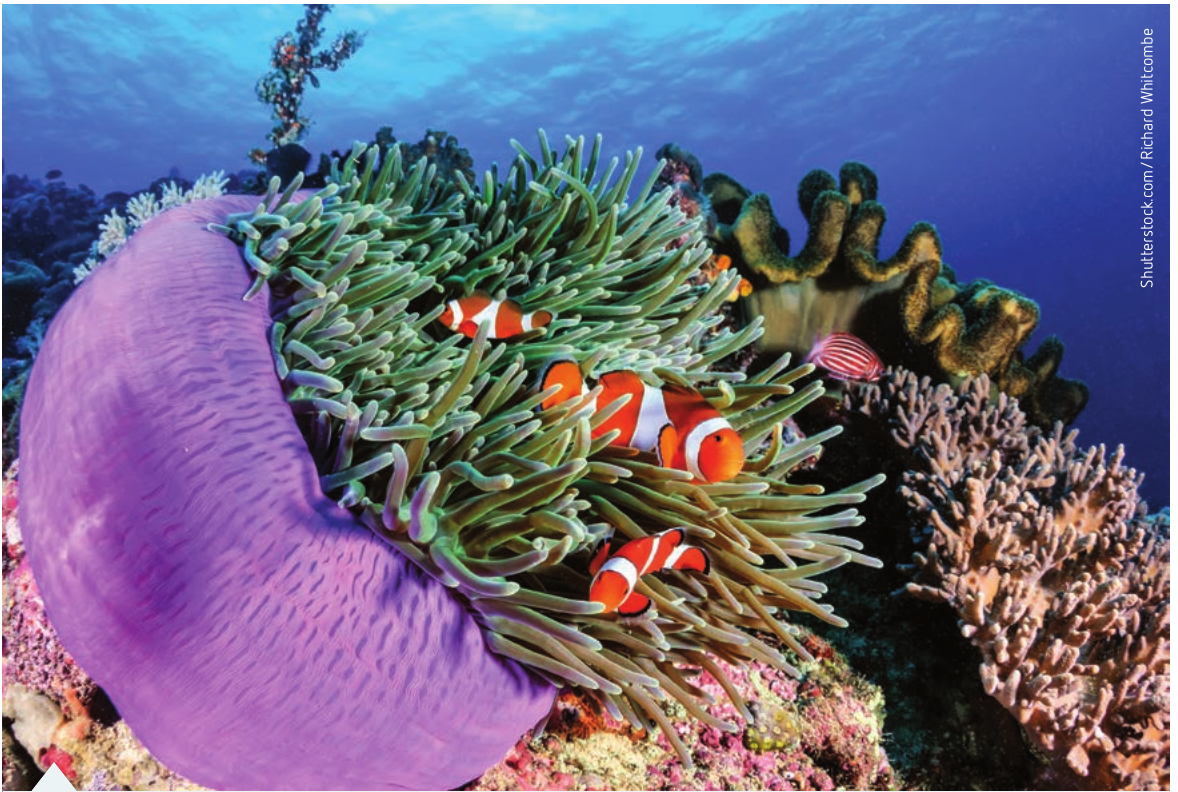
Maintaining the right conditions in different environments is essential for the organisms living there. Factors such as pH, ion concentration, and temperature must be kept at suitable levels. In natural environments, these conditions determine which organisms can survive. For example, freshwater fish like the Murray cod need water with low salt concentrations, whilst marine fish such as clownfish require higher salt concentrations. Similarly, keeping biological systems balanced is crucial for maintaining the health of organisms.
Note
Buffers play a vital role in maintaining optimal pH levels in natural environments and biological systems. They are also important in many industries, including pharmaceuticals, fermentation, food production, dyeing, printing, and electroplating.
What is a buffer?
A buffer is a solution containing a weak acid and its conjugate base (or a weak base and its conjugate acid) that resists changes in pH when small amounts of acid or base are added. This resistance to pH change occurs because of the equilibrium established between the weak acid (or base) and its conjugate partner.
When an acid or base is added to a buffer solution, the equilibrium shifts to counteract the addition. The concentration of hydronium ions () returns to close to its original value, and therefore the pH remains relatively constant.
Note
A common example of a buffer is a solution containing carbonic acid and sodium hydrogen carbonate ().
How buffers work
Equilibrium mechanism
Buffers work based on the equilibrium between a weak acid and its conjugate base. Consider the general equilibrium:
In this system, HA represents the weak acid and A⁻ represents the conjugate base.
Adding a strong acid
When a strong acid is added to the buffer, it increases the concentration of hydronium ions (). According to Le Chatelier's principle, the extra pushes the equilibrium to the left. This shift partially reduces the concentration of , bringing the pH back towards its original value.
Adding a strong base
When a strong base (such as ) is added, it reacts with the hydronium ions present. The system opposes this change by shifting to the right to produce more . This decreases the pH back towards the original value.
Important
In both cases, the buffer's equilibrium system counteracts the change, maintaining a relatively constant pH. This is the fundamental mechanism by which all buffers operate.
Factors determining buffer pH
The pH of a buffer solution is determined by two key factors:
- The equilibrium constant () of the weak acid: This indicates the strength of the weak acid and its tendency to donate protons.
- The ratio of conjugate base [] to weak acid [HA] in solution: This ratio determines the position of equilibrium.
When a buffer has more acid than base, more ions are present and the pH is lower.
Important
Critical relationship: When the concentrations of and HA are equal, then equals and the pH equals .
The pH is maintained by manipulating the proportion of weak base () and weak acid (HA) in solution. As long as the ratio is between and , the pH stays within 1 unit and the solution is effectively buffered.
Buffer capacity
Buffer capacity is the amount of acid or base that can be added to a buffer solution without causing a significant change in pH.
Maximum buffer capacity
The buffer capacity is greatest when there are equal numbers of moles of the weak acid and the conjugate base. This is optimal because the buffer can effectively counteract the addition of both acids and bases.
Effect of concentration
Buffer capacity is also affected by the total amount of weak acid and conjugate base present. The more of each component present in the solution, the greater the buffer capacity. This is because there are more reactant and product molecules available, allowing both the forward and reverse reactions to occur to a greater extent to counteract pH changes.
Note
Think of buffer capacity like a reservoir: the larger the reservoir (higher concentrations of both components), the more water it can absorb or release (acids or bases added) without significantly changing its level (pH).
Investigation 7.9: Effect of buffers
This investigation compares the behaviour of a buffered solution with an unbuffered solution when acids and bases are added.
Aim
To compare the behaviour of a buffered solution with an unbuffered solution.
Materials
- of acetic acid ()
- of sodium acetate ()
- of hydrochloric acid (HCl)
- of sodium hydroxide (NaOH)
- Distilled water
- beakers
- measuring cylinder
- Stirring rod
- plastic droppers
- Universal indicator and colour chart
- Safety glasses
- Disposable gloves and an apron
Risk assessment
| What are the risks in doing this investigation? | How can you manage these risks to stay safe? |
|---|---|
| Chemicals may splash onto your skin or into your eyes | Wear safety glasses and wash your hands at the end of the experiment |
| HCl is corrosive to skin and clothes | Wear gloves and an apron |
| NaOH is corrosive | Wear gloves and an apron |
Method
- Measure of acetic acid and pour it into a clean, dry beaker.
- Measure of sodium acetate and add this to the acetic acid in the beaker.
- Use a measuring cylinder to measure of this solution into two beakers. Discard the remainder.
- Add five drops of universal indicator to both beakers. Record the colour, and therefore pH, of the solutions. Label these beakers 'Buffered solution'.
- Into a fourth beaker, add of distilled water.
- Add 10 drops of universal indicator to the water.
- Add hydrochloric acid drop by drop to the distilled water until the colour is the same as the buffered solution.
- Use a measuring cylinder to measure of the solution from step 7 into two beakers and discard the remainder. Label these beakers 'Unbuffered solution'. Record the colour of these solutions.
- To one of the buffered solutions add HCl one drop at a time until 40 drops have been added. Stir the solution between each drop.
- Record the colour and pH of the resultant solution.
- Repeat steps 9 and 10 for one of the unbuffered beakers.
- Repeat steps 9-11 with the remaining beakers, adding NaOH instead of HCl.
Results table
| Beaker | Initial colour | Initial pH | Final colour | Final pH | Change in pH |
|---|---|---|---|---|---|
| Buffered solution + HCl | |||||
| Buffered solution + NaOH | |||||
| Unbuffered solution + HCl | |||||
| Unbuffered solution + NaOH |
Expected observations
Note
The buffered solution should show minimal pH change when acid or base is added, whilst the unbuffered solution will show significant pH changes. This demonstrates the buffer's ability to resist pH changes through equilibrium shifts that counteract the additions.
Buffering in the environment
Ocean water buffering
With increasing carbon dioxide levels in the atmosphere, there is major concern that oceans and soil are being acidified. In ocean water, carbon dioxide is found in higher concentrations than other non-polar gases because it reacts with water. The changes in pH are significant and are altering the thickness of shells of aquatic organisms and their ability to take up calcium.
In seawater, the buffer system uses bicarbonate and carbonate ions. The bicarbonate ion () acts as the weak acid and the carbonate ion () acts as the conjugate base. This establishes the following equilibrium:
Response to acidification
When acid is added to natural bodies of water, the concentration of hydronium ions increases. According to Le Chatelier's principle, this causes the reverse reaction to be favoured, counteracting the change. As the reverse reaction consumes hydronium ions, their concentration decreases, meaning the pH remains close to its original value despite the addition of acid.
Note
The breakdown of organic matter and fish waste also causes water to become more acidic, but the buffer system counteracts these changes.
Response to alkaline additions
Calcium and magnesium ions from sources such as shells and mineral runoff from surrounding soil can make water more alkaline. When a base is added to natural bodies of water, it reacts with hydronium ions, neutralising them and decreasing their concentration. According to Le Chatelier's principle, the forward reaction is favoured to counteract this change. Since the forward reaction produces hydronium ions, the pH remains close to its original value despite the addition of base.
Optimal conditions
Important
Natural seawater has a pH of . At this pH, there are approximately equal amounts of bicarbonate and carbonate ions. This is the ideal situation because it allows the buffer to effectively counteract the addition of both acids and bases, providing maximum buffer capacity.
Soil buffering
pH plays a critical role in soils since most plants grow best in a pH range of . Acid rain can lead to acidification of soil, leaching away beneficial nutrients and killing beneficial bacteria responsible for nitrogen fixation and the decomposition of organic matter. The minerals and organic matter in soil act as natural buffers to help maintain optimal pH levels.
Buffering in biological systems
The pH of many biological systems is maintained within narrow ranges by buffers. The internal pH of most living cells is close to . These carefully controlled pH levels are essential for proper cell function and enzyme activity.
Blood pH regulation
Important
The pH range for human blood is . This narrow range must be maintained for proper physiological function.
The main buffer system in blood is the carbonic acid/hydrogen carbonate ion system:
How the blood buffer works
When blood becomes too acidic, the reverse reaction occurs to reduce the excess . When blood becomes too basic, the forward reaction occurs to increase the concentration to neutralise the excess base. This equilibrium system maintains blood pH within its critical narrow range.
Carbon dioxide transport
This buffer system is also involved in transporting waste carbon dioxide from cells. Carbon dioxide is a clear, odourless gas produced in every cell in the body during cellular respiration. This carbon dioxide must be transported to the lungs for removal.
Dissolution and conversion
Carbon dioxide dissolves in blood, which is an aqueous medium:
In enzyme-catalysed reactions, the dissolved carbon dioxide then reacts with water in the blood to form carbonic acid:
The majority of carbon dioxide is transported in the blood to the lungs as the hydrogen carbonate ion (). As more carbon dioxide dissolves, the acidity of the blood increases.
Release at the lungs
Once the blood reaches the lungs, the reverse series of reactions occurs. Carbon dioxide gas diffuses into the air space in the lungs. The concentration of carbon dioxide in the lungs is lower than in blood, so the equilibrium shifts. The first reaction proceeds to the left, which reduces the concentration of dissolved . This reduction pushes the second reaction to the left, which reduces the concentration of carbonic acid. This in turn pushes the third reaction to the left. Overall, the concentration of decreases. The amount of carbon dioxide in the blood is maintained within a narrow band, which helps prevent blood from becoming too acidic.
Adaptations in marine mammals
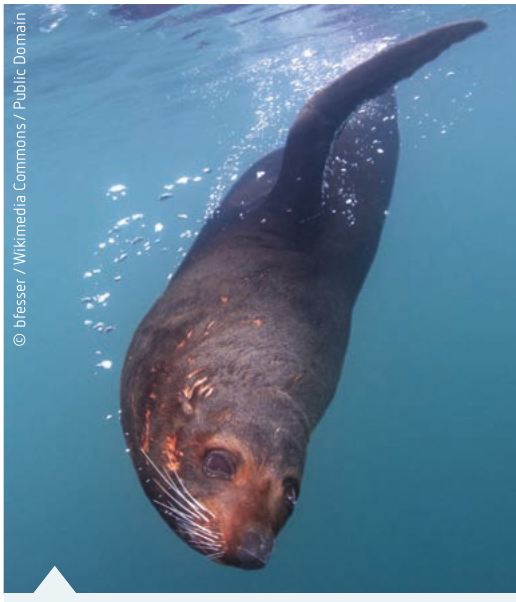
Sea-diving animals, such as whales, seals and dolphins, can stay underwater for more than an hour. These organisms have several adaptations, including a higher tolerance for carbon dioxide in their blood compared to humans.
Note
Humans can generally only hold their breath for a couple of minutes. Interestingly, it is the high level of carbon dioxide, not the low level of oxygen, that causes the breathing reflex when holding one's breath. Marine mammals' higher tolerance for carbon dioxide allows them to dive for extended periods before needing to surface for air.
Remember!
Summary
Key Points to Remember:
-
A buffer is a solution of a weak acid and its conjugate base (or vice versa) that resists pH changes when acids or bases are added.
-
Buffers work through equilibrium shifts according to Le Chatelier's principle, counteracting additions of acids or bases.
-
Buffer capacity is greatest when equal moles of weak acid and conjugate base are present, and increases with higher total concentrations.
-
Natural water systems use the bicarbonate/carbonate buffer system () to maintain pH around .
-
Human blood uses the carbonic acid/hydrogen carbonate buffer system () to maintain pH between , which is also involved in carbon dioxide transport.