Alcohol (VCE SSCE Health and Human Development): Revision Notes
📚Revision Notes
Alcohol
Alcohol has been consumed by humans for thousands of years. Many cultures include alcohol at social gatherings, and it forms an important part of ceremonies, customs and traditions. When consumed in moderation, alcohol has minimal negative effects. Some research suggests that red wine in moderation may even benefit cardiovascular health.
However, excessive alcohol consumption can significantly harm health and contributes substantially to Australia's burden of disease. Understanding how alcohol affects health status and disease burden is essential for promoting public health.
Alcohol and alcohol use disorders
Alcohol misuse refers to drinking too much alcohol and includes both alcoholism and binge drinking. When alcohol misuse continues over time, it may indicate the presence of an alcohol use disorder.
Key definitions
Alcohol use disorder is a disease characterised by ongoing risky alcohol consumption. This is a chronic condition that requires appropriate management and support.
Alcoholism occurs when a person cannot stop drinking once they have started, or experiences a constant desire to drink alcohol. This condition tends to contribute to chronic health problems over the long term, such as liver disease.
Binge drinking in Australia is defined as consuming more than four standard drinks in one sitting. This pattern of drinking often results in immediate health concerns such as road accidents, injuries, drownings and violence.
Important
Important Distinction
You do not need to have an alcohol use disorder to experience negative health outcomes from drinking. For example, binge drinking on one occasion may not mean you have an alcohol use disorder, but it still increases your risk of accidents, injuries and other health problems.
According to the Australian Institute of Health and Welfare (2020):
- Around 17% of people aged 18 and over consumed alcohol at levels that put them at risk of long-term harm
- Around 26% (1 in 4) consumed alcohol that put them at short-term harm at least monthly
Health impacts of alcohol
Alcohol misuse and alcohol use disorders affect health and wellbeing in numerous ways. There are a number of major health concerns linked to excessive alcohol consumption.
Alcohol and high body mass index
Alcohol contains kilojoules, which provide energy to the body. When you drink alcohol regularly, these extra kilojoules can lead to weight gain. Over time, alcohol consumption can contribute to becoming overweight or obese.
Note
This matters because obesity itself acts as a risk factor for other serious conditions including:
- Type 2 diabetes
- Cardiovascular disease
- Some cancers
Alcohol and cancer
Strong evidence shows that alcohol use increases the risk of several types of cancer, including:
- Mouth cancer
- Throat cancer
- Stomach cancer
- Bowel cancer
- Liver cancer
- Breast cancer
The amount of alcohol consumed largely influences cancer risk, regardless of body weight. More alcohol means higher risk. Because cancers are the leading cause of premature death in Australia, alcohol-related cancers significantly affect mortality rates, DALY (Disability-Adjusted Life Years) and life expectancy.
Alcohol and liver disease
The liver filters alcohol from the body. When someone drinks excessively, alcohol can cause scarring of liver tissue. This damage prevents the liver from functioning properly, allowing toxins to remain in the body. Over time, this process can lead to chronic liver diseases such as cirrhosis, a serious condition where the liver becomes permanently damaged.
Alcohol and injuries
Alcohol consumption affects both judgement and motor control. This combination creates serious risks in several ways:
Impaired motor control and judgement lead to increased falls and road traffic injuries. Alcohol is a major contributor to road accidents and crashes.

Changed behavior occurs when people are affected by alcohol. This puts strain on relationships and increases the risk of mental health issues like depression. It also increases the risk of suicide and self-harm.
Impulsive and risky behavior becomes more likely under the influence of alcohol. People may engage in drink driving, display aggression or take other risks. These behaviors increase both morbidity (illness and injury) and mortality (death) from injuries and violence.
Alcohol and mental health issues
A complex relationship exists between alcohol use and mental health. Problem drinkers are more likely to experience mental health issues, and people with mental health issues are more likely to misuse alcohol. However, researchers have not definitively established which comes first.
Note
Alcohol as a depressant: Alcohol is classified as a depressant drug. Some studies suggest that people with depressive symptoms are more likely to misuse alcohol and develop alcohol dependence during their younger years.
Regardless of the causal direction, alcohol use is strongly associated with greater risk of suicide and self-inflicted injuries.
Alcohol and prenatal infant health outcomes
Drinking alcohol during pregnancy harms health status in several ways by increasing the risk of:
- Premature birth
- Low birth weight
- Foetal Alcohol Spectrum Disorder (FASD)
Important
FASD is an umbrella term describing a range of conditions that can occur in children who were exposed to alcohol before birth. These conditions can affect physical, behavioral and learning development throughout life.
Alcohol and the Australian Burden of Disease Study
In 2015, alcohol use was responsible for 4.5% of the total burden of disease and injury in Australia, making it a leading preventable risk factor.
Contribution to specific diseases
Alcohol contributed to the burden of many diseases and injuries. It was responsible for:
- 100% of the burden due to alcohol use disorders
- 28% of the burden due to road traffic injuries
- 24% of the burden due to chronic liver disease
- 23% of the burden due to suicide and self-inflicted injuries
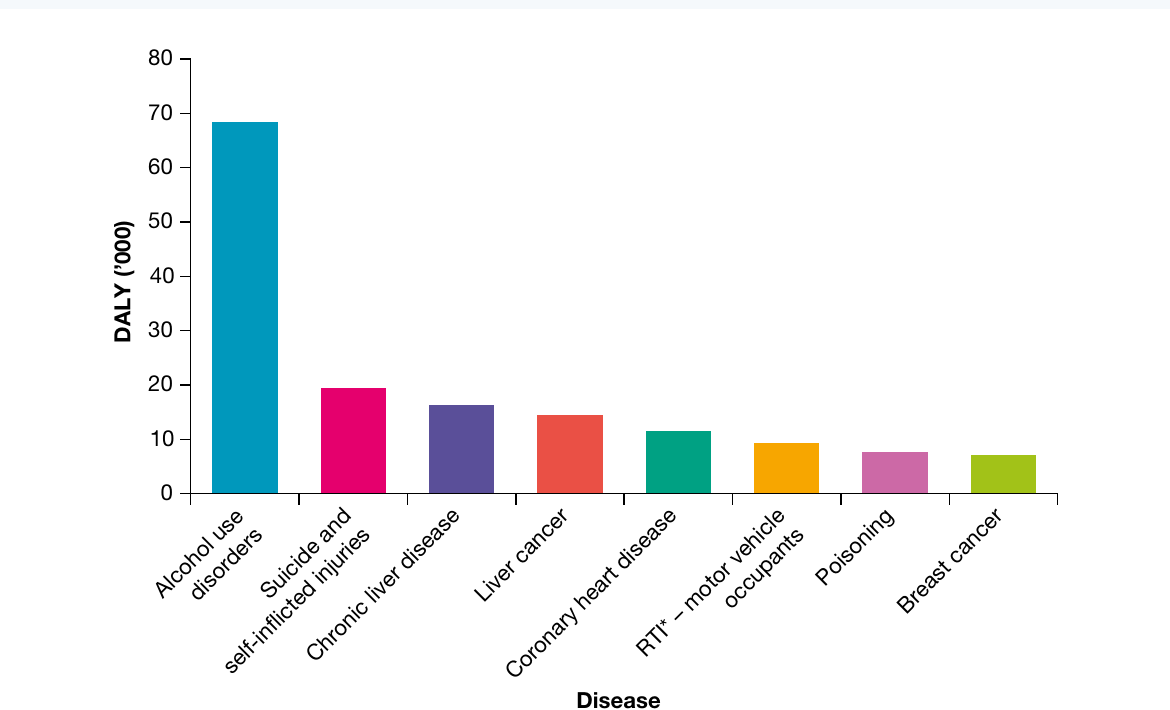
The following chart shows the total DALY attributable to alcohol use for selected conditions in 2015:
Note
Alcohol use disorders account for the largest burden by far, at approximately 68,000 DALY. This is followed by suicide and self-inflicted injuries, chronic liver disease, liver cancer, coronary heart disease, road traffic injuries, poisoning and breast cancer.
Fatal versus non-fatal burden
Of the total burden attributable to alcohol consumption:
- Around 61% was due to fatal outcomes (deaths)
- Around 39% was due to non-fatal outcomes (years lived with disability)
However, this split varies considerably depending on the specific condition:
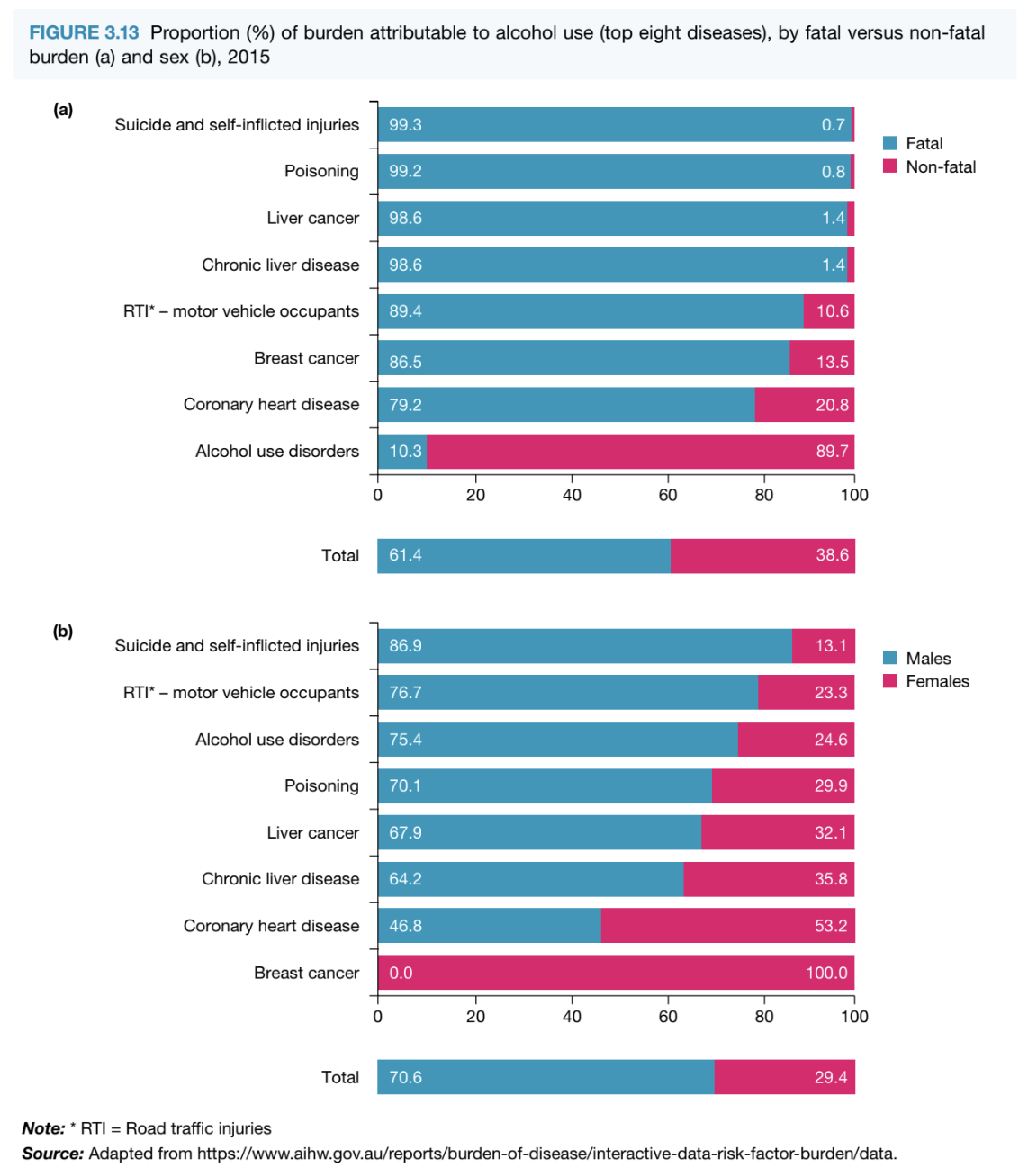
Some conditions caused by alcohol use are more likely to result in death:
- Around 99% of burden from suicide and self-inflicted injuries was fatal
- Around 99% of burden from poisoning was fatal
- Around 99% of burden from liver cancer was fatal
In contrast:
- Around 90% of burden from alcohol use disorders was non-fatal (people living with the condition)
Gender differences in burden
Overall, males experienced 71% of the burden attributed to alcohol use, compared to 29% for females.
This proportion was much higher for males in certain conditions:
- Suicide and self-inflicted injuries: 87% male
- Poisoning: 88% male
- Falls: 86% male
- Road traffic injuries (motor vehicle occupants): 78% male
- Chronic liver disease: 69% male
Females accounted for a greater proportion of the burden for:
- Stroke and coronary heart disease attributable to alcohol use
- Breast cancer: 100% female (as this affects females almost exclusively)
Age-related patterns in burden
The burden attributed to alcohol differs across the lifespan:
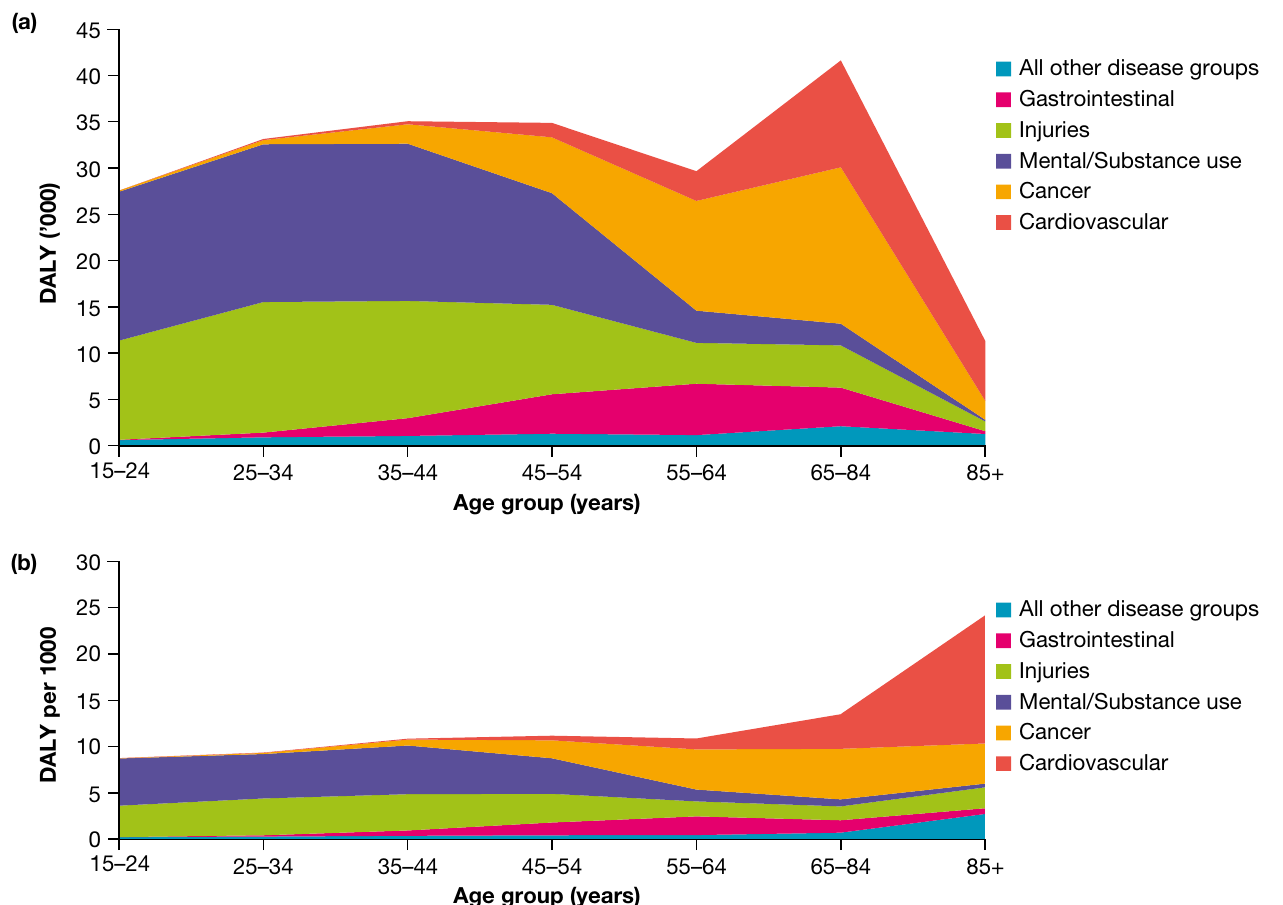
Key patterns:
Up to age 55: Injuries and mental health/substance use disorders contribute the majority of the burden. The burden remains relatively high and consistent across these younger and middle-aged groups.
After age 55: There is a significant decrease in the total DALY attributed to alcohol use. The burden from injuries and mental health conditions decreases. However, the burden from cancer and cardiovascular disease increases in these older age groups.
After age 85: There is a dramatic spike in burden, with cardiovascular disease becoming the dominant contributor in elderly populations.
Summary of alcohol's impact on health status and burden of disease
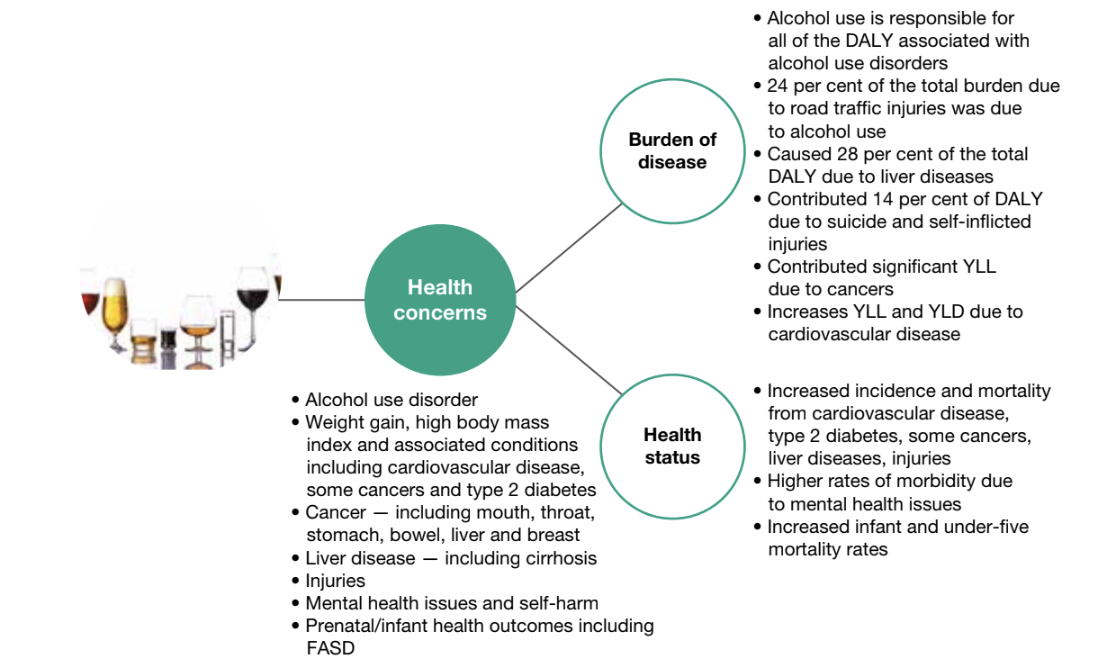
The following diagram summarizes how alcohol affects Australia's health status and burden of disease:
Note
Health concerns related to alcohol include:
- Alcohol use disorder
- Weight gain, high body mass index and associated conditions (cardiovascular disease, some cancers, type 2 diabetes)
- Cancer (mouth, throat, stomach, bowel, liver, breast)
- Liver disease including cirrhosis
- Injuries
- Mental health issues and self-harm
- Prenatal and infant health outcomes including FASD
Impact on health status:
- Increased incidence and mortality from cardiovascular disease, type 2 diabetes, some cancers, liver diseases and injuries
- Higher rates of morbidity due to mental health issues
- Increased infant and under-five mortality rates
Impact on burden of disease:
- Alcohol use is responsible for all DALY associated with alcohol use disorders
- 24% of total burden from road traffic injuries was due to alcohol use
- Caused 28% of total DALY due to liver diseases
- Contributed 14% of DALY due to suicide and self-inflicted injuries
- Contributed significant YLL (Years of Life Lost) due to cancers
- Increases YLL and YLD (Years Lived with Disability) due to cardiovascular disease
Summary
Remember!
- Alcohol misuse includes both alcoholism (chronic, long-term addiction) and binge drinking (consuming 4+ standard drinks in one sitting)
- You don't need an alcohol use disorder to experience negative health outcomes from drinking alcohol
- Alcohol affects six main areas of health: body weight, cancer, liver disease, injuries, mental health, and prenatal outcomes
- In 2015, alcohol was responsible for 4.5% of Australia's total burden of disease, making it a leading preventable risk factor
- Males experience approximately 71% of the burden attributed to alcohol use, though the proportion varies by condition
- The pattern of alcohol-related burden changes with age: injuries and mental health dominate in younger people, while cancer and cardiovascular disease increase in older age groups