High Body Mass Index (VCE SSCE Health and Human Development): Revision Notes
📚Revision Notes
High Body Mass Index
What is body mass index?
Body mass refers to how much a person weighs. Health professionals assess body mass using two main measurements: body mass index (BMI) and waist circumference.
Body mass index (BMI) is a statistical measure that compares a person's weight to their height. It is calculated by dividing weight in kilograms by height in metres squared.
The BMI formula
Example
Worked Example: Calculating BMI
For someone who is 182 centimetres tall (1.82 metres) and weighs 88 kilograms:
This person would be classified as overweight.
BMI classifications for adults
Once calculated, BMI scores are compared against standard classifications to determine weight status:
| BMI | Classification |
|---|---|
| Under 18.5 | Underweight |
| 18.6–24.9 | Healthy weight |
| 25–29.9 | Overweight |
| 30 and over | Obese |
Note
High body mass index refers to a BMI of 25 or above. People in this range are classified as either overweight or obese.
Limitations of BMI
While BMI is useful, it doesn't account for where fat is distributed in the body. Research shows that people carrying more abdominal (belly) fat face higher health risks than those with fat distributed elsewhere. This is why waist circumference measurements are increasingly used alongside BMI. However, BMI remains the standard measure used by the Australian government to track population health trends.
Prevalence of high body mass index in Australia
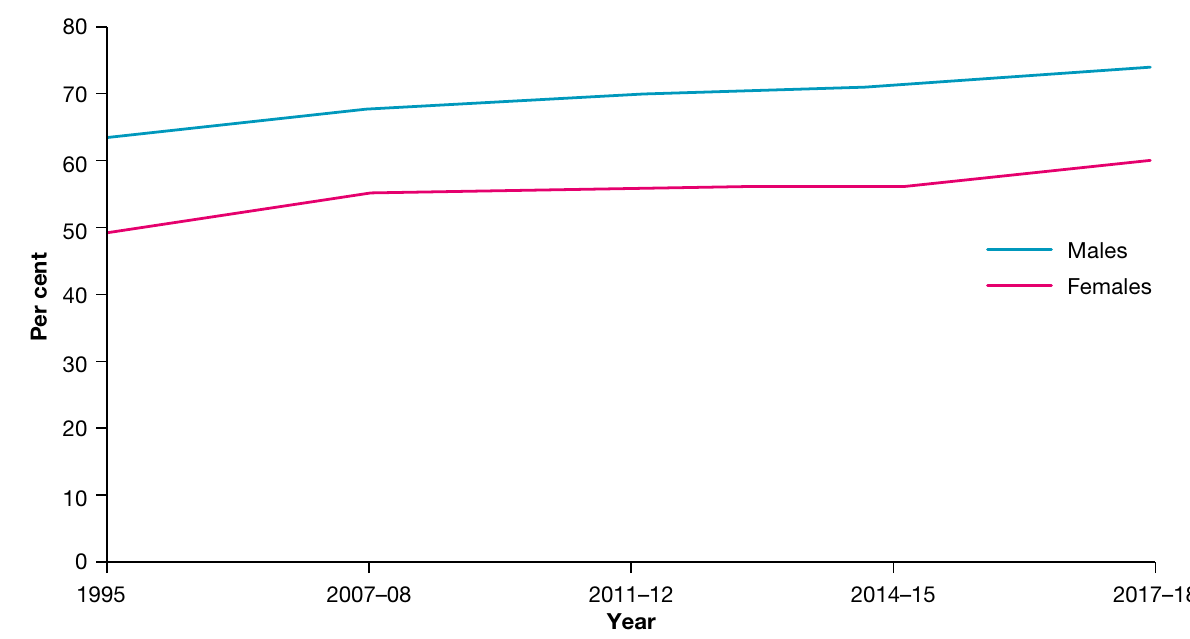
High body mass index is a growing concern in Australia, with rates steadily increasing over recent decades.
Note
According to the Australian Bureau of Statistics National Health Survey:
- In 2017–18, 67% of Australian adults (18 years and over) were overweight or obese
- This represents a significant increase from 56.3% in 1995
- Males consistently show higher rates than females (74% compared to 61% in 2017–18)
- Among children aged 5–17 years, approximately 25% were overweight or obese in 2017–18
The data shows a persistent upward trend for both males and females, though the gap between genders has remained relatively stable.
Health conditions linked to high body mass index
High body mass index significantly increases the risk of developing numerous health conditions. Understanding these connections is crucial for recognising the broader impact of obesity on population health.
Cardiovascular disease
Carrying excess weight places additional strain on the heart and circulatory system. This leads to several cardiovascular problems:
- Hypertension (high blood pressure): Extra body mass forces the heart to work harder to pump blood throughout the body
- Elevated cholesterol levels: High BMI often correlates with increased cholesterol, particularly harmful LDL cholesterol
- Atherosclerosis: When cholesterol builds up in arteries, it narrows blood vessels and restricts blood flow
- Heart attack and stroke: The combination of these factors dramatically increases risk
- Irregular heartbeat: Two common heart rhythm problems linked to high BMI are atrial fibrillation and atrial flutter
Note
Key terms:
- Hypertension = high blood pressure
- Cholesterol = a type of fat needed by the body but harmful in excess; can be 'bad' (LDL) or 'good' (HDL)

Type 2 diabetes
High body mass index is the single greatest risk factor for developing type 2 diabetes. In this condition, either the pancreas doesn't produce enough insulin, or the body's cells don't respond properly to insulin (called insulin resistance).
Important
Traditionally, type 2 diabetes mainly affected adults. However, as childhood obesity rates have risen, more young people are now being diagnosed with this condition. This represents a concerning shift in disease patterns.
Cancer
Research has established links between high BMI and certain cancers, particularly:
- Colorectal cancer
- Breast cancer
The mechanisms behind these associations are complex and involve hormonal changes, inflammation, and metabolic dysfunction associated with excess body fat.
Chronic kidney disease
High body mass index contributes to kidney disease through two main pathways:
- Increasing risk of high blood pressure
- Increasing risk of type 2 diabetes
Both hypertension and diabetes are major risk factors for kidney damage, so high BMI indirectly but significantly affects kidney health.
Osteoarthritis and osteoporosis
Excess weight affects bone and joint health in important ways:
Osteoarthritis:
- Extra body weight increases pressure on weight-bearing joints
- This accelerates wear and tear on cartilage (the cushioning material between bones)
- When cartilage breaks down, bones rub directly against each other, causing pain and limited movement
- Most commonly affects knees, hips, lower back, neck, and fingers
- Often progressive, worsening over time and reducing mobility
- Can severely impact daily activities like walking, writing, or standing
Osteoporosis:
Current research also indicates that high BMI may increase the risk of osteoporosis (weakening of bones), though this relationship is less well understood than the link with osteoarthritis.
Asthma
Children carrying excess weight face a higher risk of developing asthma compared to children with healthy body mass. The mechanisms may involve inflammation, changes in lung function, and altered immune system responses.
Mental health issues
High body mass index can significantly impact psychological wellbeing:
- Increased rates of anxiety
- Higher risk of depression
- Social stigma and discrimination
- Body image concerns
Important
Children with high BMI are particularly vulnerable to mental health problems, which contributes substantially to years lived with disability (YLD) in younger age groups.
Maternal health conditions
Pregnant women with high body mass index face increased risks during pregnancy:
- Pregnancy-related hypertension (high blood pressure)
- Gestational diabetes (diabetes that develops during pregnancy)
- Complications during labour and delivery
- Higher risk of maternal mortality
These conditions affect both maternal and infant health outcomes.
High body mass index and the burden of disease
The Australian Burden of Disease Study provides comprehensive data about the impact of high body mass index on population health.
Overall contribution
In 2015, high body mass contributed 8.4% of all disease and injury burden in Australia. This made it the second highest risk factor, ranking just behind tobacco use.
Disease-specific burden
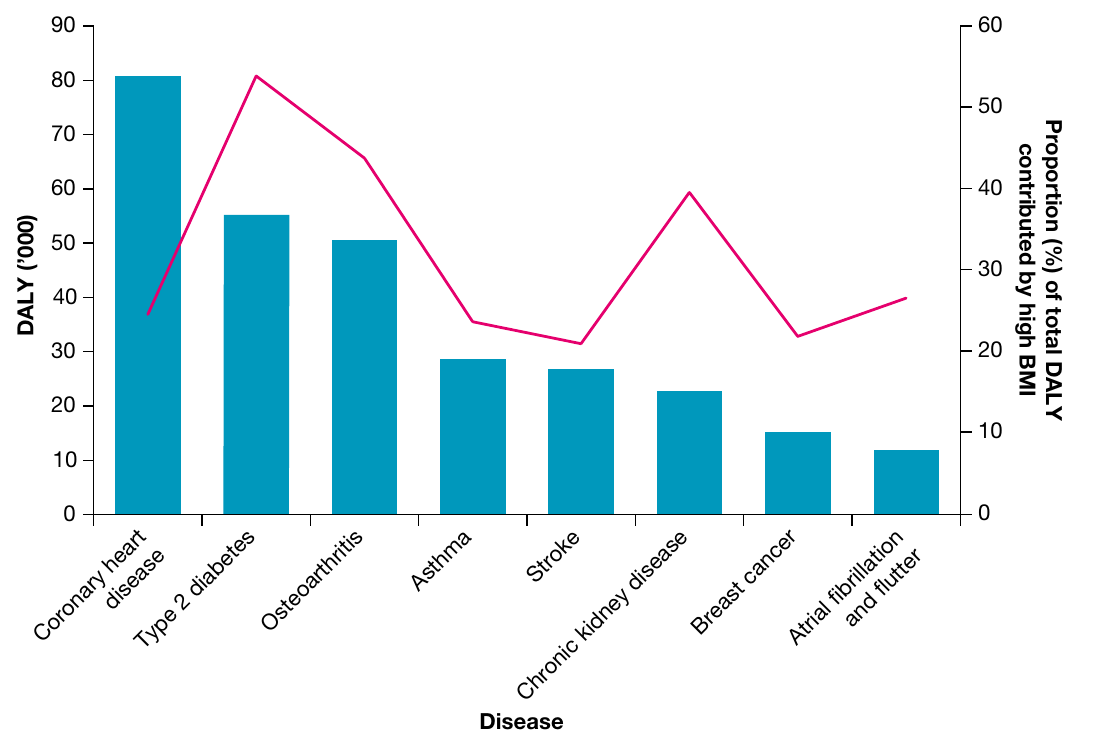
High BMI contributed substantially to disability-adjusted life years (DALYs) for numerous conditions:
Absolute burden (total DALYs):
- Coronary heart disease: approximately 80,000 DALYs
- Type 2 diabetes: approximately 55,000 DALYs
- Osteoarthritis: approximately 50,000 DALYs
- Asthma: approximately 29,000 DALYs
Note
Proportional contribution (percentage of total disease burden):
High BMI was responsible for:
- 54% of the type 2 diabetes burden
- 44% of the osteoarthritis burden
- 40% of the chronic kidney disease burden
- 25% of the coronary heart disease burden
- 21% of the stroke burden
These figures demonstrate that while high BMI affects many conditions, its relative impact varies considerably. For example, it's the dominant risk factor for type 2 diabetes but one of several important factors for coronary heart disease.
Fatal versus non-fatal burden
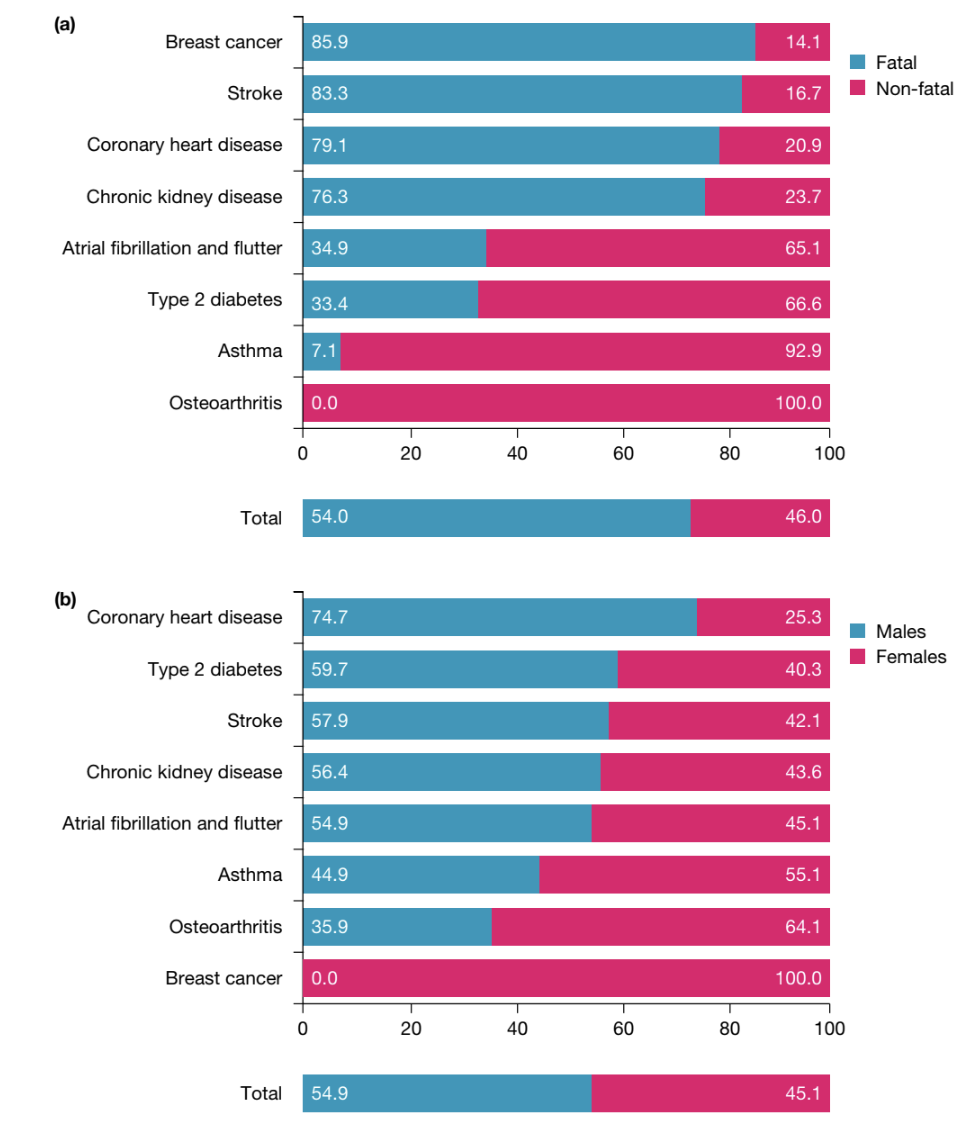
The burden attributable to high body mass can be divided into fatal outcomes (leading to death and affecting YLL) and non-fatal outcomes (affecting quality of life and contributing to YLD).
Overall pattern:
- 54% of the burden was due to fatal outcomes
- 46% was due to non-fatal outcomes
Disease-specific patterns:
Predominantly fatal burden:
- Breast cancer: 85.9% fatal
- Stroke: 83.3% fatal
- Coronary heart disease: 79.1% fatal
- Chronic kidney disease: 76.3% fatal
Predominantly non-fatal burden:
- Osteoarthritis: 100% non-fatal (doesn't directly cause death but significantly affects quality of life)
- Asthma: 92.9% non-fatal
- Type 2 diabetes: 66.6% non-fatal
- Atrial fibrillation and flutter: 65.1% non-fatal
Important
This distinction is important because:
- Fatal burden impacts mortality rates, YLL, and life expectancy
- Non-fatal burden affects morbidity rates, YLD, and health-adjusted life expectancy (HALE)
Gender differences
Males experienced approximately 55% of the total burden attributable to high body mass, while females experienced 45%.
Gender breakdown by condition:
- Coronary heart disease: 74.7% males, 25.3% females
- Type 2 diabetes: 59.7% males, 40.3% females
- Stroke: 57.9% males, 42.1% females
- Chronic kidney disease: 56.4% males, 43.6% females
- Atrial fibrillation and flutter: 54.9% males, 45.1% females
- Asthma: 44.9% males, 55.1% females
- Osteoarthritis: 35.9% males, 64.1% females
- Breast cancer: 0% males, 100% females
The higher burden among males contributes to differences in life expectancy and HALE between males and females. This reflects both higher prevalence of overweight and obesity among males and potentially different physiological responses to excess weight.
Age patterns
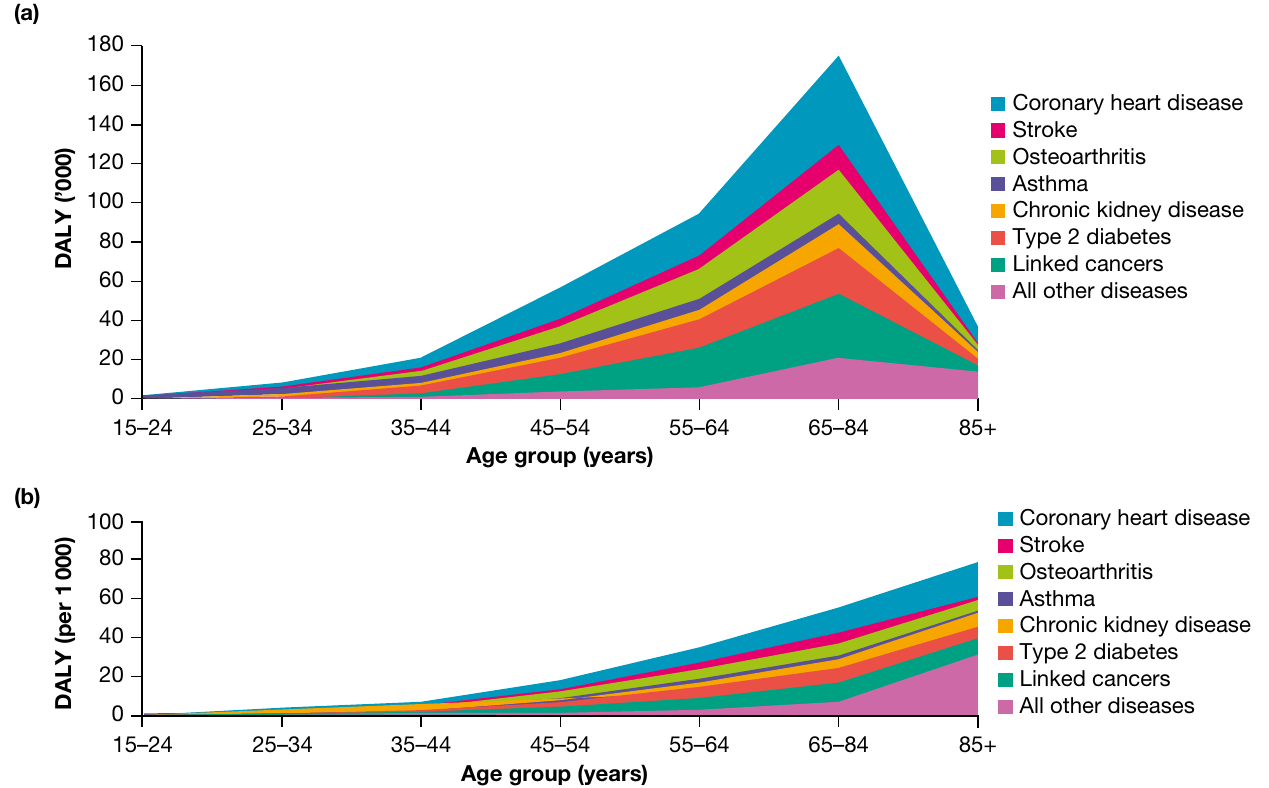
The burden of disease attributable to high body mass shows clear age-related patterns:
Absolute burden (total DALYs):
- Relatively low in younger age groups (15-24 years)
- Increases steadily through middle age
- Peaks in the 65-84 age group (approximately 170,000 DALYs)
- Declines in the 85+ age group
Rate per 1,000 population:
- Shows continuous increase with age
- Reaches approximately 75 per 1,000 in the 85+ age group
- This pattern differs from absolute burden because it accounts for population size
Note
Disease contributions by age:
- Coronary heart disease becomes the dominant contributor in older age groups
- Type 2 diabetes shows substantial burden across middle and older age groups
- Osteoarthritis becomes more prominent in older ages
- Asthma contributes across multiple age groups
Understanding these age patterns helps target prevention and treatment efforts to the populations most affected.
Summary of impacts
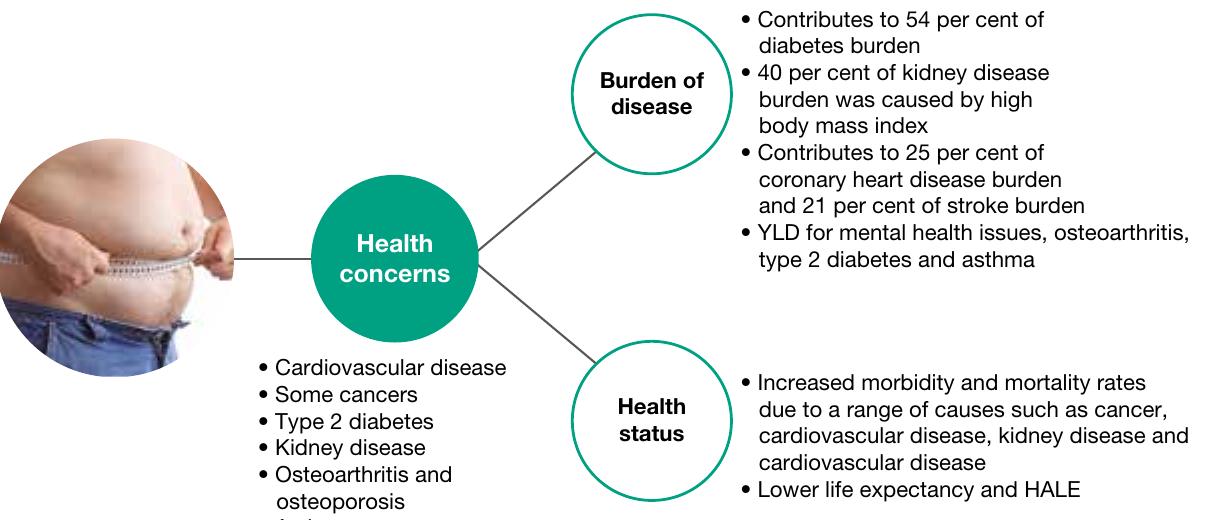
High body mass index affects Australia's health status and burden of disease through multiple interconnected pathways:
Health concerns:
- Cardiovascular disease
- Some cancers
- Type 2 diabetes
- Kidney disease
- Osteoarthritis and osteoporosis
- Asthma
- Mental health issues
- Maternal health conditions
Burden of disease impacts:
- Contributes to 54% of diabetes burden
- Responsible for 40% of kidney disease burden
- Accounts for 25% of coronary heart disease burden
- Causes 21% of stroke burden
- Creates YLD for conditions like mental health issues, osteoarthritis, type 2 diabetes, and asthma
Health status impacts:
- Increased morbidity rates (illness and disability)
- Increased mortality rates from various causes including cancer, cardiovascular disease, and kidney disease
- Lower life expectancy
- Reduced health-adjusted life expectancy (HALE)
Summary
Key Points to Remember:
-
Body mass index (BMI) is calculated by dividing weight in kilograms by height in metres squared: . A BMI of 25 or above indicates high body mass.
-
High BMI prevalence is increasing in Australia, with 67% of adults overweight or obese in 2017-18, up from 56.3% in 1995. Males show consistently higher rates than females.
-
High BMI is the second-highest risk factor for disease burden in Australia (after tobacco), contributing 8.4% of total burden. It's the single greatest risk factor for type 2 diabetes.
-
Multiple health conditions are linked to high BMI, including cardiovascular disease, type 2 diabetes, certain cancers, kidney disease, osteoarthritis, asthma, mental health issues, and maternal health complications.
-
Gender and age patterns show males experience 55% of the burden, and disease burden increases with age, peaking in the 65-84 age group. About 54% of the burden results in fatal outcomes, affecting life expectancy.