Binary Fission in Prokaryotes (AQA A-Level Biology): Revision Notes
📚Revision Notes
Binary Fission in Prokaryotes
What is binary fission?
Binary fission is the method by which prokaryotic cells (bacteria and archaea) reproduce and divide. This process allows a single bacterial cell to produce two genetically identical daughter cells. Unlike the complex mitosis seen in eukaryotic cells, binary fission is a relatively simple and rapid form of cell division that enables prokaryotes to multiply quickly under favourable conditions.
Note
Binary fission is fundamentally different from eukaryotic cell division (mitosis). While eukaryotic cells have complex chromosome structures and require multiple phases for division, prokaryotes use this streamlined process that can occur much more rapidly.
The process of binary fission
Binary fission occurs through a series of coordinated steps that ensure each daughter cell receives a complete copy of the genetic material:
Important
The success of binary fission depends on the precise coordination of DNA replication, cell growth, and physical separation. Any disruption in this sequence can prevent successful cell division.
DNA replication
The process begins with the replication of the cell's circular DNA chromosome. Prokaryotes possess a single, circular chromosome located in the nucleoid region of the cell. During replication, the DNA molecule is copied to produce two identical copies. If plasmids (small, circular DNA molecules) are present in the cell, these also undergo replication at this stage.
Attachment and growth
The two copies of the circular DNA become attached to different points on the cell membrane. As the cell continues to grow and increase in size, the distance between these two DNA copies gradually increases. This growth phase ensures that the genetic material will be properly separated into the future daughter cells.
Cell division
A new cell wall begins to form between the two pieces of DNA, growing inward from the cell membrane. Simultaneously, additional cell membrane is synthesised to accommodate the division process. This formation of new cellular components continues until the cell completely splits into two separate cells.
Result
Each daughter cell receives one copy of the main circular chromosome and a variable number of plasmid copies. The two resulting cells are genetically identical to each other and to the original parent cell, assuming no mutations occurred during DNA replication.
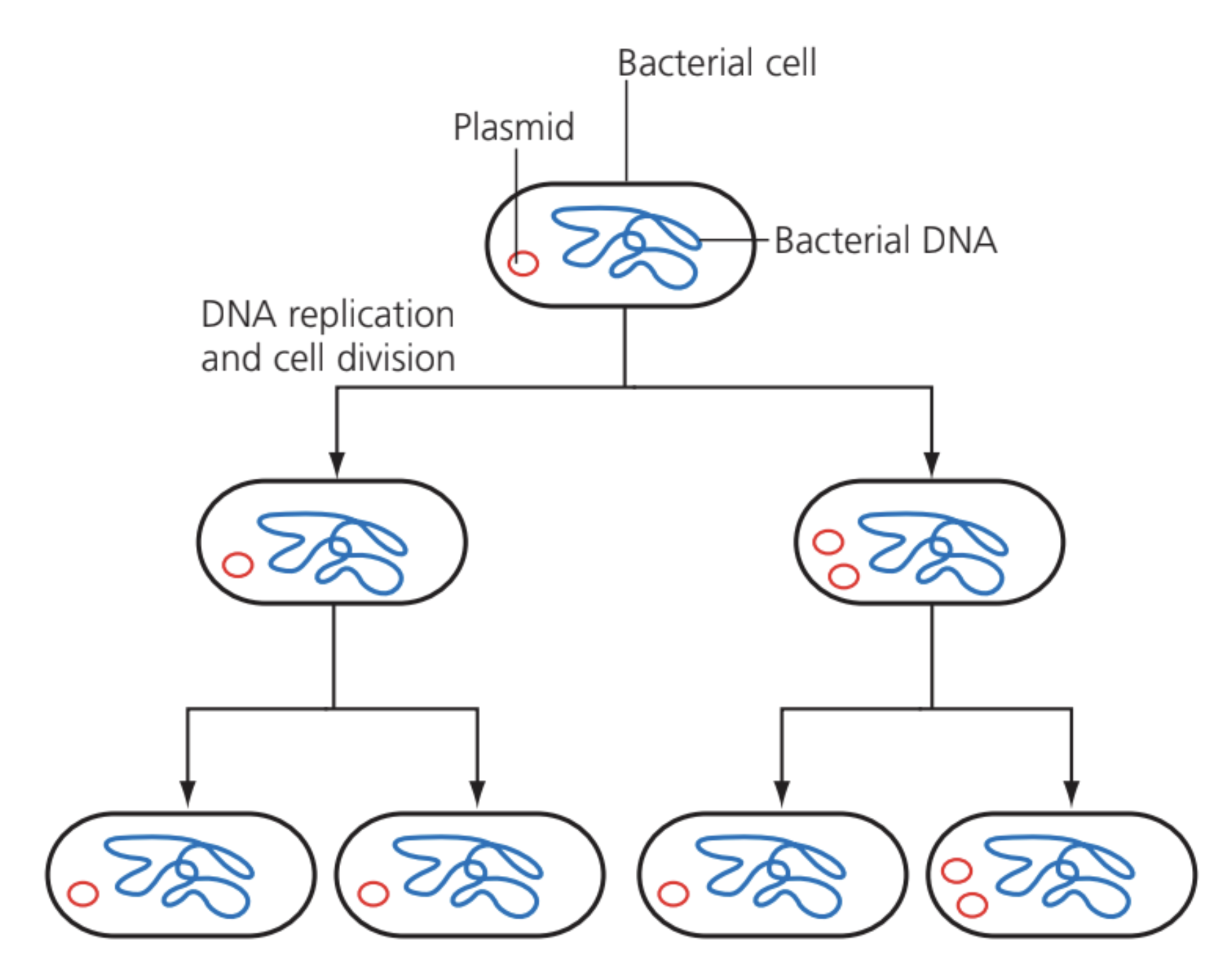
Key features of binary fission
Binary fission differs significantly from eukaryotic cell division in several important ways. The process is much faster and simpler, lacking the complex spindle apparatus and multiple phases characteristic of mitosis. The circular nature of prokaryotic DNA eliminates the need for chromosome condensation and alignment seen in eukaryotic cells.
This efficient reproduction method allows bacterial populations to grow exponentially under optimal conditions, with some species capable of dividing every 20-30 minutes. The speed and simplicity of binary fission contribute to the remarkable success and adaptability of prokaryotic organisms in diverse environments.
Important
The rapid division rate of prokaryotes (some species dividing every 20-30 minutes) means that a single bacterial cell can theoretically produce over 16 million descendants in just 8 hours under ideal conditions!
Summary
Key Points to Remember:
- Binary fission is the simple method of cell division used by prokaryotes to produce two identical daughter cells
- The process involves DNA replication, cell growth, and physical separation through new cell wall formation
- Each daughter cell receives one copy of the circular chromosome and variable numbers of plasmids
- Binary fission is much faster and simpler than eukaryotic mitosis, contributing to rapid bacterial population growth
- The circular DNA of prokaryotes attaches to the cell membrane during division, unlike the linear chromosomes of eukaryotes