Antibodies (AQA A-Level Biology): Revision Notes
📚Revision Notes
Antibodies
Structure of antibodies
Antibodies are proteins with specific binding sites that are produced by B cells in response to foreign substances. These Y-shaped molecules consist of four polypeptide chains that work together to recognise and bind to specific targets.
The antibody structure includes two types of chains:
- Heavy chains - the longer pair of polypeptide chains
- Light chains - the shorter pair of polypeptide chains
Each antibody contains two distinct functional regions:
The variable region forms the antigen-binding sites at the tips of the Y-shape. This region consists of a specific sequence of amino acids that creates a unique three-dimensional shape. This shape is complementary to a particular antigen, allowing the antibody to bind precisely to its target. Different antibodies have different variable regions, which explains why each antibody can only bind to one specific antigen.
Note
The variable region's unique three-dimensional shape is what gives each antibody its specificity - like a key that fits only one particular lock.
The constant region makes up the stem of the Y-shape and binds to receptors on immune cells such as B cells and phagocytes. This region remains the same across antibodies of the same class and determines how the antibody will interact with other components of the immune system.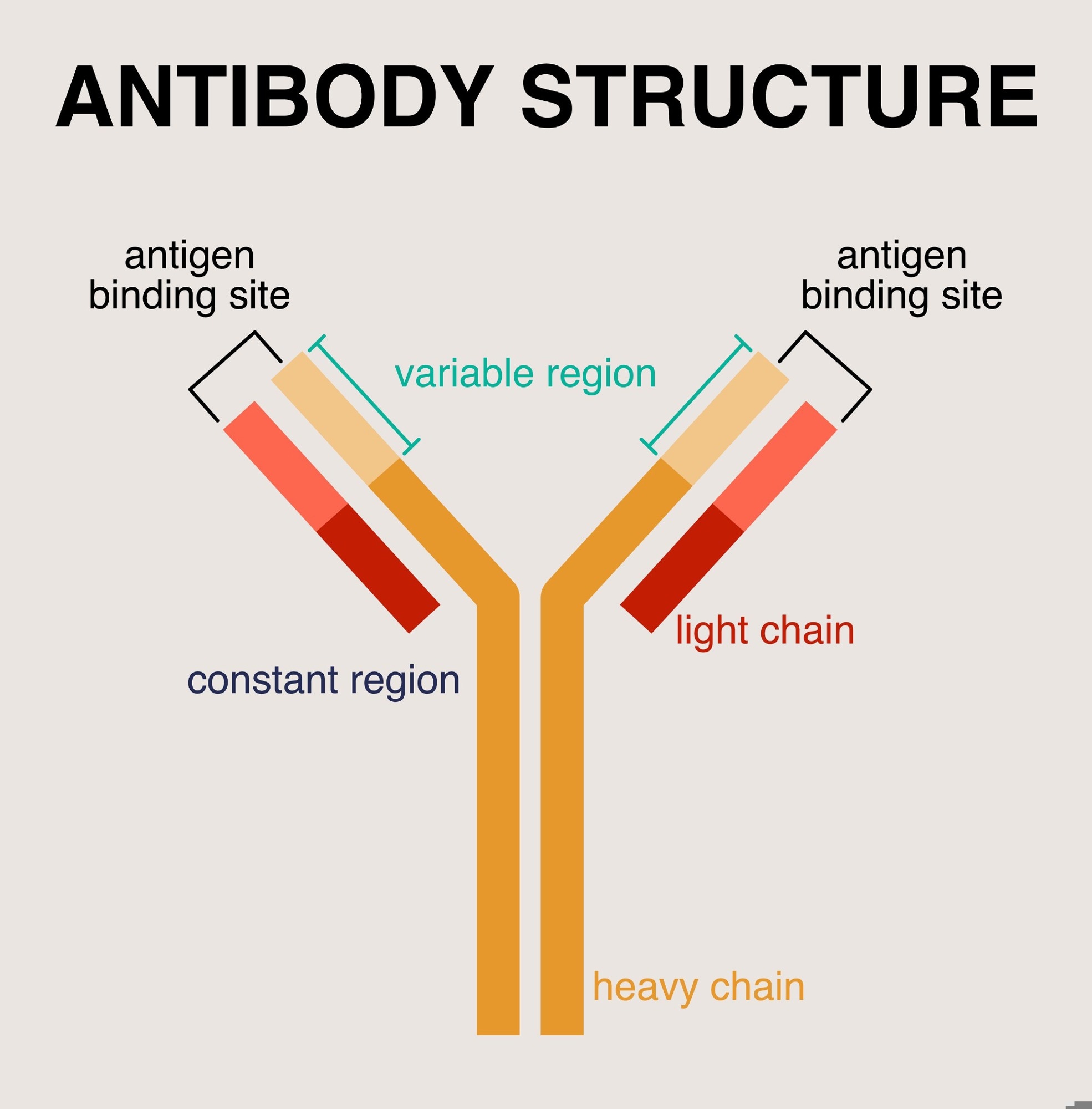
How antibodies function
When an antibody encounters its specific antigen, they bind together to form an antigen-antibody complex. This binding is highly specific due to the complementary shapes of the variable region and the antigen, similar to a lock and key mechanism.
Antibodies do not directly destroy antigens. Instead, they prepare antigens for destruction through two main mechanisms:
Example
Mechanism 1: Agglutination
Agglutination occurs when antibodies bind to antigens on the surface of pathogenic cells such as bacteria. Since each antibody has two binding sites, multiple bacterial cells become clumped together in large clusters. This process makes it much easier for phagocytes to locate and engulf the pathogens, as the clumped cells are less able to spread throughout the body.
Mechanism 2: Phagocyte Stimulation
Phagocyte stimulation happens when antibodies attached to antigens act as markers or signals. These markers stimulate phagocytes to engulf and destroy the cells or particles to which the antibodies are bound. The constant region of the antibody is recognised by receptors on phagocytes, triggering the destruction process.

Monoclonal antibodies
Monoclonal antibodies are identical antibodies produced from a single clone of B cells. Unlike the mixture of different antibodies normally produced during an immune response, monoclonal antibodies are all exactly the same and bind to the same specific antigen.
Note
The production of monoclonal antibodies involves creating hybridoma cells. These are formed by fusing B cells (which produce antibodies but have a short lifespan) with tumour cells (which divide indefinitely but don't produce antibodies). The resulting hybridoma cells combine the best features of both parent cells - they produce specific antibodies and can divide continuously outside the body.
To make monoclonal antibodies suitable for human use, they undergo humanisation. This process modifies mouse-derived antibodies to make them more similar to human antibodies, reducing the risk of immune reactions when used as treatments.
Medical applications of monoclonal antibodies
Cancer treatment
Monoclonal antibodies provide targeted cancer therapy by specifically binding to antigens found on cancer cells. This targeting approach offers significant advantages over traditional chemotherapy.
- Direct monoclonal antibody therapy uses antibodies that bind to cancer cell receptors and block the chemical signals that promote uncontrolled cell growth. For example, herceptin is used to treat breast cancer by targeting specific receptors on breast cancer cells. This approach produces fewer side effects than conventional chemotherapy because the antibodies specifically target cancer cells rather than affecting healthy tissue.
- Indirect monoclonal antibody therapy attaches radioactive substances or cell-killing drugs to monoclonal antibodies. When these modified antibodies bind to cancer cells, they deliver the toxic payload directly to the tumour site. This targeted delivery system is sometimes called "magic bullets" because it allows smaller doses of dangerous drugs to be used while minimising damage to healthy tissues.
Medical diagnosis
Monoclonal antibodies serve as powerful diagnostic tools for detecting diseases and measuring specific substances in the body. They provide rapid, accurate results for many medical conditions.
- Disease detection uses monoclonal antibodies to identify specific pathogens or disease markers. Diagnostic tests for influenza, hepatitis, and chlamydia infections rely on monoclonal antibodies to detect antigens associated with these conditions. These tests produce results much faster than traditional laboratory methods.
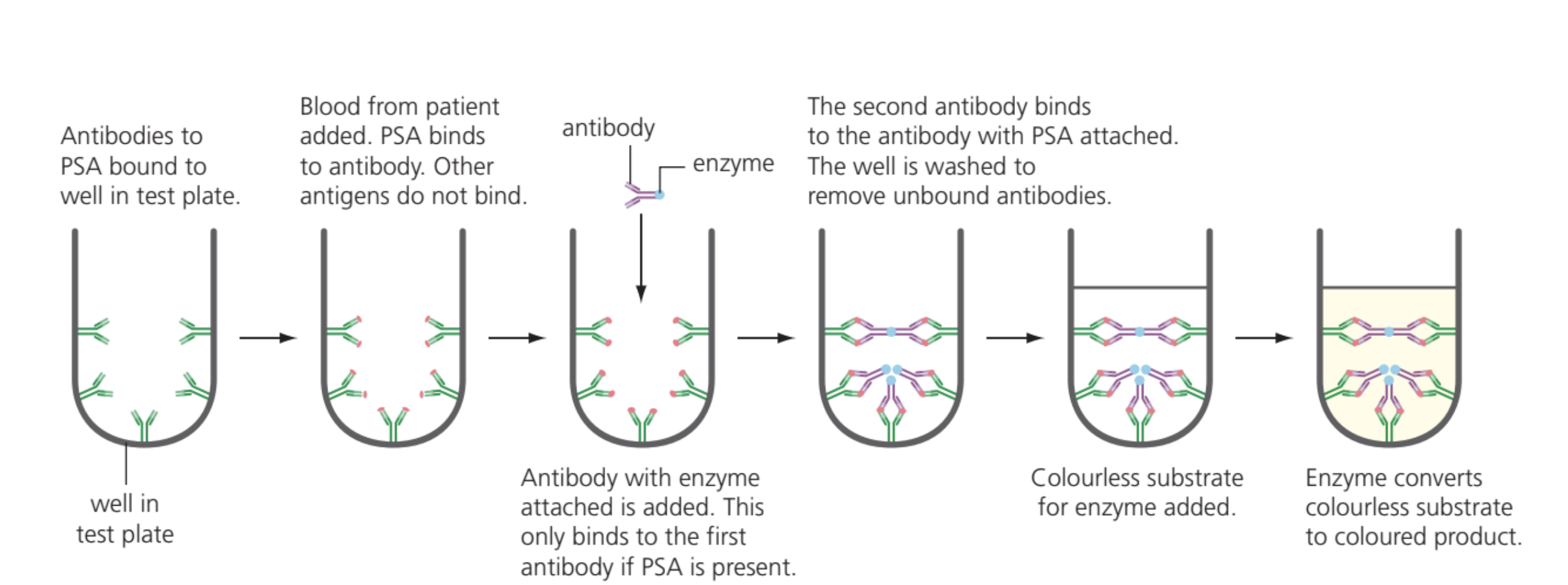
- Cancer screening employs monoclonal antibodies to detect tumour markers in blood samples. For instance, prostate cancer screening uses antibodies that bind to prostate specific antigen (PSA). Elevated PSA levels in blood can indicate the presence of prostate cancer, allowing for early detection and treatment.
Pregnancy testing
Home pregnancy tests demonstrate a practical application of monoclonal antibody technology. These tests detect human chorionic gonadotrophin (hCG), a hormone produced by the placenta during pregnancy.
Example
How Pregnancy Tests Work
Step 1: The test strip contains monoclonal antibodies linked to coloured particles.
Step 2: When hCG is present in urine, it binds to these antibodies, forming a complex that moves along the strip.
Step 3: A different type of antibody further along the strip traps this complex, creating a visible coloured line that indicates pregnancy.
Ethical considerations
The development and use of monoclonal antibodies raises several important ethical questions that society must consider:
- Animal welfare concerns arise because monoclonal antibody production traditionally involves using mice. These mice are exposed to antigens and may have tumour cells deliberately induced to create hybridomas. Despite guidelines to minimise animal suffering, some people have reservations about using animals in this way for medical purposes.
- Drug trial safety presents significant risks, as demonstrated by the TGN1412 trial in 2006. Six healthy volunteers in London suffered multiple organ failure within hours of receiving an experimental monoclonal antibody treatment. This incident highlighted the unpredictable nature of testing new immunological treatments and raised questions about the safety of human volunteers in early-stage drug trials.
- Informed consent becomes particularly important given these risks. Patients and trial participants must fully understand both the potential benefits and dangers of monoclonal antibody treatments before agreeing to their use. This is especially relevant for experimental treatments where long-term effects are unknown.
The medical benefits of monoclonal antibodies, including successful treatments for cancer and diabetes, must be weighed against these ethical concerns. Society must make informed decisions about the acceptable balance between potential medical advances and the risks involved in developing and testing these treatments.
Summary
Key Points to Remember:
- Antibodies are Y-shaped proteins made of heavy and light chains, with variable regions for specific antigen binding and constant regions for immune system interaction
- Antibodies destroy pathogens indirectly through agglutination (clumping cells together) and by stimulating phagocytes to engulf marked targets
- Monoclonal antibodies are identical copies produced from hybridoma cells, offering precise targeting for medical applications
- Medical uses include cancer treatment (direct and indirect therapy), disease diagnosis, and pregnancy testing through specific antigen detection
- Ethical considerations include animal welfare in production, drug trial safety risks, and the need for informed consent in experimental treatments