DNA & Chromosomes (AQA A-Level Biology): Revision Notes
📚Revision Notes
DNA & Chromosomes
DNA organisation in different cell types
The way DNA is organised varies significantly between prokaryotic cells (like bacteria) and eukaryotic cells (like plant and animal cells). Understanding these differences is essential for grasping how genetic material is structured and stored.
In prokaryotic cells, DNA molecules are relatively short and form circular structures. This DNA exists freely in the cytoplasm without being associated with proteins called histones. Prokaryotic cells do not possess true chromosomes in the traditional sense.
Eukaryotic cells contain much longer DNA molecules that are linear rather than circular. This DNA associates with special proteins called histones to form complex structures known as chromosomes. The mitochondria and chloroplasts within eukaryotic cells also contain their own DNA, which resembles prokaryotic DNA - it is short, circular, and not associated with histones.
Note
The key structural difference is that prokaryotic DNA is free-floating and circular, while eukaryotic DNA is linear and packaged with histone proteins into chromosomes. This fundamental difference affects how genetic material is organised and accessed in these cell types.
Chromosome structure and DNA packaging
Chromosomes only become visible as distinct structures during cell division. For most of the cell cycle, they remain dispersed throughout the nucleus in a less condensed form.
When chromosomes first appear during cell division, they consist of two identical threads joined at a single point called the centromere. Each thread is termed a chromatid, formed because DNA replication has already occurred, creating two identical DNA molecules.
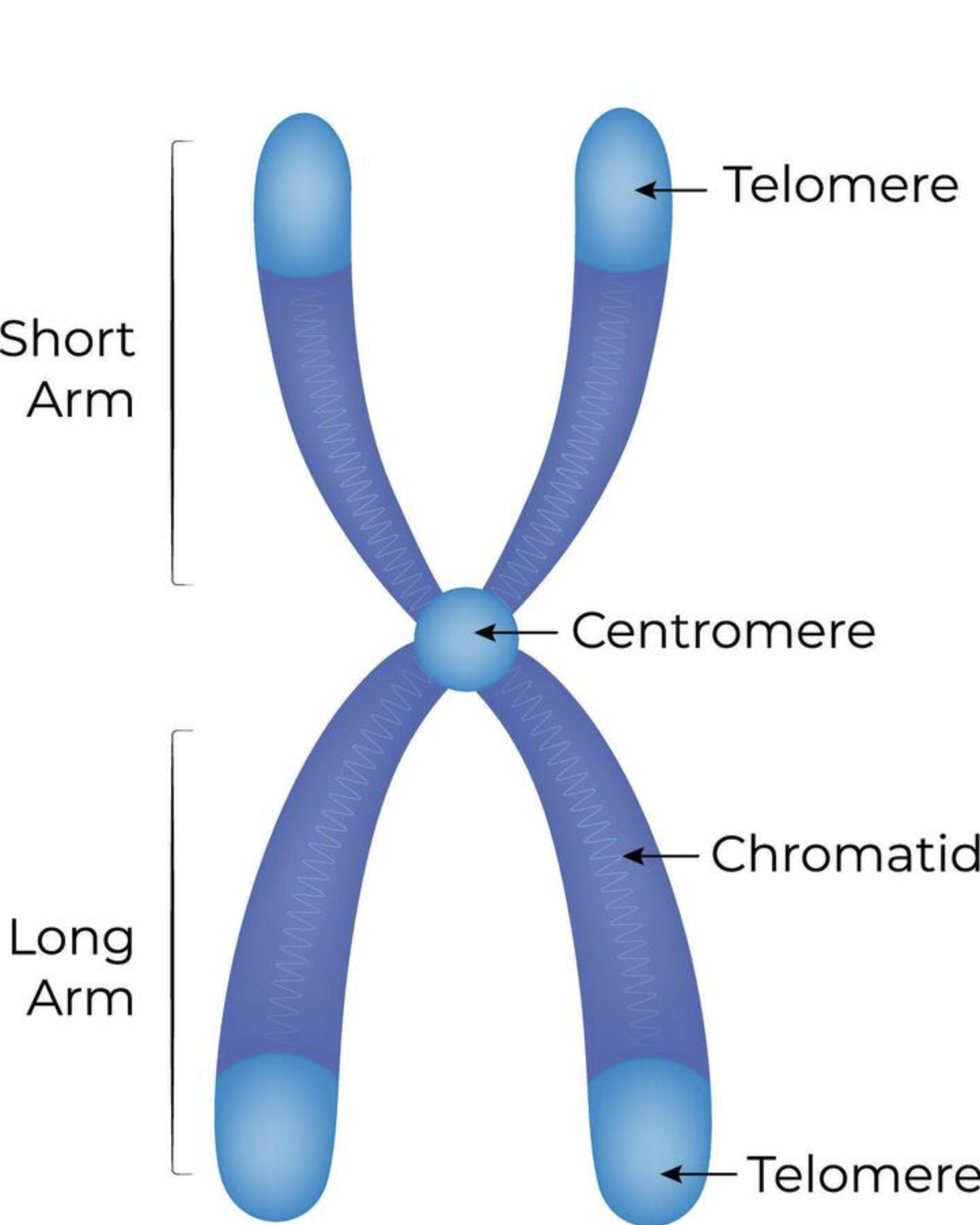
The enormous length of DNA found in each cell (approximately 2 metres in every human cell) must be highly coiled and folded to fit within the microscopic nucleus. This packaging process involves several levels of organisation:
Example
DNA Packaging Process: From Double Helix to Chromosome
Step 1: DNA double helix winds around histone molecules
Step 2: The DNA-histone complex becomes coiled into increasingly tight structures
Step 3: These coils fold to form loops
Step 4: The loops coil and pack together to form the final chromosome structure

This intricate packaging system allows vast amounts of genetic information to be stored in an incredibly compact form whilst remaining accessible when needed.
Important
Without this sophisticated packaging system, the 2 metres of DNA in each human cell could never fit into a nucleus that is only about 10 micrometres in diameter!
Chromosome numbers across species
The number of chromosomes remains constant for normal individuals within a species, but varies considerably between different species. Humans possess 46 chromosomes, whilst potato plants have 48 and dogs have 78. Most species maintain an even number of chromosomes in their adult cells.
Note
The chromosome number is not related to organism complexity - some single-celled organisms have more chromosomes than humans, while some plants have fewer.
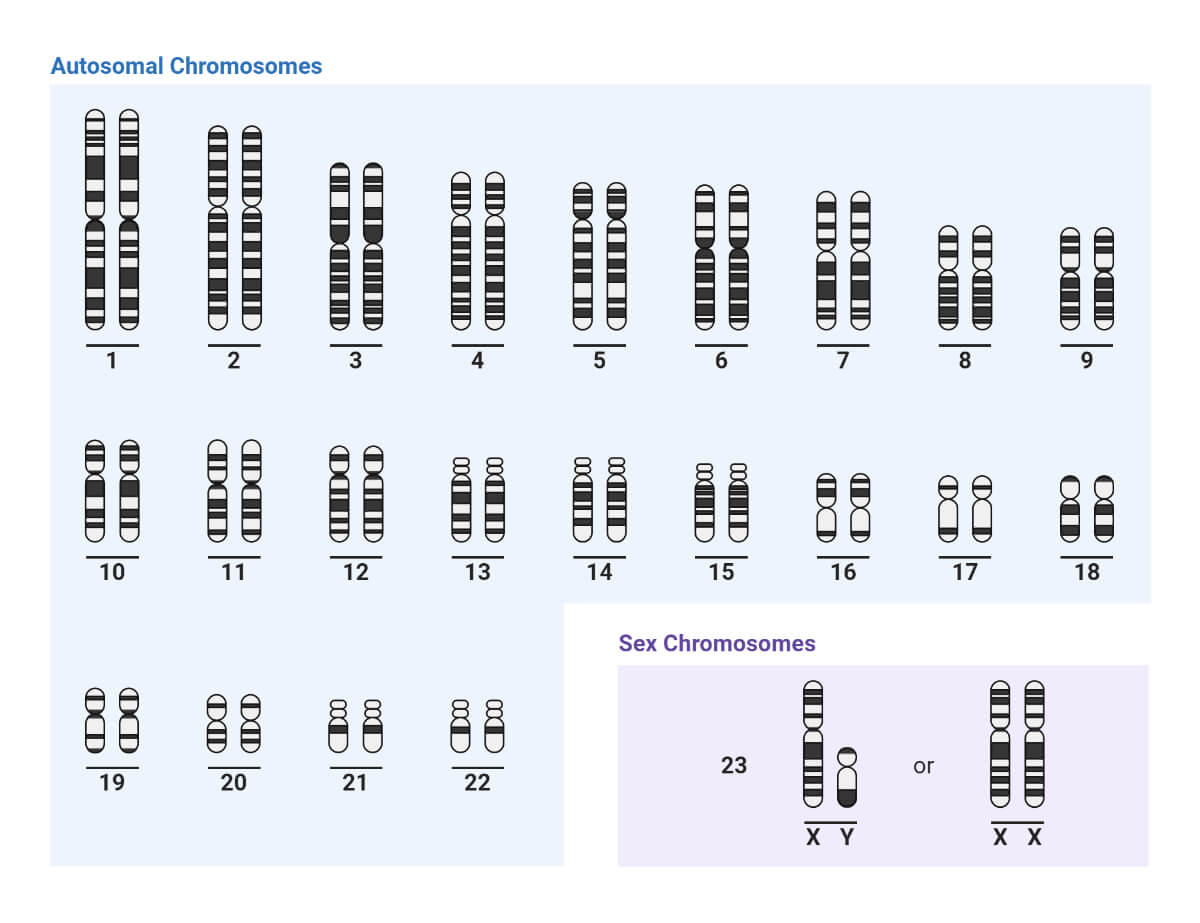 Humans have 46 chromosomes in each cell, arranged in 23 pairs: 22 pairs of autosomes and one pair of sex chromosomes.
Homologous chromosomes
Sexually reproducing organisms like humans result from the fusion of sperm and egg cells. Each gamete contributes one complete set of chromosomes to the offspring. This means that one chromosome from each pair derives from the maternal chromosomes (via the egg) and the other originates from the paternal chromosomes (via the sperm).
These paired chromosomes are called homologous pairs, and the total number is referred to as the diploid number (46 in humans). Homologous chromosomes always carry the same genes but may possess different versions of those genes.
Example
Understanding Homologous Chromosomes: A Practical Example
Both chromosomes in a homologous pair might contain genes for tongue rolling and blood group, but:
- One chromosome might carry the allele for non-roller and blood group A
- Its partner carries the allele for roller and blood group B
This demonstrates how homologous chromosomes have the same genes in the same positions, but potentially different versions (alleles) of those genes.
During meiosis, chromosome numbers are halved so each daughter cell receives one chromosome from each homologous pair. This ensures each cell contains one gene for each characteristic. When haploid gametes combine during fertilisation, the diploid state with paired homologous chromosomes is restored.
Understanding alleles
An allele represents one of several alternative forms that a gene can take. Genes are sections of DNA containing coded information as specific base sequences. Each gene can exist in two or occasionally more different forms, with each form called an allele.
Every individual inherits one allele from each parent for every gene. These two alleles may be identical or different. When alleles differ, each possesses a different base sequence, resulting in a different amino acid sequence and therefore producing a different polypeptide.
Changes in a gene's base sequence create new alleles through mutation, leading to different amino acid sequences being coded. This altered amino acid sequence produces different polypeptides and ultimately different proteins.
Important
When the altered protein is an enzyme, it may have a modified shape that prevents proper function with its substrate. Non-functional enzymes can have serious consequences for organisms, potentially affecting essential metabolic processes.
The relationship between alleles, proteins, and organism characteristics demonstrates how genetic variation at the molecular level translates into observable differences between individuals.
Summary
Key Points to Remember:
- Prokaryotic DNA is short, circular and free from histones, whilst eukaryotic DNA is long, linear and associated with histones
- Chromosomes are highly condensed DNA-histone complexes that become visible during cell division, consisting of two chromatids joined at the centromere
- Homologous chromosomes occur in pairs in diploid organisms, carrying the same genes but potentially different alleles
- Alleles are alternative forms of genes that can produce different proteins, leading to variation in characteristics
- DNA packaging involves multiple levels of coiling and folding to fit approximately 2 metres of DNA into each cell nucleus