Genes & the Genetic Code (AQA A-Level Biology): Revision Notes
📚Revision Notes
Genes & the Genetic Code
What is a gene?
A gene represents a specific section of DNA containing coded information necessary for producing polypeptides and functional RNA molecules. The coded information exists as a particular sequence of bases along the DNA molecule.
Note
Genes serve two primary functions by coding for:
- The amino acid sequence of a polypeptide
- Functional RNA molecules, including ribosomal RNA and transfer RNA
Since polypeptides form proteins and enzymes control chemical reactions, genes ultimately determine an organism's proteins. Enzymes are responsible for an organism's development and activities, meaning genes, alongside environmental factors, determine the nature and development of all organisms.
Each gene occupies a particular position called a locus on a DNA molecule. A single DNA molecule carries many different genes along its length.
The sequence of amino acids coded by DNA forms the primary structure of a protein. This primary structure determines the protein's tertiary structure and therefore its shape, including enzymes. DNA therefore indirectly controls protein shape through the genetic code.
The genetic code
Scientists discovered that DNA bases code for amino acids through logical reasoning. As only 20 different amino acids regularly occur in proteins, and each amino acid requires its own unique code, they determined that a minimum of three bases must code for each amino acid.
Example
Worked Example: Why Three Bases Are Needed
The reasoning follows this pattern:
- DNA contains only four different bases: adenine, guanine, cytosine, and thymine
- If each base coded for one amino acid, only 4 different amino acids could be coded
- Using pairs of bases provides different combinations, still insufficient for 20 amino acids
- Three bases produce different combinations, providing more than enough codes for 20 amino acids
Since the code uses three bases for each amino acid, each unit is called a triplet. With 64 possible triplets but only 20 amino acids, some amino acids are coded by more than one triplet.
Features of the genetic code
Experimental research has revealed several important characteristics of the genetic code:
Degenerate nature: The code is described as a degenerate code because most amino acids are coded by more than one triplet. Some amino acids have only a single triplet, while others have between two and six different triplets each.
Note
Directional reading: Triplets are always read in one specific direction along the DNA strand, ensuring consistent protein synthesis.
Start signal: The beginning of every DNA sequence coding for a polypeptide uses the same triplet, which codes for the amino acid methionine. If this initial methionine molecule doesn't form part of the final polypeptide, it is removed later.
Important
Stop signals: Three triplets do not code for any amino acid. These stop codons mark the end of a polypeptide chain, functioning like full stops at the end of sentences.
Non-overlapping: Each base in a sequence is read only once. For example, if six bases are numbered 123456, they are read as triplets 123 and 456, rather than overlapping combinations like 123, 234, 345.
Note
Universal application: With minor exceptions, each triplet codes for the same amino acid in all organisms. This universality provides indirect evidence for evolution, suggesting all life shares a common origin.
Gene structure and coding regions
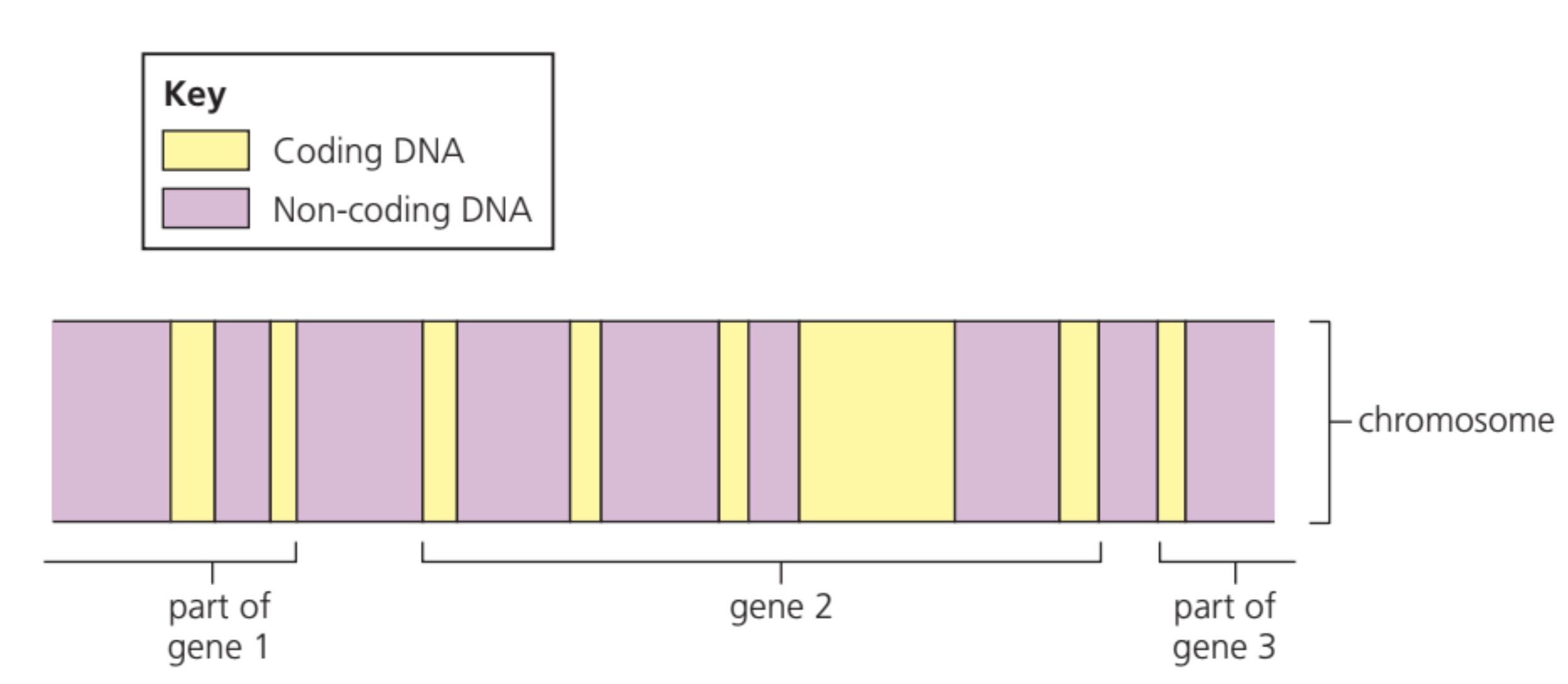
Much DNA in eukaryotes does not code for polypeptides. Between genes, non-coding sequences consist of multiple repeats of base sequences. Even within genes, certain sequences called exons code for amino acids, while these are separated by introns - further non-coding sequences.
Note
Some genes code specifically for ribosomal RNA and transfer RNA rather than polypeptides.
Interpreting the genetic code
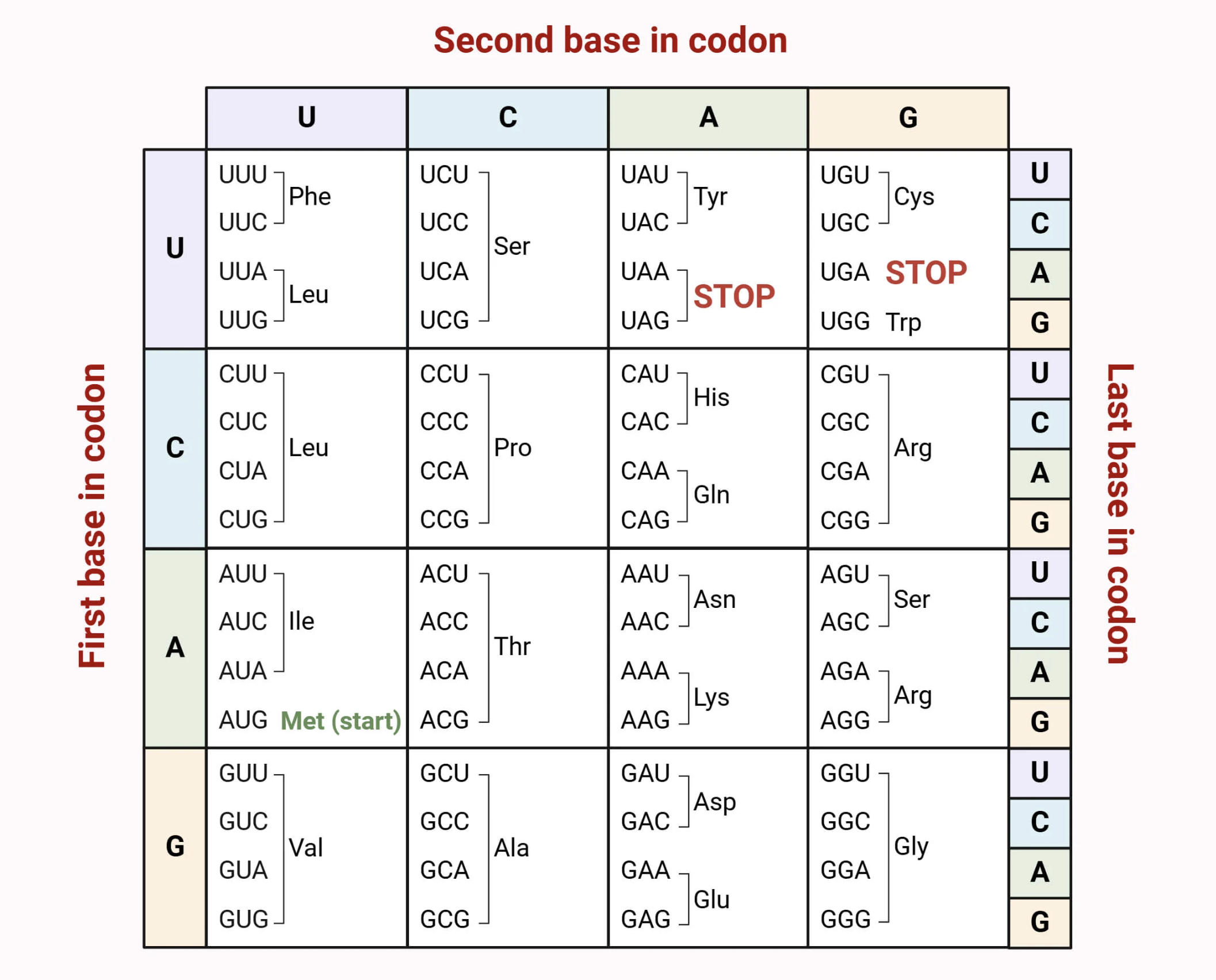
The genetic code table shows which amino acids correspond to each codon (set of three nucleotides in mRNA). To find the amino acid coded by any triplet, locate:
- The first base from the left column
- The second base from the top row
- The third base from the right column
Example
Worked Example: Reading the Genetic Code
Most amino acids have multiple codons. For example, alanine has four different codons: GCU, GCC, GCA, and GCG. This redundancy in the genetic code helps protect against mutations, as changes in the third position often still code for the same amino acid.
Summary
Key Points to Remember:
- A gene is a DNA section containing coded information for making polypeptides and functional RNA
- The genetic code uses triplets of bases because three bases provide 64 combinations (), enough for 20 amino acids
- The code is degenerate - most amino acids have multiple triplets coding for them
- The code is universal across almost all organisms, providing evidence for common evolutionary origin
- Exons are coding sequences within genes, separated by non-coding introns