Influences on Business Decisions (Edexcel A-Level Business): Revision Notes
📚Revision Notes
Business Ethics
What are business ethics?
Business ethics examines the moral rights and wrongs of decisions made at a strategic level within an organization. Unlike day-to-day operational choices made by individual employees, ethical business decisions typically involve senior management and shape the long-term direction of the company.
All businesses face ethical decisions regularly. Some ethical matters are governed by law. For instance, businesses cannot legally dump waste illegally or operate unsafe vehicles. However, many ethical questions exist outside legal frameworks and require businesses to make judgment calls. Should an employer grant paid leave for an employee caring for a sick child? Should a company continue purchasing from overseas suppliers where working conditions are poor?
Note
Legal vs. Ethical Decisions
While laws set minimum standards for business behavior, ethics often extend beyond legal requirements. A business might legally pay minimum wage, but ethically question whether this provides adequate living standards. Many of the most challenging business decisions involve areas where legal frameworks provide no clear guidance.
Most businesses establish a code of conduct that sets out expected standards for ethical decision-making. While individual employees may hold different personal views on specific issues, businesses generally maintain consistent ethical positions aligned with their stated values and mission statements. These standards form part of the organization's corporate culture and guide how the business interacts with its various stakeholders.
Key ethical issues facing businesses
Businesses encounter numerous ethical challenges that require strategic decisions. The following areas represent the most significant ethical concerns for modern companies.
The environment
Environmental protection presents ongoing ethical dilemmas for businesses. While regulations in countries like the UK and USA set minimum standards for pollution and environmental damage, companies must decide whether to exceed these requirements. Should a business invest in recycling programs if doing so reduces profitability? Multinational corporations operating in developing countries often face lower environmental standards. They must choose whether to maintain their home country standards or adopt the less stringent local requirements.
Animal rights
Companies in certain industries face criticism regarding animal welfare. Pharmaceutical firms and cosmetics manufacturers may use animal testing for product development, which animal rights groups consider unethical. Other businesses, particularly food producers and oil companies, can destroy natural habitats and endanger wildlife. Conservation groups oppose farming practices that eliminate forests or other ecosystems, and oil operations that pollute environments and harm animal and plant life.
Workers in developing countries
Many companies face accusations of worker exploitation in developing nations. Manufacturing in emerging economies offers significantly lower production costs, but this raises ethical questions about whether cost savings should come at workers' expense. Issues include low wages, poor working conditions, long hours, and inadequate safety standards.
Important
Common Ethical Pitfalls
Businesses often justify lower standards in developing countries by arguing they're "following local practices" or "providing jobs where none existed." However, critics point out that multinational corporations have the resources to maintain higher standards globally and that worker exploitation undermines human dignity regardless of location.
Corruption
Bribery represents a serious ethical issue in certain industries and regions. Some emerging economies have environments where civil servants or government officials expect payments for major business contracts, such as arms deals. Companies must decide whether to engage in bribery even when competitors do, and whether involvement in arms trading with politically unstable regions is ethical.
New technologies
Most new products, like mobile phones or confectionery, pose few ethical concerns. However, certain technological developments generate controversy. Nuclear power generation has been debated since the 1950s. More recently, genetically modified (GM) crops have raised significant concerns. Future developments like cloning may provoke strong ethical reactions.
Product availability
When someone cannot afford luxury goods like expensive cars, most people do not view this as an ethical issue. However, when HIV-positive individuals in South Africa cannot access life-saving drugs due to high pharmaceutical prices, many consider this an ethical problem. The direction of research also matters ethically. Companies might develop treatments for rare conditions affecting few people in industrialized nations, or focus on diseases like malaria that kill millions annually in developing countries.
Trading issues
Some countries face international condemnation for government policies, sometimes resulting in sanctions or trade embargoes. Companies must decide whether to trade with or invest in these nations despite international disapproval.
Implementing ethical standards
Codes of practice
Many large businesses have adopted ethical codes of practice in recent years. These documents establish guidelines for how employees should respond when ethical issues arise. While codes vary between businesses and industries, they typically include statements about:
- Environmental responsibility: Commitments to protecting the natural environment
- Fair dealing: Treating customers and suppliers honestly and fairly
- Fair competition: Competing legitimately without engaging in collusion or predatory pricing
- Workforce treatment: Responding fairly to employee needs and maintaining good working conditions
Ethical objectives
Businesses may develop ethical objectives that inform their codes of practice. These objectives can be explicit or implicit.
Note
Understanding Explicit vs. Implicit Objectives
Explicit ethical objectives are formally stated and publicly communicated. For example, a large business might declare that it will:
- Not test products on animals
- Deal fairly with all suppliers
- Never accept bribes from customers
Companies carefully consider explicit objectives because violating stated ethical commitments can generate negative publicity and damage reputation.
Implicit ethical objectives are not formally written down. Instead, they form part of the organization's corporate culture and represent unwritten rules about stakeholder treatment. For instance, most businesses aim to deal fairly with customers, even without explicitly stating this objective. Implicit objectives guide everyday business conduct without formal documentation.
Corporate Social Responsibility (CSR)
Corporate Social Responsibility (CSR) recognizes that businesses have responsibilities extending beyond shareholders to include all stakeholders. Some large businesses demonstrate CSR commitment by auditing relevant activities and publishing the results in Corporate Responsibility Reports, similar to how financial accounts are made public.
Auditing involves inspecting evidence against established standards, allowing auditors to verify that information presented by businesses is accurate and fair. While financial accounting standards are set by bodies like the Accounting Standards Board, social and environmental auditing remains voluntary with no universal standards. Companies choose their own measurement criteria and auditors.

Important
Voluntary Nature of CSR Audits
Unlike financial audits which are legally required and follow strict standards, social and environmental audits remain entirely voluntary. This means:
- Businesses select which indicators to measure
- Companies choose their own auditors
- No universal standards exist for comparison
- Businesses can present favorable data while omitting less positive information
This voluntary approach limits the reliability and comparability of CSR reports across different companies.
Most businesses do not conduct social or environmental audits. Those that do use varied measures depending on their industry. An oil company might track oil spills, while a drinks manufacturer might measure air pollution from production facilities. The voluntary nature of these audits means businesses select indicators most relevant to their operations.
CSR audit indicators
Social and environmental audits typically include both financial and non-financial measures across several categories:
Employment indicators assess workforce treatment, including:
- Pension and healthcare benefits
- Union representation and negotiating rights
- Training and education programs
- Workplace accident rates
- Minimum wage compliance
- Equal opportunities policies
- Women in senior management and director positions
Human rights indicators evaluate the company's human rights record, such as:
- Support for worker rights to join trade unions
- Existence of works councils
- Use of child labor (directly or through suppliers)
- Trading relationships with countries having poor human rights records
- Discrimination in recruitment and promotion based on race, gender, or age
Community impact examines effects on local communities where the business operates:
- Charitable donations
- Investment in local schools, hospitals, and housing
- Support for community programs and initiatives
Business integrity and ethics measures ethical conduct in business activities:
- Legal compliance in trading activities
- Political contributions and recipients
- Involvement in unfair competition cases
- Transparency in business dealings
Product responsibility considers social impacts of products sold:
- Health and safety issues
- After-sales service quality
- Advertising truthfulness and fairness
- Customer and supplier privacy protection
Environmental indicators can form separate environmental audits or integrate with broader social audits:
- Energy and raw material consumption (water, pesticides)
- Waste and effluent production
- Greenhouse gas and ozone-depleting emissions
- Recycling rates for materials used
- Impact on biodiversity
- Effects on protected and sensitive areas
- Fines for environmental regulation violations
Unlike financial accounts that provide clear profit and loss figures, social and environmental audits present diverse data that is difficult to summarize quickly. This makes year-on-year comparisons and overall performance assessment more challenging.
Pay and rewards
An important ethical consideration concerns employee pay and rewards. Remuneration refers to the reward from work, provided as pay, wages, or salary. Businesses use remuneration for several purposes:
Attracting skilled employees: Where jobs require fewer skills, abundant available workers allow relatively low pay rates. Where skills are extremely rare, such as top Premier League footballers, pay rates must be very high to attract the best talent.
Rewarding and motivating staff: Rather than simply minimizing labor costs to maximize profit margins, businesses must ensure pay rates motivate staff to perform at their best. Proper remuneration supports employee satisfaction and commitment.
Maximizing productivity: Pay serves as an important motivator, and highly motivated staff demonstrate greater productivity. Appropriate compensation strategies contribute to overall business performance.
National Minimum Wage
Generally, individual businesses determine pay rates independently. However, the UK government imposes a National Minimum Wage to protect low-paid workers. This legal requirement prevents businesses from paying extremely low wages.
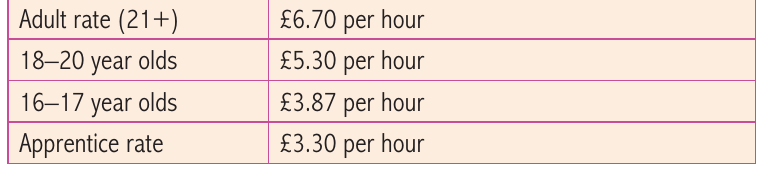
Some argue the National Minimum Wage remains insufficient for providing an adequate standard of living. Workers on low pay often qualify for Tax Credits, government payments to workers earning below certain thresholds. Effectively, the government supplements the difference between business-paid wages and the amount needed for basic living costs.
Living wage
The Living Wage Foundation, an independent organization campaigning for fair pay, developed the concept of a living wage. This wage rate is set higher than the National Minimum Wage and covers basic living costs. The 2015 living wage rate was £7.85 per hour (£9.15 in London), compared to the National Minimum Wage of £6.70 for adults.

Note
The Living Wage Debate
The difference between National Minimum Wage (£6.70 in 2015) and Living Wage (£7.85 in 2015) represents a significant gap - over £1 per hour. For a full-time worker (40 hours per week), this amounts to over £2,000 annually.
Supporters argue paying a living wage is an ethical responsibility, ensuring workers can afford basic living costs without government subsidies. Critics contend that businesses should determine pay based on market forces, and that mandating higher wages could lead to job losses or business closures, particularly for small enterprises operating on thin profit margins.
The ethical dimensions of pay decisions depend on perspective. Free market advocates argue businesses should determine pay independently. Business aims include maximizing profits and shareholder returns. If achieving this requires paying millions for highly skilled staff, that represents a legitimate business decision. When Manchester United pays Wayne Rooney £14.4 million annually, this reflects market value for exceptional talent. Without top players, the club cannot compete for championships and trophies.
Trade-offs between profit and ethics
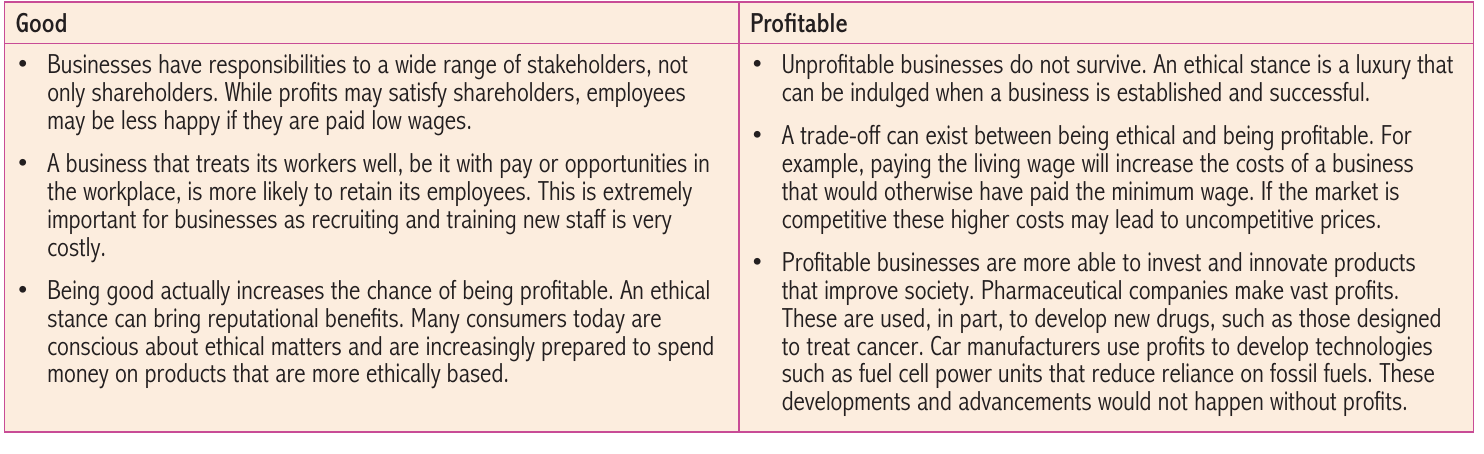
A trade-off occurs when selecting one choice results in losing another option. Trade-offs exist at all levels, from individuals to large corporations and governments. If you buy a new car, you might forego a holiday. If government increases income tax allowances, it might lack funds for infrastructure projects. Similarly, businesses face trade-offs with every decision. Investing in new production facilities might mean delaying vehicle fleet replacement.
Trade-offs become particularly apparent when considering ethics. Does acting ethically require accepting lower profits?
Costs of ethical behavior
Acting ethically beyond legal requirements can negatively impact profit in several ways:
Increased costs:
- Paying overseas workers higher wages than necessary increases expenses
- Finding alternatives to animal testing for new drug development adds costs
- Developing and implementing ethical codes requires staff training and management time
- Paying above legal minimum wages directly increases labor costs
Reduced revenues:
- Refusing to offer bribes might result in lost contracts
- Selling medicines to emerging economies at low prices may increase volume but decrease total revenue
- Avoiding controversial product development (like GM crops) might allow competitors to capture market leadership
- Extreme ethical positions might even threaten business survival (for example, a cigarette manufacturer fully accounting for health costs to customers might need to cease operations)
Benefits of ethical stances
Despite potential costs, adopting ethical positions can produce significant benefits:
Marketing advantages: Some companies successfully use their ethical stance for marketing purposes. In the UK, the Co-operative Bank and The Body Shop have increased sales by maintaining strong ethical positions that attract like-minded customers. Many high street coffee shops emphasize ethical credentials. Starbucks claims 99% of its coffee is ethically sourced through Conservation International partnership. Costa's Corporate Responsibility Report notes exclusive use of Forest Stewardship Council (FSC) certified wood for store furniture. However, ethical positioning does not guarantee success. Harris + Hoole, an artisan coffee brand emphasizing ethical credentials when launched in 2012, closed several London stores by 2014.
Reputation protection: For most companies taking Corporate Social Responsibility seriously, ethical conduct serves as insurance against reputational damage. Businesses want to avoid appearing unethical and facing legal penalties or customer boycotts.
Example
Cautionary Tale: Enron and Arthur Andersen
In 2002, two major companies paid heavily for unethical behavior, demonstrating the catastrophic consequences of ethical failures:
Enron: A large US energy trading company collapsed after manipulating accounts to inflate profits. Senior management hid this from shareholders and government. The scandal destroyed one of America's largest corporations virtually overnight.
Arthur Andersen: One of the world's top five accounting firms, which had audited Enron's accounts, was accused of concealing irregularities. The firm lost major customers and closed down entirely, ending decades of business reputation in months.
These cases illustrate how unethical behavior can lead to complete business failure, not merely reduced profits. The reputational damage proved terminal for both organizations.
Large companies must seriously consider behavioral consequences. Customers and society have become less tolerant of businesses behaving unethically. However, most companies adopt ethical policies primarily to prevent marketplace or legal harm. A few pursue aggressive ethical stances that sometimes attract additional customers. Small to medium-sized businesses often lack resources for formal ethical codes, instead developing ethical positions organically influenced by their operating environment.
The relationship between ethics and profitability remains complex and context-dependent. Whether ethical behavior supports or undermines profitability depends on factors including business type, market conditions, economic climate, and competitive dynamics. Some businesses thrive through ethical positioning, while others face challenges balancing moral standards with financial performance.
Remember!
Summary
Key Takeaways: Business Ethics
-
Business ethics examines moral rights and wrongs of strategic business decisions, extending beyond legal requirements to voluntary choices affecting stakeholders.
-
Key ethical issues include environmental protection, animal rights, worker treatment in developing countries, corruption, new technologies, product availability, and international trading relationships.
-
Ethical implementation occurs through codes of practice (formal guidelines) and ethical objectives (explicit public statements or implicit cultural values).
-
Corporate Social Responsibility (CSR) recognizes business responsibilities to all stakeholders, not just shareholders, measured through voluntary audits across employment, human rights, community impact, business integrity, product responsibility, and environmental indicators.
-
Pay and rewards present ethical challenges, particularly regarding the gap between National Minimum Wage (legal requirement, £6.70 in 2015) and Living Wage (voluntary higher standard covering basic living costs, £7.85 in 2015).
-
Trade-offs exist between ethical behavior and profitability—ethical actions can increase costs and reduce revenues, but may also provide marketing advantages and protect reputation against potentially catastrophic damage from unethical conduct.