Statement of Comprehensive Income (Edexcel A-Level Business): Revision Notes
📚Revision Notes
Statement of Comprehensive Income
What is a statement of comprehensive income?
The statement of comprehensive income (also known as the profit and loss account or income statement) is a financial document that shows how much profit or loss a business has made over a specific period, typically one year. Companies are legally required to produce this statement annually, though public limited companies (plcs) often prepare them quarterly for more frequent performance monitoring.
This statement works by starting with the total revenue (sales) a business has generated, then systematically deducting different categories of expenses to arrive at the final profit figure. Understanding how to read and interpret this statement is essential for evaluating business performance and making informed strategic decisions.
Note
The statement must follow standardised formats set by the International Accounting Standards Board, ensuring consistency and comparability across different businesses. This standardisation means that stakeholders can reliably compare performance between companies and across different time periods.
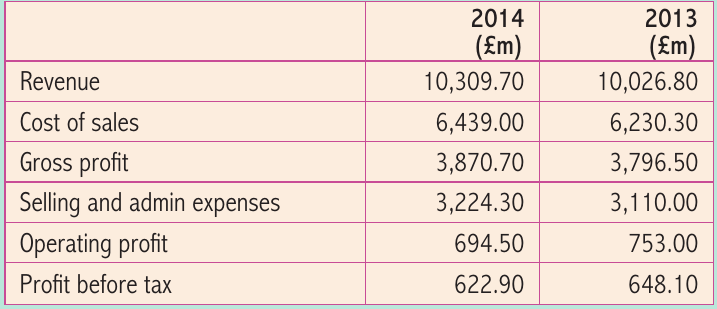
Key components of the statement of comprehensive income
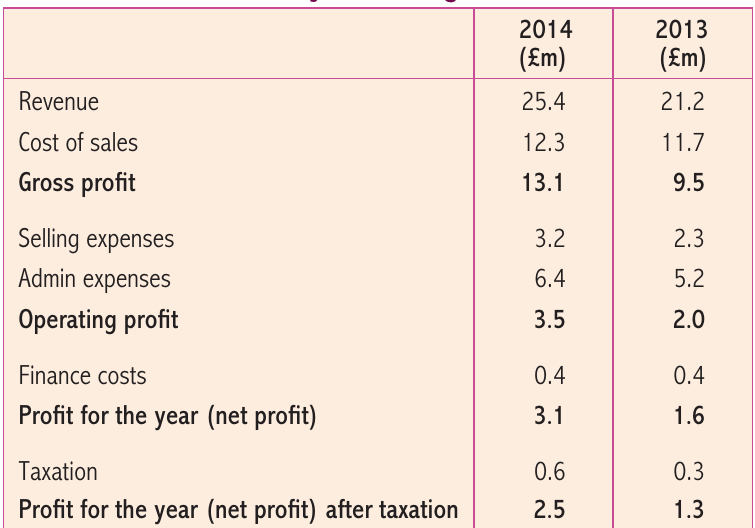
The statement of comprehensive income follows a logical structure, with each line representing a different aspect of the business's financial performance. Understanding what each component represents and how they relate to each other is crucial for accurate interpretation.
Revenue (turnover)
Revenue represents the total income a business generates from selling its goods or services during the accounting period. This is always shown excluding VAT because VAT collected belongs to the government, not the business. Revenue is the starting point for all profitability calculations and provides an immediate indicator of business size and growth.
When analysing revenue, look for trends over multiple years. Rising revenue typically indicates business growth, while falling revenue may signal problems with competitiveness, market conditions, or product demand.
Important
Revenue vs Profit
Revenue alone doesn't tell the full story – a business can have high revenue but still make losses if costs are too high. Always look beyond the top line to understand true profitability.
Cost of sales (direct costs)
Cost of sales includes all the direct costs involved in producing the goods or services that generated the revenue. These are costs that vary directly with production levels.
Example
Different Business Types and Cost of Sales:
For a manufacturer: Raw materials, component parts, factory wages, and production-related utilities
For a retailer: Purchase cost of stock bought for resale plus any direct labour costs
For service businesses: Direct costs of delivering services, particularly labour costs for service delivery staff
Understanding cost of sales is vital because it shows how efficiently a business converts its inputs into outputs. A business that can reduce its cost of sales while maintaining revenue will improve profitability significantly.
Gross profit
Gross profit is calculated by subtracting cost of sales from revenue. This figure reveals how much profit the business makes before accounting for overhead costs like administration, marketing, and finance charges.
Gross profit is a crucial performance indicator because it shows the fundamental profitability of a business's core trading activities. A healthy gross profit margin (gross profit as a percentage of revenue) suggests the business has effective cost control and appropriate pricing strategies.
Note
Different industries have different typical gross profit margins – retailers might operate on lower margins than manufacturers or service providers.
Selling expenses
Selling expenses are all the costs directly associated with marketing and selling products. These include sales staff salaries and commissions, advertising and promotional campaigns, distribution costs, and any expenses related to getting products to customers. While these aren't production costs, they're essential for generating revenue.
Businesses must balance selling expenses carefully. Insufficient spending on marketing and sales can limit growth, but excessive spending can erode profitability. The relationship between selling expenses and revenue growth is particularly important – increased selling expenses should ideally lead to proportionally greater revenue increases.
Administrative expenses (overheads)
Administrative expenses represent the general running costs of the business that aren't directly tied to production or sales. These indirect costs (overheads) include office staff salaries, rent and rates for premises, professional fees (legal, accounting), office supplies and equipment, insurance, and utilities for non-production facilities.
These costs often remain relatively stable regardless of sales levels, which is why they're sometimes called "fixed costs". However, businesses must control administrative expenses carefully because they directly reduce profitability without generating revenue.
Important
Control Your Overheads
Excessive overheads can make a business unprofitable even if its gross profit is healthy. Regular review and control of administrative expenses is essential for maintaining profitability.
Operating profit
Operating profit shows the profit generated from a business's core trading activities after deducting all operating expenses but before accounting for financing costs and taxation.
This is a particularly important profit measure because it isolates the performance of the actual business operations from the effects of how the business is financed. This makes operating profit useful for comparing businesses with different capital structures. A strong operating profit indicates effective operational management and suggests the business model itself is sound.
Finance costs (interest)
Finance costs represent the interest paid on borrowed money, such as bank loans, overdrafts, or bonds. When a business borrows to finance its operations or growth, it must pay interest to lenders. This appears as a finance cost in the income statement.
Note
Some businesses may also have finance income if they have cash deposits earning interest. This would be shown separately and added rather than deducted. The net finance cost (finance costs minus finance income) shows the overall cost of the business's financing arrangements.
High finance costs can significantly reduce profitability and may indicate excessive debt levels.
Profit for the year (net profit before tax)
Net profit before tax is calculated by subtracting finance costs from operating profit. This represents the profit the business has made before the government takes its share through taxation.
This figure is important because it shows the total profit generated by all business activities, including both operations and financing decisions. It's the profit that will be subject to corporation tax.
Profit for the year after taxation (the 'bottom line')
This is the final profit figure after corporation tax has been deducted. Often called the "bottom line" because it's the last line on the income statement, this represents the profit that belongs to the business owners (shareholders in a company).
Important
The Bottom Line Matters Most
The bottom line is crucial for shareholders because this is the pool of money from which dividends can be paid. However, not all of this profit is necessarily distributed to shareholders – businesses typically retain some profit to reinvest in growth and maintain financial stability. The bottom line also determines the addition to retained earnings in the balance sheet.
Understanding year-on-year comparisons
Statements of comprehensive income always show figures for at least two years – the current year and the previous year. This comparative approach allows stakeholders to identify trends and assess whether performance is improving or declining.
When analysing comparative figures, look for:
- Revenue growth – Is the business expanding its sales?
- Margin trends – Is gross profit margin improving or declining?
- Cost control – Are expenses rising faster or slower than revenue?
- Bottom line performance – Is net profit increasing, and by how much?
Note
Percentage Changes Provide Better Insight
Percentage changes often provide more insight than absolute figures. For example, if revenue increases by 20% but net profit only increases by 5%, this suggests costs are rising faster than sales, indicating potential efficiency problems that need addressing.
Who uses the statement of comprehensive income and why?
Different stakeholders have distinct interests in the statement of comprehensive income, using it to make various decisions and assessments about the business.
Shareholders
Shareholders are primarily interested in profitability, particularly the profit after tax figure, because this determines both dividend payments and the value of their investment. Rising profits typically lead to rising share prices, increasing shareholder wealth.
Shareholders use the income statement to assess whether management is performing effectively. They look for consistent profit growth, improving profit margins, and revenue expansion. Shareholders may also calculate profitability ratios (such as net profit margin) to compare performance with competitors or industry averages.
Note
If performance is poor, shareholders might pressure management to change strategy or, in extreme cases, vote to replace directors.
Managers and directors
Management teams use the statement of comprehensive income as a key performance monitoring tool. They set targets for various measures such as revenue growth, gross profit margin, and net profit, then use the actual results to assess whether these targets have been met.
Managers analyse the income statement to identify areas requiring attention. For example, if gross profit margin is falling, they might investigate whether suppliers have increased prices or whether production efficiency has declined. If operating profit is under pressure, they might look for ways to reduce overheads. The income statement helps managers make evidence-based decisions about pricing, cost control, and resource allocation.
Employees
Employees and trade unions may use the statement of comprehensive income when negotiating wages and working conditions. If the statement shows strong profit growth, employees can argue that the business can afford pay increases. Conversely, if profits are falling, management might use this evidence to resist wage increase demands or even propose pay cuts.
Employees also have a broader interest in business performance because job security depends on profitability. Consistently profitable businesses are more likely to maintain employment levels and invest in staff development, while unprofitable businesses may need to make redundancies.
Suppliers
Before offering credit terms to a new customer, suppliers should assess creditworthiness to avoid bad debts. The statement of comprehensive income provides evidence of a potential customer's financial viability. A business showing consistent profitability is more likely to be able to pay its bills on time.
Suppliers might request several years of accounts to see trends and verify that profitability isn't just a one-off occurrence. They're particularly interested in whether the business generates sufficient profits to cover its obligations. Unprofitable businesses or those showing declining profits represent higher credit risks.
The government
The government requires businesses to produce statements of comprehensive income by law for several purposes. HMRC (Her Majesty's Revenue and Customs) uses the statement to calculate corporation tax liability. Businesses must provide authenticated accounts annually to prove their tax calculations are correct.
Government agencies like the Office for National Statistics (ONS) also use aggregated business account data to produce economic statistics. These statistics inform government policy decisions and provide the public with information about economic performance and trends across different sectors.
Exam technique tips
When analysing a statement of comprehensive income in exam questions:
Important
Essential Exam Techniques:
-
Calculate percentage changes – Don't just state absolute figures; calculate the percentage change between years to show the significance of changes
-
Compare profit margins – Calculate gross profit margin and net profit margin to assess profitability relative to sales
-
Look for patterns – If revenue is rising but profits are falling, identify which costs are increasing disproportionately
-
Consider context – Think about external factors (economy, market conditions, competition) that might explain the figures
-
Use precise terminology – Distinguish between different profit measures (gross profit, operating profit, net profit)
-
Link to stakeholders – Explain how different stakeholders would interpret the figures differently
-
Make judgements – In evaluation questions, weigh up whether performance is genuinely strong or weak, considering both positive and negative aspects
Remember that analysis requires explanation of why figures have changed and what this means, not just description of what has changed.
Remember!
Summary
Key Points to Remember:
-
The statement of comprehensive income shows a business's income and expenses over a period (typically one year), working down from revenue to final profit after tax
-
Gross profit (Revenue - Cost of Sales) shows profitability before overheads, while operating profit (Gross Profit - Operating Expenses) shows profit from core trading activities
-
Net profit after tax (the "bottom line") is the profit belonging to shareholders, used for dividends and retained earnings
-
Year-on-year comparisons are essential for identifying trends and assessing whether performance is improving or deteriorating
-
Different stakeholders use the statement for different purposes: shareholders assess returns, managers monitor performance, employees negotiate wages, suppliers assess creditworthiness, and government collects tax
-
When evaluating performance, calculate percentage changes and profit margins rather than just comparing absolute figures – this provides better insight into whether the business is performing well