Globalisation (Edexcel A-Level Economics A): Revision Notes
📚Revision Notes
Globalisation
Understanding globalisation
Globalisation is one of the most significant economic phenomena of recent decades. The world economy has become increasingly integrated, meaning that individual economies can no longer be viewed in isolation. The UK economy exemplifies this interconnectedness through its extensive international trade, substantial importing and exporting activity, and the global presence of many UK firms.
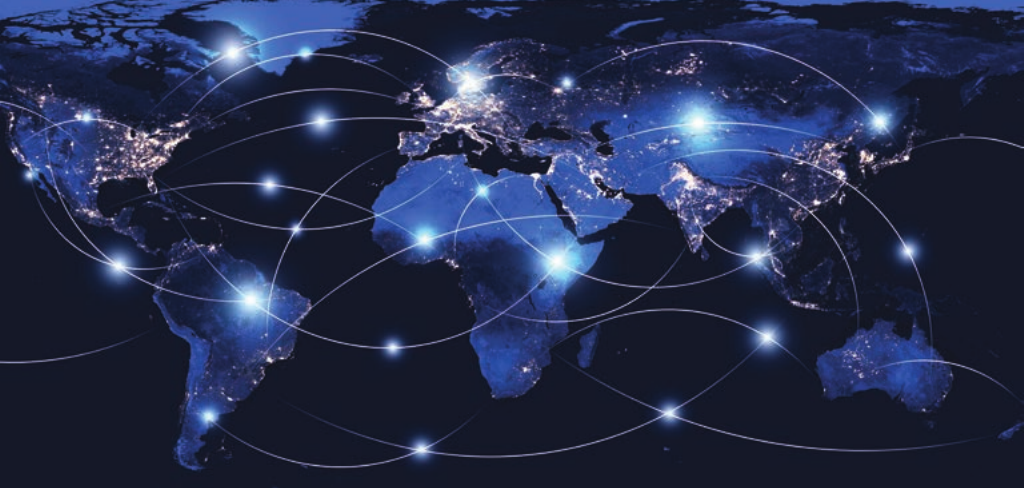
Globalisation is a process by which the world's economies are becoming more closely integrated. This integration affects not only trade in goods and services but also the movement of capital, technology, and people across borders.
One of the most influential definitions comes from Joseph Stiglitz, Nobel laureate and former chief economist at the World Bank, who described globalisation as:
"the closer integration of countries and peoples of the world which has been brought about by the enormous reduction of costs of transportation and communication, and the breaking down of artificial barriers to the flows of goods, services, capital, knowledge, and (to a lesser extent) people across borders."
Note
This definition highlights that globalisation is fundamentally about reducing the barriers that once separated national economies. Economic agents in one part of the world are now much more affected by events occurring elsewhere than ever before.
However, globalisation is not without controversy. Critics have raised concerns about its environmental impact and the opportunities it creates for powerful nations and large corporations to exploit weaker economies. Understanding both the benefits and drawbacks of globalisation is essential for evaluating its overall impact.
Foreign direct investment
A key driver of globalisation has been the expansion of foreign direct investment (FDI), which refers to investment undertaken in one country by companies based in other countries. This activity is primarily carried out by transnational companies – organisations whose production activities span multiple countries.
Motivations for FDI
The United Nations Conference on Trade and Development (UNCTAD) identifies three main reasons why transnational companies engage in FDI:
1. Market-seeking FDI
Some transnational companies invest abroad because they want to sell their products in a particular market and find it more efficient to produce within that market rather than export to it. This approach allows firms to avoid transportation costs, tariffs, and other trade barriers whilst better understanding local consumer preferences.
2. Resource-seeking FDI
Companies may undertake investment in a country to access specific resources. These might include:
- Natural resources such as oil or natural gas
- A skilled labour force with particular expertise
- Low-cost unskilled labour
Note
This type of FDI enables transnational companies to take advantage of varying factor endowments across different countries.
3. Efficiency-seeking FDI
Transnational companies may review their production options globally and decide that they can produce most efficiently in a particular location. This might involve locating just part of their production chain in a specific country to maximise overall efficiency. Such decisions reflect the ability of firms to fragment their production processes across multiple locations.
Regional patterns of FDI
Market-seeking FDI has been particularly important in certain regions. China's opening to foreign investment has attracted substantial transnational company investment, as firms seek access to its large and growing market. Similarly, non-European firms have invested heavily in the EU to gain entry to the Single Market. The UK has experienced a two-way flow of FDI, with foreign investors investing in Britain whilst UK investors have simultaneously invested abroad. The long-term effects of Brexit on UK FDI patterns remain to be seen.
Effects of FDI on host countries
FDI can have both positive and negative effects on the countries receiving it. On the positive side, there is hope that FDI will bring:
- Increased employment opportunities
- Higher tax revenue for the government
- Technology transfer and capital investment
- Positive spillover effects on economic growth
These benefits may be particularly significant for developing countries that lack capital and technology or struggle to raise tax revenue domestically.
Important
However, potential drawbacks exist. If profits generated by foreign investment are repatriated to shareholders elsewhere in the world, the long-term impact of FDI may be diluted rather than feeding back into economic growth in the host country. Additionally, tax concessions negotiated by transnational firms can reduce the benefits to the host country, and transferred technology may not always be appropriate or may not be effectively disseminated.
Factors contributing to globalisation
Several interconnected factors have driven the process of globalisation over recent decades.
Transportation and communication costs
One of the most significant contributory factors has been rapid advances in transportation and communication technology.
Improvements in transportation have enabled firms to fragment their production processes and take advantage of varying cost conditions in different parts of the world. For example, labour-intensive stages of production can now be sited in regions where labour is relatively plentiful and cheap. This flexibility has enabled transnational companies to thrive, in some cases operating across a wide range of countries.
Note
Communications technology has developed rapidly alongside the growth of the internet and e-commerce, enabling firms to compete more easily in global markets. Email, video conferencing platforms like Zoom and Microsoft Teams, and other forms of instant communication across the globe are now taken for granted. This has made it much easier for firms to communicate within their organisations and with other firms, fuelling closer integration of firms and economies.
The emergence of a global media presence has also enabled the rapid sharing of information and ideas, keeping consumers well informed about new products entering the market. These technological changes have reinforced existing economies of scale and scope, enabling firms to grow even larger. In the countries where they operate, the sheer size of some transnational companies gives them significant political and economic power.
Reduction of trade barriers
A second crucial factor has been the successive reduction in trade barriers during the period since the Second World War. This process began under the auspices of the General Agreement on Tariffs and Trade (GATT), which organised a series of 'rounds' of tariff reductions. The GATT was later replaced by the World Trade Organization (WTO), which continues this work.
Beyond these multilateral trade-liberalising measures, there has been a trend towards establishing free trade areas and customs unions in various parts of the world. The European Union represents just one example of this development. China's emergence on the world stage has also been of crucial importance. China has the largest population of any country in the world and has experienced unprecedented, consistent economic growth in recent decades.
Note
When China joined the WTO in 2001, it had a major impact on global markets. By agreeing to abide by WTO rules, China positively affected the confidence with which other countries could view trade with and investment in China.
By facilitating international trade, such developments have encouraged firms to become more active in trade, adding to the momentum towards globalisation.
Deregulation of financial markets
Hand in hand with these developments, measures have been introduced to remove many restrictions on the movement of financial capital between countries. This has made it much easier for firms to operate globally and has been reinforced by technological developments that enable financial transactions to be undertaken more quickly and efficiently.
Migration
In Europe, the formation of the Single European Market enabled freer movement of people within the EU. More broadly, successive conflicts around the world have resulted in large-scale movements of refugees, affecting patterns of labour supply.
The impact of globalisation
Globalisation and the growth of transnational companies have had significant effects on countries, governments, producers, consumers, workers, and the environment. Not all of these effects have been positive.
Impact on individual countries and governments
By enabling increased specialisation and trade, globalisation has facilitated economic growth. However, this has come at a cost, as countries have had to adjust to new patterns of economic activity.
Many advanced countries have experienced a transition in which traditional sectors such as manufacturing have declined in the face of competition from developing countries. This process is known as deindustrialisation – a process whereby the structure of economic activity in a country shifts away from manufacturing towards the service sector.
Note
Increased specialisation represents a transitional cost of globalisation. For example, the UK and other advanced economies have seen manufacturing decline whilst service sectors such as financial services have expanded and consolidated their position in global markets. Brexit has represented something of a retreat from trade, particularly with Europe, and many British firms struggled during the transition period. This was compounded by the COVID-19 pandemic, which caused further disruption to trading activity.
Political factors and the rise of China
When exploring globalisation, political factors must be considered. China's rise as a major force in the global economy has been a defining feature of recent decades. China experienced sustained economic growth at a rapid rate never seen before, fuelled partly by the expansion of exports.
This growth was partly enabled by political decisions. China manipulated its exchange rate to maintain the competitiveness of its exports by purchasing quantities of US government securities. This had the side effect of reducing US interest rates, which may have contributed to the 2008 financial crisis. The focus on exports also meant reducing production for the domestic economy, affecting the resources available for consumption within China.
Important
Globalisation was further affected by Russia's invasion of Ukraine in 2022. The economic sanctions imposed by Western economies on Russia led to a realignment of trade patterns, particularly in the energy sector, given the high dependence of European countries on Russian supplies of oil and gas.
External shocks in a globalised economy
One issue concerning a more closely integrated global economy is the question of resilience to shocks. Globalisation may function well when the world economy is booming and all nations can share in the success. But if the global economy enters recession, will all nations suffer the consequences?
Various situations might cause the global economy to experience a downturn, which would then affect countries and their governments worldwide. Governments need to be able to respond to such external shocks to protect their domestic economies.
Oil prices
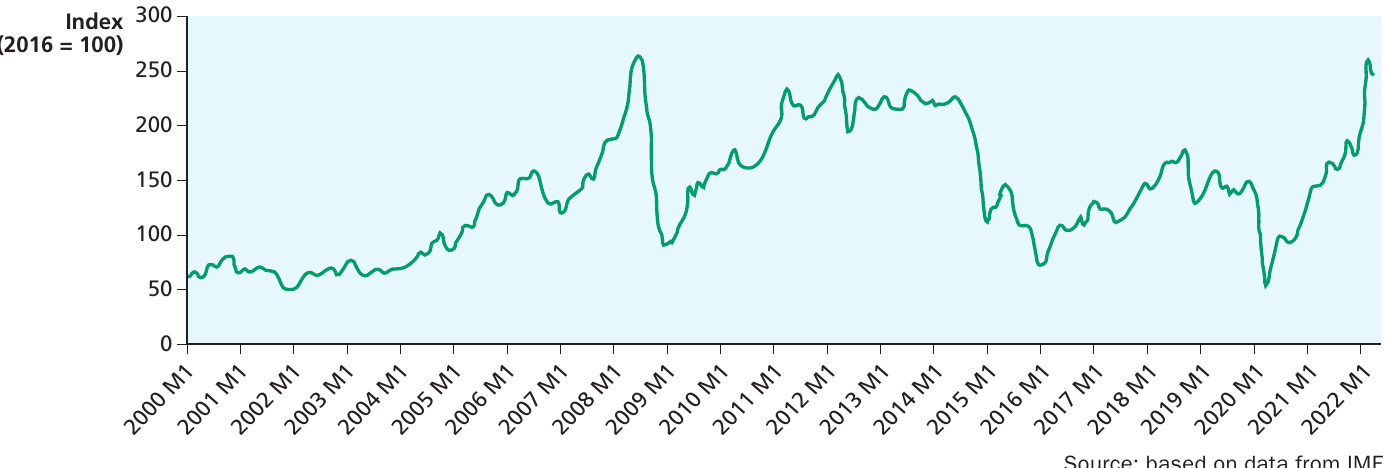
Oil prices present one significant threat. Historically, sudden changes in oil prices have caused widespread disruption. For example, in 1973-74 and 1979-80, sudden increases in prices followed supply-side shocks. The graph above shows how oil prices changed on a monthly basis after 2000, indexed to 2016 = 100.
In the 2000s, part of the upward pressure on price came from demand, with China's demand for oil being especially strong. The pressures of falling demand as the global recession began brought the price of oil tumbling in 2008. Prices rose again as the global economy recovered, and by 2011 oil prices were well above $100 per barrel. After 2014, increased production of oil from shale in the USA caused prices to fall again. In early 2017, OPEC began to curb production to support prices.
Note
During the early stages of the COVID-19 pandemic in 2020, oil prices fell dramatically. However, as the pandemic receded, prices rose again before spiralling upwards during the Ukrainian conflict.
The price of oil is significant because of its importance as an energy source for so many businesses. Fluctuations in oil prices can have knock-on effects across the global economy. Higher oil prices have also heightened awareness of environmental issues and stimulated the search for new energy sources.
Financial crisis
Given the increasing integration of financial markets, a further concern is whether globalisation increases the chances that a financial crisis will spread rapidly between countries rather than being contained within a country or region.
Important
The dangers of close interdependence became apparent in 2007-08, when a so-called 'credit crunch' began to affect commercial banks in several countries. This followed a period of relatively low interest rates that had allowed a bubble of borrowing. When house prices began to slide, many banks found that they had overextended themselves and had to cut back on lending, in some cases threatening their viability.
This recession would affect countries globally because of the new interconnectedness of economies. It became apparent that no single country could tackle the problem alone, as measures taken to support banks in one economy had rapid knock-on effects elsewhere. Once this was realised, coordinated action was taken. In October 2008, the central banks of several countries reduced their official bank rates together, followed by action aiming to salvage the situation and avoid a full-blooded recession.
By early 2009, the UK economy was officially in recession. Bank Rate had been lowered to an unprecedented 0.5%, and the Bank of England was introducing quantitative easing to stimulate the economy. One problem was that commercial banks had become reluctant to lend, so firms wanting to invest found it difficult to obtain funds. As time passed and the recession deepened, several countries in the Eurozone faced crises with their levels of public debt. Ireland, Greece, and Portugal in particular all needed bailouts.
Impact on producers
The changes brought about by globalisation have affected producers, opening up new opportunities but also presenting challenges.
Some firms were able to take advantage of new opportunities for international trade, expanding into new markets and sometimes into new products. In the UK, sectors such as financial services consolidated their position in global markets and profited accordingly.
However, some producers, especially in manufacturing, proved unable to compete with lower-cost producers elsewhere in the world. Brexit represented something of a retreat from trade with Europe, and British firms struggled during the transition period, which was compounded by the COVID-19 pandemic causing further disruption to trading activity.
Impact on consumers
Globalisation and the economic growth that accompanied it enabled an increase in living standards for people in many countries. Some countries, notably China, experienced a significant reduction in the number of people living in absolute poverty.
Furthermore, globalisation allowed more consumer choice, as it enabled access to a wider range of products than was previously possible. However, this may have a downside. Along with choice comes a danger that inappropriate products and lifestyles may spread at the expense of local cultures. For example, fast-food chains such as KFC and McDonald's have spread throughout the world, competing with traditional foods and potentially driving out local suppliers.
Note
On the positive side, competition and improved efficiency in production may have eased inflationary pressures in many developed countries.
Impact on workers
One effect of globalisation was to initiate changes in the pattern of production and trade, affecting the range of job opportunities available for workers. As service sectors expanded, workers displaced from manufacturing occupations did not always find it easy to retrain for service sector jobs, which typically require a different skill set.
Impact on the environment
Critics of globalisation have pointed to the impact that increased trade associated with globalisation may have on the environment, especially in the context of climate change and global warming. This connects to the notion of sustainable development, which refers to 'development which meets the needs of the present without compromising the ability of future generations to meet their own needs' (Brundtland Commission, 1987).
Important
The core of the argument is that increased trade means increased emissions of greenhouse gases because of the need to transport goods over long distances. For example, checking the country of origin of fruit and vegetables in your local supermarket reveals that these are imported from far and wide, even produce that could potentially be grown in the UK.
On this basis, it is argued that increasing such trade damages the environment. However, the case is not fully accepted by everyone, and the debate continues.
Remember!
Summary
Key Points to Remember:
-
Globalisation is the process by which world economies become more closely integrated, driven by reductions in transportation and communication costs, removal of trade barriers, and increased movement of capital and people.
-
Foreign direct investment (FDI) by transnational companies takes three main forms: market-seeking (to access specific markets), resource-seeking (to access natural resources or labour), and efficiency-seeking (to optimise production locations).
-
Key factors driving globalisation include: technological advances in transportation and communication, successive reductions in trade barriers through GATT and the WTO, deregulation of financial markets, and increased migration.
-
External shocks spread more rapidly in a globalised economy: oil price changes, financial crises, and political events (like the Ukraine conflict) can quickly affect countries worldwide, though integrated economies may also be more resilient in responding.
-
Globalisation creates both winners and losers: consumers benefit from greater choice and potentially lower prices, but producers in some sectors face intense competition, workers may need to retrain for different sectors, and environmental concerns arise from increased transportation and trade.