Genetic Engineering (OCR A-Level Biology A): Revision Notes
📚Revision Notes
Genetic Engineering
What is genetic engineering?
Genetic engineering is the modification of an organism's genome using techniques that are not possible through selective breeding. It involves removing one or more genes from an organism and inserting them into another organism. This can involve transfers between different species or between individuals of the same species.
Note
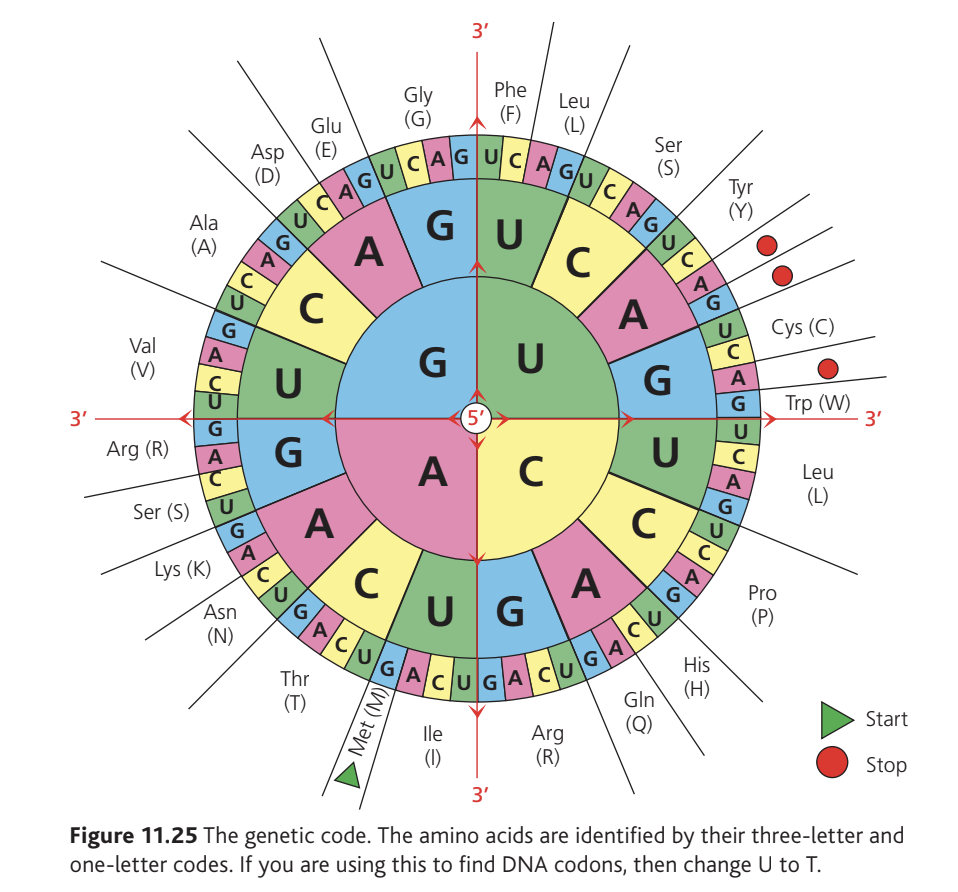
The process relies on the fact that the genetic code is universal. All organisms interpret DNA sequences in the same way, so a gene from one species will produce the same protein when transferred to any other species. For example, a human gene inserted into a bacterium will produce the same human protein in the bacterial cell.
DNA is obtained and inserted into a vector - a structure used to deliver genes into host cells. Vectors include viruses, plasmids, bacterial artificial chromosomes (BACs), and liposomes. Alternatively, DNA can be inserted directly into cells without using a vector.
Reasons for genetic engineering
Scientists modify organisms for several purposes:
- Producing chemicals and proteins that are difficult to obtain by other methods
- Making crops resistant to diseases, pests, and herbicides
- Making livestock resistant to diseases and pests
- Improving yields from crops and livestock
- Enhancing nutritional quality of crops
- Modifying animals to produce human proteins for medicines
- Engineering bacteria to absorb and break down toxic pollutants
Tools of genetic engineering
Scientists use various molecular tools discovered through research. The following table shows the main tools and their functions:
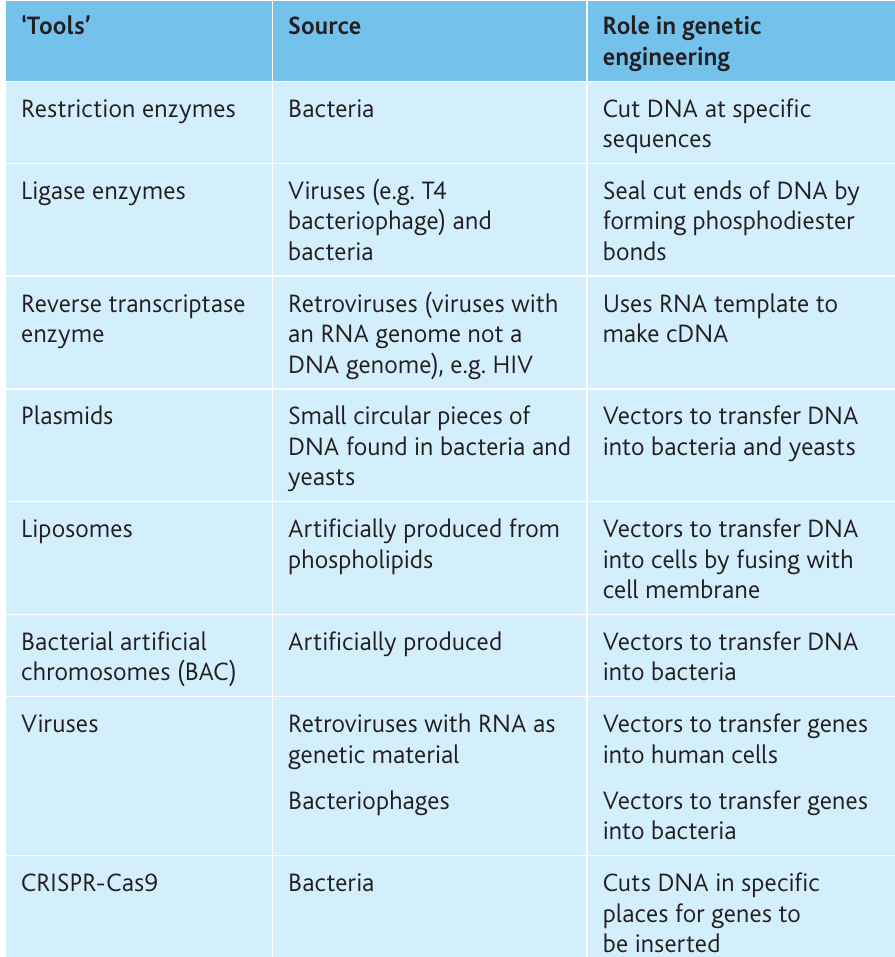
Restriction enzymes
Restriction enzymes (also called restriction endonucleases) cut DNA at specific sequences called restriction sites. These enzymes come from bacteria, where they defend against viral infections by cutting viral DNA.
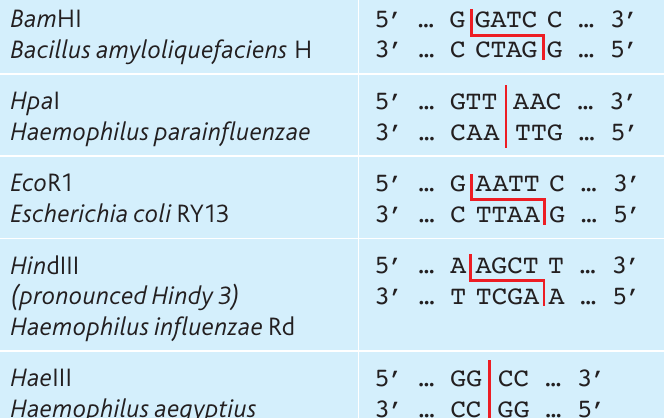
Each restriction enzyme recognises a specific nucleotide sequence, typically around 6 base pairs long. These sequences are palindromic - they read the same in the 5′ to 3′ direction on both strands. For example:
Note
Restriction enzymes are named after the bacteria from which they were first isolated. The cutting pattern varies between enzymes.
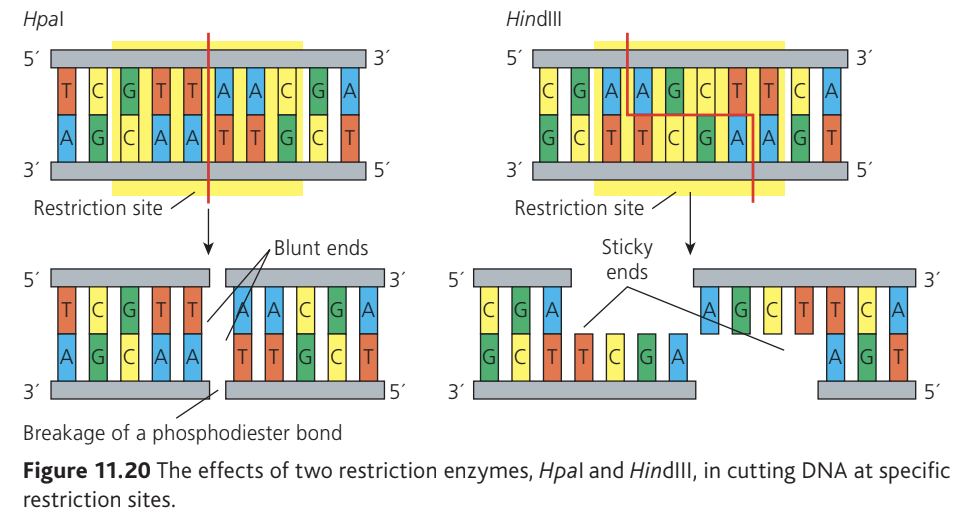
Some enzymes (like BamHI, EcoRI, and HindIII) produce sticky ends - short unpaired sequences that can form complementary base pairs with matching sequences. This allows genes cut by the same enzyme to join together through base pairing.
Other enzymes (like HpaI and HaeIII) cut straight across both strands, producing blunt ends with no unpaired bases.
Important
Sticky ends vs Blunt ends:
- Sticky ends have unpaired sequences that enable complementary base pairing, making them ideal for joining DNA fragments from different sources
- Blunt ends have no unpaired bases and are more difficult to join together
Ligase enzyme
Ligase catalyses the formation of phosphodiester bonds between DNA fragments. After restriction enzymes cut DNA and fragments are joined by complementary base pairing through sticky ends, ligase seals the sugar-phosphate backbone to create continuous DNA strands.
Reverse transcriptase
Reverse transcriptase is an enzyme that synthesises DNA using an RNA template - the reverse of normal transcription. It uses RNA as a template and deoxynucleotide triphosphates (dNTPs) to build a complementary DNA strand.
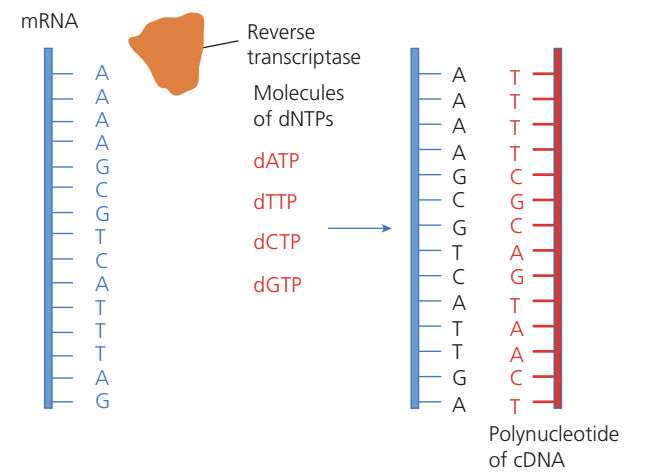
The DNA produced is called complementary DNA (cDNA). When mRNA from the cytoplasm is used as the template, the resulting cDNA has the same sequence as the coding strand of the original gene.
Important
The major advantage of cDNA: It contains only exons and no introns, making it immediately functional when inserted into bacteria. This is crucial because bacteria cannot process introns like eukaryotic cells can.
Obtaining mRNA from protein-synthesising cells is much easier than isolating specific genes from chromosomes. Reverse transcriptase was used to produce the insulin gene for bacterial production.
Vectors
Vectors are structures that transfer genes into host organisms. Different types serve different purposes:
- Plasmids: Small circular DNA molecules from bacteria and yeasts, used to transfer genes into these organisms
- Liposomes: Artificially produced from phospholipids, they fuse with cell membranes to deliver DNA
- Bacterial artificial chromosomes (BACs): Artificially produced to transfer large DNA segments into bacteria
- Viruses: Modified retroviruses and bacteriophages transfer genes into mammalian cells and bacteria respectively
CRISPR-Cas9
This bacterial system cuts DNA at specific locations, allowing precise gene insertion.
Important
Unlike earlier methods that insert genes randomly, CRISPR-Cas9 can target specific genome locations, reducing unwanted effects and improving the accuracy of genetic engineering.
The genetic engineering process
Inserting genes into bacteria
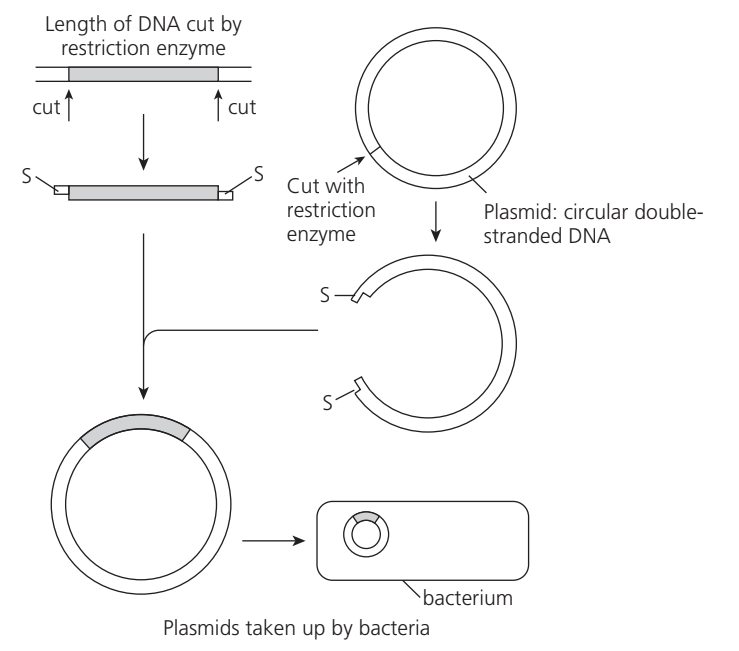
The general process involves several steps.
Example
Worked Example: Creating Recombinant DNA
Step 1: Cutting the DNA The desired gene and the plasmid vector are both cut with the same restriction enzyme, creating complementary sticky ends
Step 2: Mixing components Cut genes are mixed with cut plasmids. Some plasmids take up the gene through complementary base pairing of sticky ends; others reform without the gene
Step 3: Sealing Hydrogen bonds hold the sticky ends together temporarily. Ligase enzyme then forms permanent covalent phosphodiester bonds in the sugar-phosphate backbone
Step 4: Transformation Host bacteria are treated with calcium ions, cooled, and given an electric shock (electroporation) to increase membrane permeability and plasmid uptake
The DNA formed by combining sequences from two sources is called recombinant DNA (rDNA). Bacteria containing foreign DNA are described as transformed.
Identifying transformed cells
Not all plasmids take up foreign genes, and not all bacteria take up plasmids. Vectors contain marker genes to identify successfully transformed cells:
- Antibiotic resistance genes: Foreign genes are inserted into these genes, disrupting them. Transformed cells become sensitive to the antibiotic, while untransformed cells remain resistant
- Green fluorescent protein (GFP): A protein that emits bright green fluorescence under blue or UV light, indicating successful transformation
- β-glucuronidase (GUS): An enzyme that converts colourless substrates into coloured products, used in plants to show genetic modification
Note
Marker genes are essential for identifying which cells have successfully taken up the foreign DNA. Without them, it would be extremely difficult to distinguish transformed cells from untransformed ones.
Gene expression and replication
Once transformed, bacteria replicate the plasmids using DNA polymerase. The bacteria then divide by binary fission, each daughter cell receiving several plasmid copies.
If bacteria produce a foreign protein, they are described as transgenic. For successful transcription, a promoter must be inserted with the foreign gene. The complete DNA sequence - promoter, foreign gene, marker gene, and any other necessary elements - is called a gene construct.
Post-translational processing limitations
Important
Bacteria cannot perform the complex post-translational modifications that eukaryotic cells use to fold and modify proteins (such as adding sugars through glycosylation). Therefore, genetic engineers sometimes use yeasts, plant cells, or animal cells as hosts for producing proteins that require these modifications.
Advantages of using microorganisms
Bacteria, yeasts, and cultured mammalian cells offer several production benefits:
- Simple nutritional requirements
- Large-scale production volumes
- Space-efficient facilities
- Can be carried out anywhere in the world
Applications: GM crop plants
The first GM crops incorporated genes for pest and herbicide resistance to improve cultivation. More recent developments focus on improving human health.
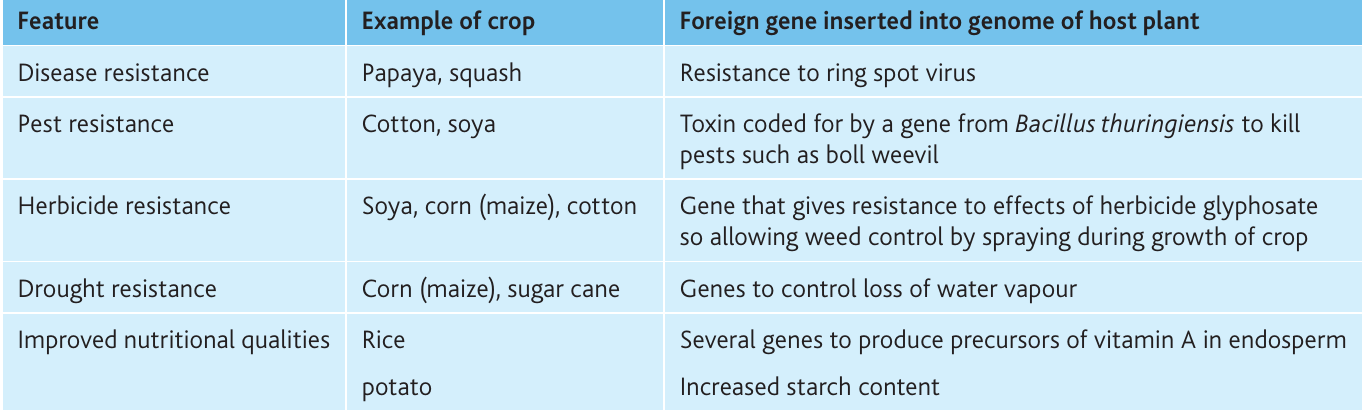
Example: GM soya beans
Example
Worked Example: GM Soya Bean Development
The Problem: Soya bean plants face attack from various insect pests including cotton bollworm, fall army worm, soybean looper, velvetbean caterpillar, and tobacco budworm. Annual losses run into billions of dollars.
The Solution: Biotechnology companies inserted a gene from the bacterium Bacillus thuringiensis into herbicide-resistant varieties. This gene codes for Bt toxin, which is poisonous to insect pests.
The Mechanism: The toxin binds to receptors on gut epithelial cell microvilli in larvae, inserting into membranes and forming pores. This creates water potential imbalances that kill the insects.
The Result: The variety INTACTA RR2 PRO™, introduced in Brazil in 2013 after 11 years of development, combines insect resistance, herbicide tolerance, and improved yield through more beans per pod.
Patenting and technology transfer
Note
Biotechnology companies patent their genetic modifications. To recover research and development costs, they charge higher prices for GM seed than non-GM seed. Farmers growing GM crops may also need to purchase specific herbicides from the same company.
Almost all soya grown in Brazil, Argentina, and the USA is now herbicide resistant. Increasingly, new varieties combine multiple features like pest resistance, high yield, and water efficiency. However, developing GM cereals may be too expensive for subsistence and small-scale farmers in developing countries.
Concerns about GM crops
Important
Major Concerns About GM Crops:
Many objections exist regarding GM organism development, use, and release:
- Antibiotic-resistance genes could transfer to pathogenic organisms, making infections untreatable
- Herbicide-resistance genes could transfer via pollen to weeds, creating herbicide-resistant "superweeds"
- Increased plant pathogen infections have been correlated with glyphosate herbicide use on resistant crops (particularly alfalfa in the USA)
- Foreign genes could transfer to wild relatives or contaminate non-GM and organic crops
- Inserted genes could mutate or activate/silence other genes with unforeseen consequences
- Herbicide-resistant crops may encourage increased herbicide use, raising farmer costs
- GM crops don't "breed true," so farmers cannot save seed for the following year, disadvantaging small-scale farmers in developing countries
- Viral genetic material used in engineering could recombine with natural viruses, potentially creating new or more harmful pathogens
- Major grain crops are becoming genetically uniform, losing diversity and making food security dependent on continued genetic manipulation
Regulation in the European Union
EU countries must approve GM crop growth and imported GM products. About half of EU countries, including France and Germany, have banned GM crop cultivation. Only one GM crop is currently grown commercially in the EU - a maize variety resistant to the European corn borer (Ostrinia nubilalis).
Note
However, EU countries, even those banning GM crop growth, import GM-derived products like animal feed made from GM soya and maize.
Campaign groups object to genetic modification developments, sometimes violently. Supporters argue GM technology is necessary to feed the growing global population and produce crops adapted to rapid climate change, since traditional breeding methods are too slow.
Applications: GM livestock
GM animals fall into two categories:
- Enhanced performance animals: Modified for improved overall performance; the whole animal enters the food market (though as of 2015, no GM animal had been approved for human consumption)
- Pharmaceutical production animals: Modified to produce specific substances in milk, eggs, or blood for therapeutic use, or to serve as medical research models
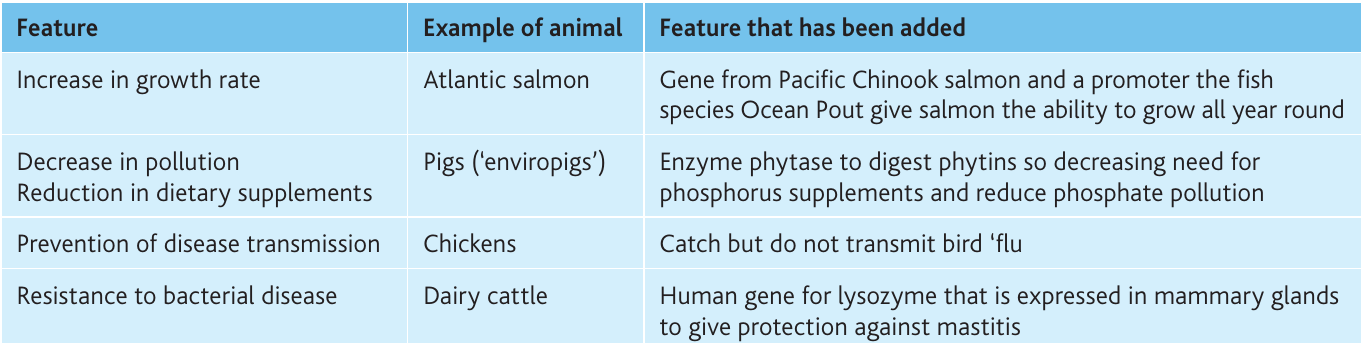
Pharming
Pharming refers to using livestock to produce pharmaceuticals. These animals are called "biopharm" animals.
Example
Examples of Pharming:
- Goats producing human antithrombin (prevents blood clotting) in milk
- Sheep producing human α-antitrypsin (treats emphysema) in milk
- Goats producing spider silk protein in milk for fibre research
The range of proteins that could be produced this way appears limitless.
Applications: GM microorganisms
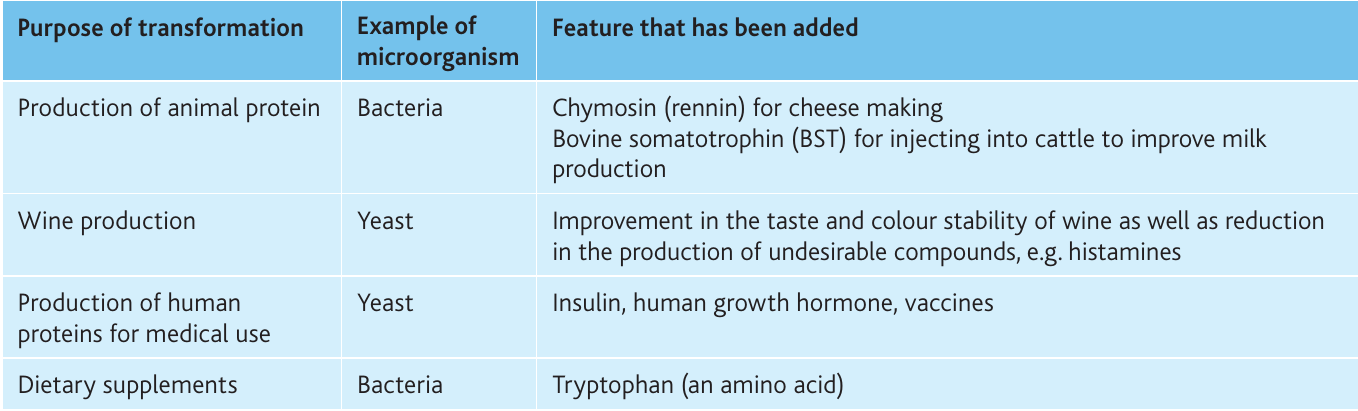
Microorganisms were the first organisms to be genetically engineered. They now produce a wide range of chemicals:
Pharmaceutical production
About 25% of commercial pharmaceuticals are biopharmaceuticals. GM organisms produce human and animal medicines that are difficult to obtain otherwise:
- Insulin for diabetes treatment
- Human growth hormone for children with hormone deficiency
- Thyroid-stimulating hormone for thyroid cancer treatment
- Factors 8 and 9 for treating blood-clotting protein deficiencies
- Vaccines (e.g., influenza)
- Monoclonal antibodies for cancer diagnosis and treatment
Most proteins used in genetic engineering itself (restriction enzymes, ligases) are also produced by GM microorganisms.
Production advantages
Using organisms for large-scale production offers cheaper prices. For example, each GM goat produces as much antithrombin annually as can be collected from 90,000 blood donations. Microorganisms and eukaryotic cells can be cultured on large scales without depending on factors like insulin availability from deceased animals.
Example: Insulin production
Example
Worked Example: Insulin Production Using GM Bacteria
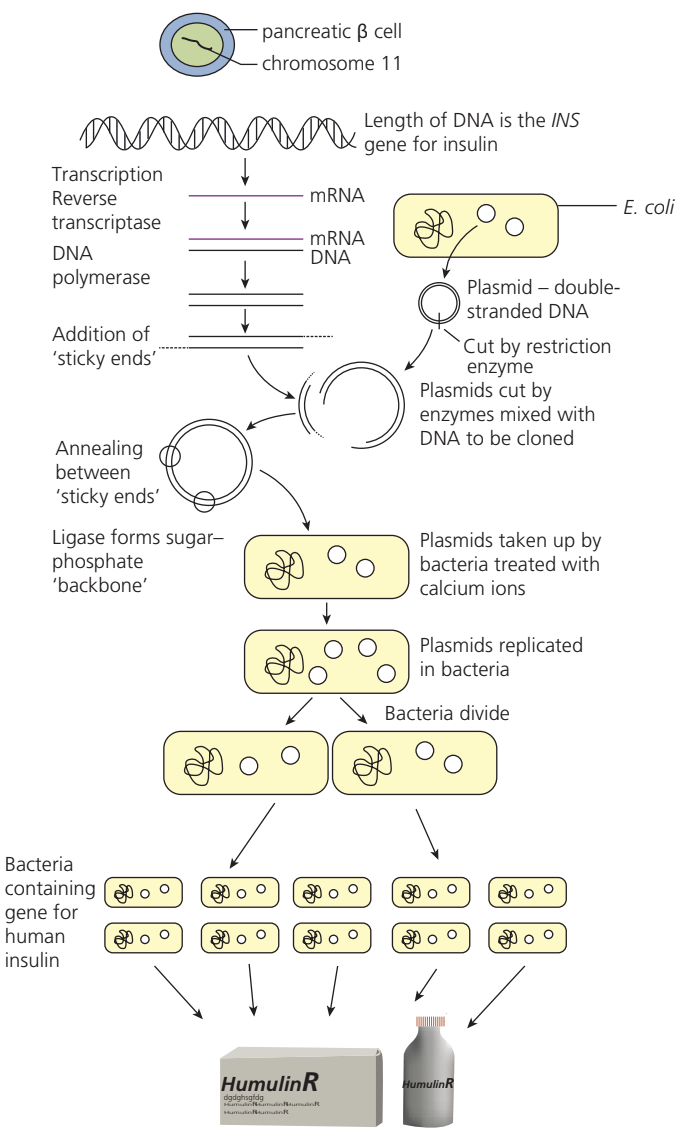
Insulin was the first recombinant product approved for treating humans. It has been produced for many years in Escherichia coli and Saccharomyces cerevisiae (yeast). The process involves:
Step 1: Extracting mRNA from pancreatic β cells (from chromosome 11)
Step 2: Using reverse transcriptase to synthesise cDNA from the mRNA
Step 3: Using DNA polymerase to create double-stranded DNA
Step 4: Adding sticky ends to the DNA
Step 5: Cutting plasmids with restriction enzymes
Step 6: Mixing plasmids with insulin gene DNA
Step 7: Annealing through sticky ends
Step 8: Using ligase to form the sugar-phosphate backbone
Step 9: Treating bacteria with calcium ions for uptake
Step 10: Replicating plasmids in bacteria
Step 11: Bacterial division producing insulin (Humulin®)
Applications: GM pathogens
Genetic engineering techniques have been used to study plant and animal pathogens.
Mycobacterium tuberculosis
This bacterium has been modified to investigate its metabolism, drug resistance, and disease mechanisms. Modifications enable faster growth, making it easier to study in vitro. Research provides insights for vaccine development and drug production.
Modified viruses for gene delivery
Adenovirus has been genetically modified to deliver genes in gene therapy. It's suitable because it infects human and mammalian cells without being species- or cell-type-specific.
Note
Modified adenoviruses have two genes removed to prevent replication after infection, creating space for inserted genes up to 7 kilobase pairs in length.
Recombinant human adenovirus type 5 expresses enhanced green fluorescent protein (eGFP) under promoter control. eGFP is a mutant with improved fluorescence and stability. Green fluorescence under UV light indicates successful gene delivery.
Tobacco mosaic virus (TMV)
TMV has been modified to deliver a gene for TMOF (a decapeptide hormone) into crop plant cells. GM viruses are sprayed on plants and invade cells. Host cells transcribe and translate the gene, producing TMOF that inhibits trypsin production by insect pests.
The DNA sequence for TMOF was combined with TMV coat protein sequences, so both translate as one molecule. Trypsin cuts the peptide bond joining them, releasing active TMOF, which then inhibits further trypsin production in insects.
After harvest, GM plant leaves can be processed into powder and used as spray to protect against insects including mosquitoes. TMV infects tobacco and many broad-leaved crops (tomatoes, peppers, potatoes), and TMOF acts on many insect pests and disease vectors like mosquitoes, giving GM TMV wide-ranging applications.
Practical and ethical considerations
These applications have few practical and ethical problems since proteins don't need extraction from animal sources or blood donor collections. However, bacteria cannot modify proteins the same way eukaryotic cells do. Therefore, eukaryotic cells are preferred for producing human proteins. For example, genetically modified hamster cells produce factor 8 for haemophilia A treatment.
Biosafety precautions
Important
Biosafety Measures:
Potential hazards exist from possible release of genetically modified organisms from laboratories and factories. Precautions include:
- Transgenic microorganisms compete poorly in natural environments because they use energy to produce substances that provide no survival advantage
- Containment facilities with filters on air conditioning and airlocks on doors prevent organism escape
- Lethal genes are added so microorganisms die if removed from culture conditions
Gene therapy
Gene therapy is genetic engineering applied to correct genetic "errors" in humans. It involves several methods:
- Replacing a mutated disease-causing gene with a functioning version
- Introducing a new gene to help fight disease
- Repairing mutated genes using enzymes to edit DNA and insert functioning genes
- Inactivating ("knocking out") mutated genes that don't function properly
Types of gene therapy
Somatic cell gene therapy
Somatic cells are all body cells except gamete-forming cells and gametes. These cells die when the individual dies, so genetic changes aren't passed to the next generation.
However, gene therapy can treat and potentially cure genetic conditions. Long-term treatments are possible by inserting functioning alleles into stem cells (e.g., bone marrow stem cells). The approach is most successful in long-lived cells like those in the retina, but less successful in cells replaced every few days, such as airway epithelium and gut lining.
Germ-line gene therapy
The germ line refers to cells that differentiate to form gametes. In mammals, the germ line forms early in development and populates the gonads (ovaries and testes). These cells increase by mitosis, then some divide by meiosis to form gametes.
Important
If a functioning allele is inserted into a fertilised egg, all cells formed by mitosis will be genetically altered. The change is permanent and will be inherited by future generations. This is currently not legal in the UK and many other countries, though some consider it a future development.
Examples of gene therapy
Severe combined immunodeficiency syndrome (SCID)
Example
Worked Example: Treating ADA-SCID
Gene therapy was first used successfully to treat children with SCID. In ADA-SCID, the enzyme adenosine deaminase (ADA) doesn't function due to homozygous recessive faulty alleles. ADA breaks down adenosine, which is toxic to white blood cells.
Treatment Process:
- Removing T cells (white blood cells)
- Giving cells the dominant allele for the enzyme
- Returning cells to the blood
First done successfully in 1990, the approach has been refined using modified stem cells from bone marrow rather than differentiated white blood cells. Using lentiviruses (modified HIV) as vectors for delivering the dominant allele to stem cells has improved results. Lentiviruses can deliver genes to both dividing and non-dividing cells.
Haemophilia
Two forms of haemophilia are sex-linked blood clotting disorders. Factor 8 and factor 9 are proteins in the blood clotting cascade, coded by genes on the X chromosome. Both conditions have been treated with adeno-associated-virus-based gene therapies where the vector is injected directly into the body and targets liver cells for gene expression.
β-thalassaemia
A person with β-thalassaemia doesn't produce β-globin of haemoglobin. Treatment involves incorporating the dominant allele into bone marrow stem cells. One patient was treated successfully with chemotherapy to kill some bone marrow cells before inserting treated stem cells. However, this success was considered fortunate and unlikely to be easily repeated. As of 2015, trials continue for this disease, common in UK populations of Mediterranean origin.
Cancer treatment
Advanced work involves removing T cells from a patient's bloodstream, giving them a gene encoding a chimeric antigen receptor that targets tumour cells, then reinfusing the cells into the patient's bloodstream.
Leber's congenital amaurosis (LCA)
The autosomal recessive sight disorder LCA was treated successfully with gene therapy in 2008. It's a rare disorder affecting 1 in 80,000 people, apparent at birth. Gene therapy has restored sight in treated patients.
Benefits of gene therapy
Summary
Key Benefits of Gene Therapy:
Clinical trials have been successful:
- Children with SCID no longer need sterile environments or injections of adenosine deaminase and antibodies
- Successfully treated children can expect normal life spans
- People with LCA can have sight restored
Hazards and side effects
Important
Hazardous Side Effects of Gene Therapy:
Gene therapy has hazardous side effects:
- Virus vectors have caused viral diseases
- The immune system may respond to the vector or proteins coded by inserted genes; each disease poses unique delivery problems
- Some boys with X-linked SCID developed leukaemia because retrovirus vectors inserted genes without control, activating proto-oncogenes that control cell division
Practical problems
Several practical issues limit gene therapy:
- Gene therapies may be temporary because genetically modified cells have short lifespans (e.g., airway cells in cystic fibrosis treatment)
- Directing vectors to specific target cells is difficult; even when alleles insert into intended cells, they aren't always expressed
- Only recessive conditions (haemophilia, LCA) can be treated; switching off dominant alleles (like the Huntington's disease allele) isn't yet possible
Note
CRISPR-Cas9 technology may soon solve problems with directing genes to appropriate genome locations. This enzyme can be directed to specific DNA sequences to insert genes. Once gene therapies for monogenic conditions become accepted, similar therapies may become available for multifactorial diseases like heart disease, dementias, and cancers.
Currently, only somatic cell gene therapy is practised. Germ-line therapy - placing genes into eggs or zygotes so all body cells contain them and they pass to the next generation - is not legal in any country. This approach could solve the problem of delivering genes to all cells requiring them.
Remember!
Summary
Key Points to Remember:
-
Genetic engineering transfers genes between organisms using the universal genetic code, employing vectors like plasmids and viruses to deliver genes into host cells
-
Key tools include restriction enzymes (cut DNA at specific palindromic sequences), ligase (joins DNA fragments), reverse transcriptase (makes cDNA from RNA), and various vectors for gene delivery
-
Sticky ends produced by some restriction enzymes allow genes and plasmids cut with the same enzyme to join through complementary base pairing, while ligase seals the DNA backbone
-
Applications span GM crops (pest/herbicide resistance, improved nutrition), GM livestock (pharming for pharmaceuticals), and GM microorganisms (producing insulin, vaccines, and other proteins)
-
Gene therapy treats genetic diseases by inserting functioning genes into somatic cells (non-heritable) or potentially into germ-line cells (heritable but currently illegal), with successes in SCID, haemophilia, and LCA, though challenges remain with delivery, expression, and potential side effects