Photosynthesis (Edexcel GCSE Biology Combined Science): Revision Notes
📚Revision Notes
Photosynthesis
Note
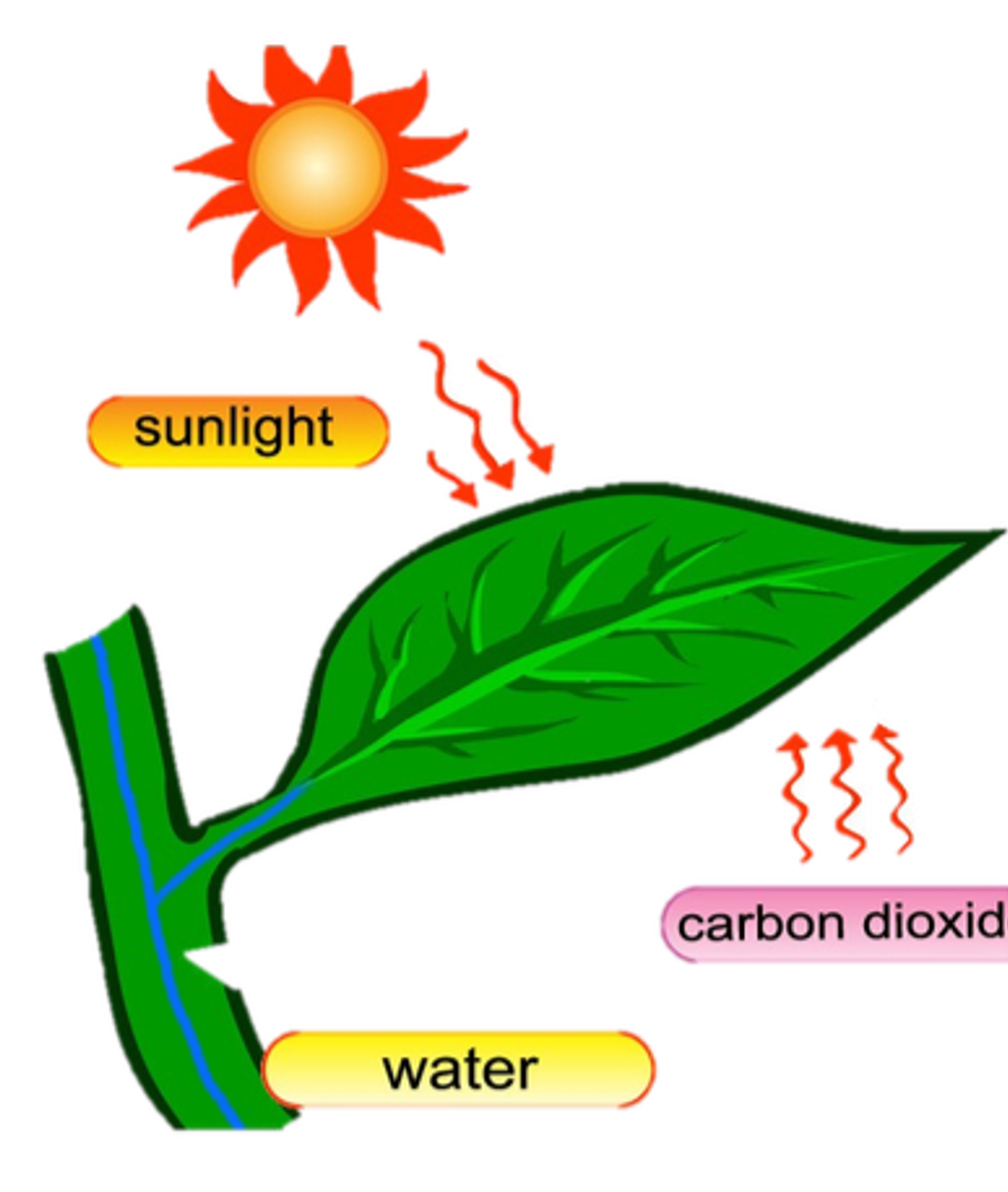
Photosynthesis is the process by which plants, algae, and some bacteria convert light energy from the sun into chemical energy in the form of glucose. This endothermic reaction requires energy, which is absorbed from the environment and transferred to the chloroplasts in plant cells by light.
Photosynthesis Equation:
The overall balanced equation for photosynthesis is:
In chemical symbols:
- Carbon Dioxide: CO₂
- Water: H₂O
- Glucose: C₆H₁₂O₆
- Oxygen: O₂
Note
During this process, carbon dioxide and water are transformed into glucose and oxygen. The glucose produced is used by the plant for energy and growth, while the oxygen is released as a by-product into the atmosphere.
Plants can make their own food
Happens in the chloroplasts: Contain chlorophyll which absorb light (energy)
Photosynthetic organisms are the main producers of food for the earth
Photosynthetic organisms such as green plants & algae use energy from the sun to make glucose ⬇️
Some of the glucose is used to make larger complex molecules that the plant needs to grow (made of the organisms biomass)
⬇️
The energy stored in the organism's biomass then works its way through the food chain as animals eat them & each other
Endothermic reaction
- Energy is taken in during the reaction