Transport in plants (Edexcel GCSE Biology Combined Science): Revision Notes
📚Revision Notes
Transport in plants
Transportation in Plants
Unlike animals, plants do not have a heart, blood, or a circulatory system. However, they still need a way to move essential substances like food, water, and minerals throughout the plant. Plants use two specialised transport systems to achieve this: xylem and phloem. These systems transport substances from the roots to the leaves and throughout the plant.
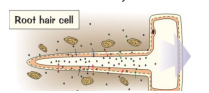
Root Hair Cells:
-
Cells on the surface of plant roots grow into hairs which stick out into soil
-
Each branch of a root will be covered in millions of those hairs Adaptations: Root hair cells absorb water by osmosis and mineral ions by active transport. They have:
-
A large surface area absorbs more water and minerals.
-
Numerous mitochondria to supply energy for active transport. The water absorbed supports plant functions such as:
-
Acting as a reactant in photosynthesis.
-
Keeping cells rigid to support leaves and stems.
-
Cooling leaves by evaporation.
-
Transporting dissolved minerals around the plant.
-
Note
The concentration of mineral ions is normally higher in root hair cells than in soil so they are absorbed by active transport
Water is absorbed by osmosis
Xylem – Water and Mineral Transport
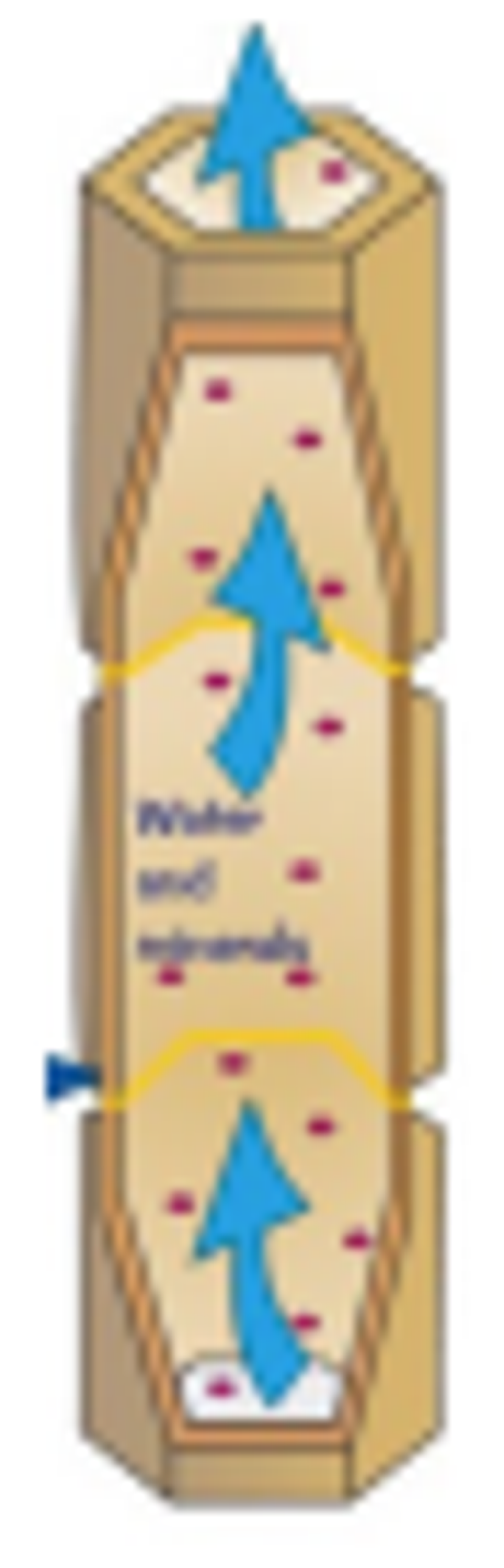
Xylem tubes (takes water up) Made of dead cells joined end to end with no walls between them & a hole down the middle. They are straightened with a material called lignin
- Function: The xylem transports water and minerals from the roots, up the stem, and into the leaves.
- Structure: Xylem consists of dead cells that form continuous, hollow tubes. These cells have:
- No end walls, allowing water to flow freely.
- Strengthened walls containing lignin, which provides structural support. Lignified cells form wood.
- Transport Process: Transport in the xylem is a physical process that requires no energy, moving water and minerals upwards through the plant via a process called transpiration.
Phloem – Food Transport
Function:
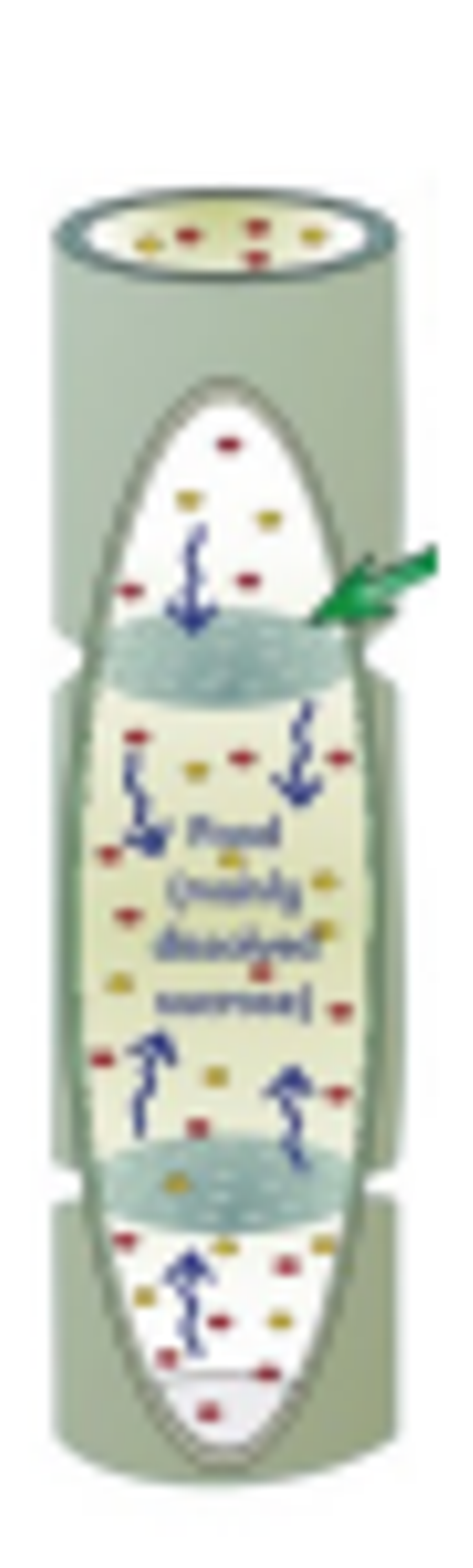
The phloem transports food substances, such as sucrose and amino acids, from the leaves (where they are produced during photosynthesis) to other parts of the plant. This process is called translocation.
Structure: Phloem consists of living cells and includes:
- Sieve tubes: Specialised for transport, with no nuclei and perforated ends, allowing cytoplasm to connect between cells.
- Companion cells: Provide energy for translocation. Each sieve tube relies on one or more companion cells. Transport Process:
Transport in the phloem requires energy because it is an active process. Food substances move both upwards and downwards to where they are needed, such as growing tissues, storage organs (like bulbs or tubers), and developing seeds.
Transpiration (loss of water)
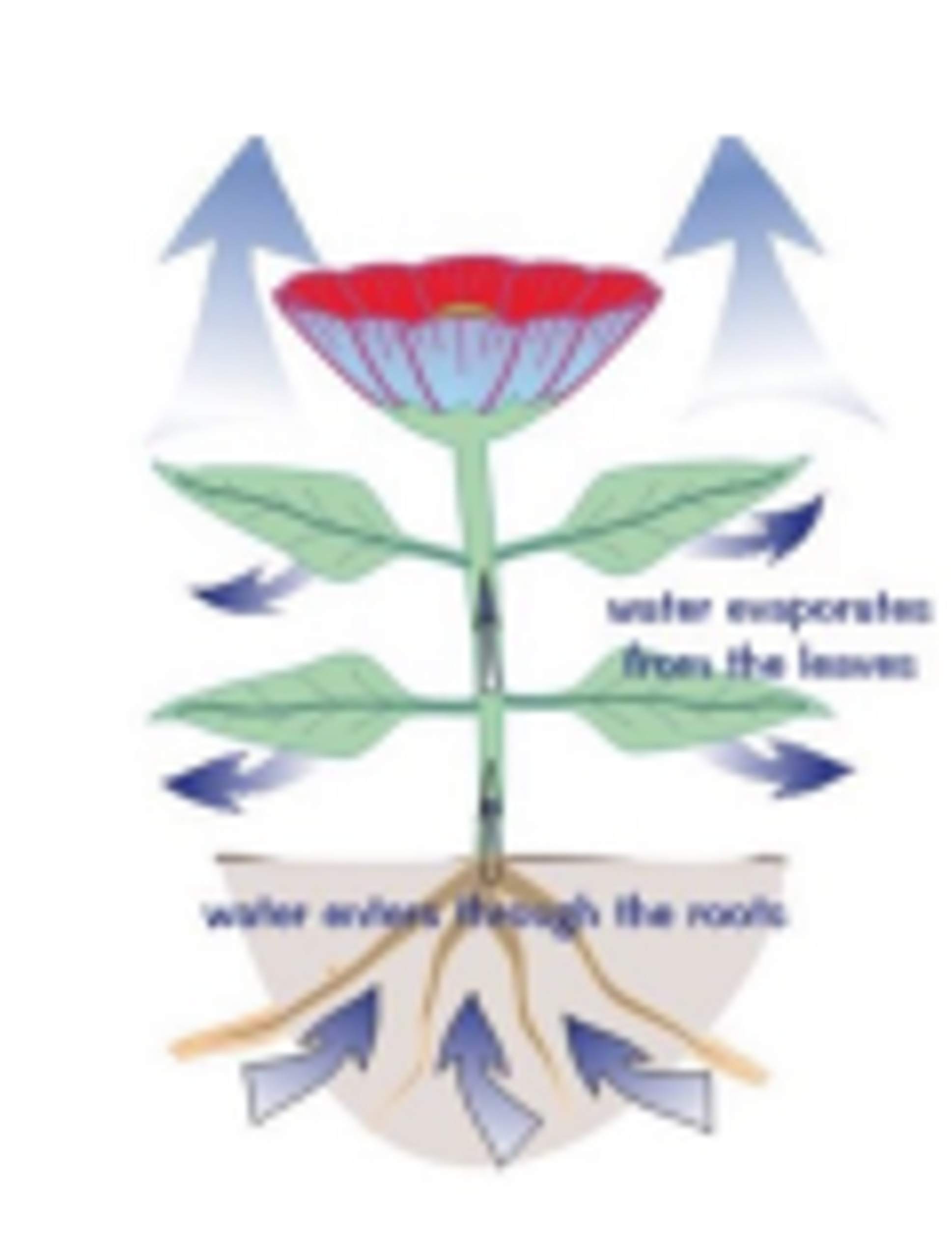
Caused by evaporation & diffusion of water from plants surface which normally happens on leaves
This creates slight shortage of water in the leaf so more water is drawn up from the rest of the plant through xylem vessels to replace it
So more water is drawn up roots so there's constant transpiration stream of water through the plant
Transpiration stream carries mineral ions that are dissolved in water along it
Stomata and Transpiration
- Stomata are tiny openings on the underside of leaves that control water loss and gas exchange. They allow water vapour and oxygen to exit the leaf and carbon dioxide to enter for photosynthesis.
- Guard Cells control the opening and closing of the stomata:
- In bright light, guard cells take in water by osmosis and become turgid, opening the stomata.
- In low light, guard cells lose water, become flaccid, and the stomata close. This helps regulate water loss, especially in dry conditions, preventing the plant from wilting. The size of the stomatal openings regulates the rate of transpiration, helping the plant control water loss.
Comparison of Xylem and Phloem
| Xylem | Phloem |
|---|---|
| Type of Transport | Physical process (no energy required) |
| Substances Transported | Water and minerals |
| Direction of Transport | Upwards (from roots to leaves) |
Summary of Transport in Plants
Plants rely on the xylem and phloem for transporting essential substances:
- The xylem moves water and minerals from the roots to the leaves.
- Phloem moves food substances like sugars to where they are needed in the plant, both upwards and downwards. The efficiency of these transport systems helps plants grow, support their structure, and carry out photosynthesis.