Plant hormones (Edexcel GCSE Biology): Revision Notes
📚Revision Notes
Plant hormones
Plant Hormones and Tropisms
To survive, plants need light and water for photosynthesis. They have developed specific responses, called tropisms, to ensure they grow towards the sources of light and water they need.
Types of Tropisms
- Positive Tropism: The plant grows towards the stimulus.
- Negative Tropism: The plant grows away from the stimulus.
Phototropism
Phototropism refers to the growth of plant shoots towards light. Different parts of the plant respond to light in the following ways:
- In the stem, light stimulates positive phototropism, meaning the stem grows towards the light.
- In the root, light causes negative phototropism, meaning the root grows away from the light.
Auxins
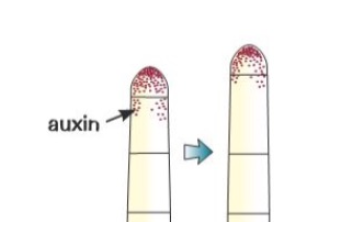
Auxins are a family of plant hormones that play a key role in controlling growth. A common auxin is Indole Acetic Acid (IAA). These hormones are primarily produced in the tips of growing stems and roots, known as the apical meristem, and they can diffuse to other parts of the plant to regulate growth.
- They move through the plant in solution (dissolved in water)
- Produced in tips & dissolves backwards to stimulate cell elongation process which occurs behind tips
- Promotes growth in shoot but inhibits growth in roots
- Involved in phototropism & gravitropism
Effects of Auxins:
- Unequal Distribution: Auxins distribute unevenly in stems and roots, leading to different growth rates. This uneven growth helps plants adjust to their environment.
- In Stems: High concentrations of auxins promote cell elongation, causing the stem to grow more.
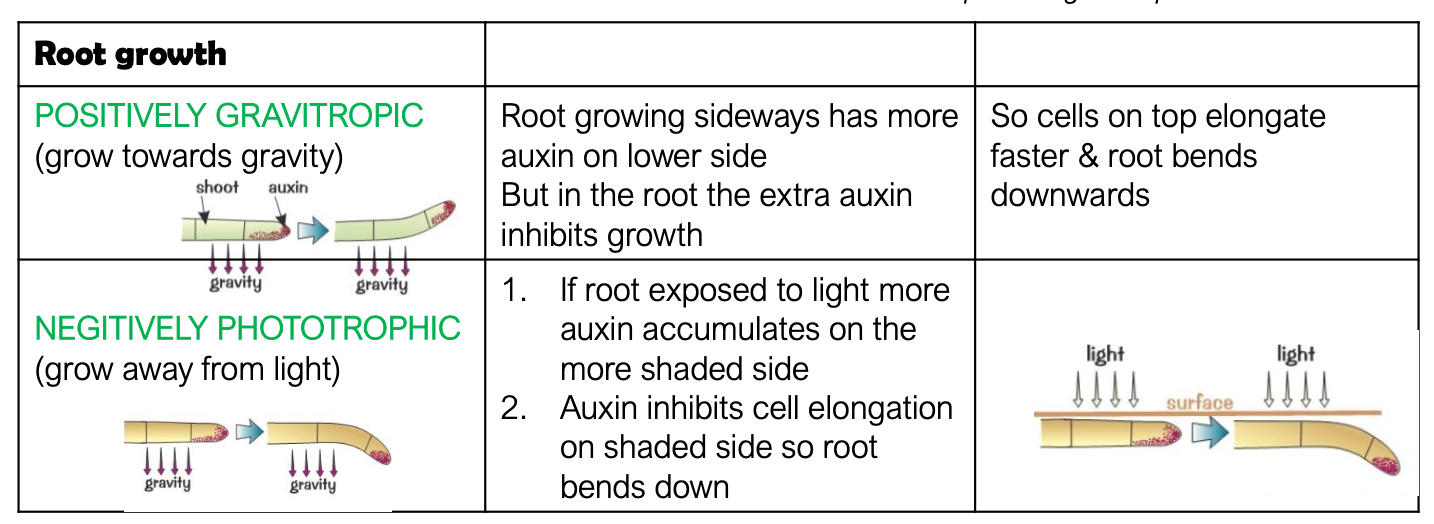
- In Roots: High concentrations of auxins inhibit growth, so cells grow less.
Phototropisms in Detail
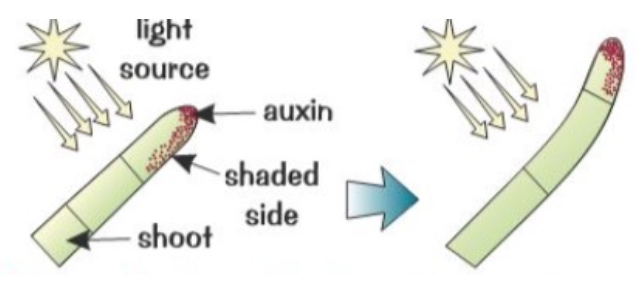
In stems, when one side is shaded, the shaded side accumulates more auxins. This causes the shaded side to grow longer, which results in the stem bending towards the light. The plant doesn't bend towards the light directly; rather, the cells on the shaded side elongate more, causing unequal growth.
If the light comes from directly above, auxins are distributed evenly, and the plant grows straight upwards.
Gravitropism (Geotropism)
While phototropism responds to light, gravitropism (also known as geotropism) is a plant's response to gravity.
Plant Responses to Gravity:
- Negative Gravitropism: In stems, growth occurs against the force of gravity, meaning the stem grows upwards.
- Positive Gravitropism: In roots, growth occurs with the force of gravity, meaning the root grows downwards. In a horizontally placed root, auxins accumulate on the bottom side, which grows less, causing the root to bend downwards in the direction of gravity. In a horizontally placed stem, auxins accumulate on the lower side, causing that side to grow more, which leads the stem to grow upwards against the force of gravity.
Shoot growth
Positively Phototrophic (grow towards light)
- When exposed to light it accumulates more auxins on the side in the shade
- Makes cells grow (elongate faster on shade side so shoot bends towards light
- Can absorb more light for photosynthesis which enables plant to grow
- A taller shoot has a better chance of finding light (that's why shoots grow faster on the dark side so they find light) Negatively Gravitropic
(Grows away from gravity)
- When the shoot grows sideways, gravity produces an unequal distribution of auxin in the tip with more auxin in the lower side
- Causes the lower side to grow faster bending shoot upwards
Root Growth
Roots underground that aren't exposed to light grow downwards due to positive gravitropism
Commercial uses of plant hormones
Selective Weed Killing
Most weeds growing in fields of crops / on a lawn are broad-leaved in contrast to grasses & cereals which have very narrow leaves. Selective weed killers have been developed from auxins which only affect the broad-leaved plants. They disrupt their normal growth patterns which soon kills them leaving the grass & crops untouched
Growing and Cutting from Rooting Powder
A cutting is part of a plant that has been cut off it. Normally if you stick cuttings in the soil they wont grow but by adding rooting powder which contains auxins, they produce roots rapidly & start growing as new plants. This enables growers to produce lots of clones (exact copies) of a really good plant very quickly
Controlling flower and fruit formation
Gibberellins are plant hormones that stimulate seed germination, stem growth & flowering. Used to make plants flower from earlier than they would / under conditions they wouldn't normally flower (eg. Warmer than normal). Also to reduce flower formation which improves fruit quality
Producing seedless fruits
Fruit normally only grows on flowering plants which have been pollinated by insects but is they aren't pollinated the fruit and seeds don't grow. Plant hormones such as gibberellins are applied to the unpollinated flowers of some plants so only fruit grows
Controlling the ripening of fruits
Can be controlled whether while they are still on the plant or during transport to shops so fruit can be picked while unripe (firmer so less damage.) Ripening hormone ethene is added and fruit will ripen on the way to the supermarket perfect when reaches the shelves
Controlling the seed germination
Lots of seeds wont germinate till they have been through certain conditions. Seeds can be treated with gibberellins to make them germinate at times of the year they wouldn't normally & helps make sure all seeds in batch germinate at the same time
Summary
- Auxins control plant growth by promoting or inhibiting cell elongation, depending on their concentration in different parts of the plant.
- Phototropism directs stem growth towards light and root growth away from light.
- Gravitropism ensures that stems grow upwards and roots grow downwards in response to gravity.
Note
These hormonal responses help plants optimise their growth and survival by directing their shoots towards light and their roots towards water and nutrients.