Civilian experience of war (Edexcel GCSE History): Revision Notes
📚Revision Notes
Civilian experience of war (c1700-c1900)
During the 18th and 19th centuries, warfare began to have a much greater impact on ordinary British people. The growing cost and scale of military conflicts meant that civilians experienced war in new ways that had never been seen before. Technology also made the reality of warfare more visible to the public, which changed social attitudes towards military conflict significantly.
Recruitment challenges and poor conditions
The British army faced serious problems attracting soldiers throughout this period. Army life was extremely harsh, with terrible living conditions both at home and abroad. For most of the 18th century, soldiers were not housed in proper barracks but were forced to stay in civilian homes, creating tension between the military and local communities.
Note
The practice of housing soldiers in civilian homes was known as "billeting" and was a major source of friction between military and civilian populations throughout the 18th century.
The army struggled to find enough recruits, partly because desertion rates were very high. Pay was extremely poor - soldiers earned less than a typical labourer and had to cover their own costs for food, accommodation during peacetime, and equipment. This made military service very unattractive to most people.
Between 1700 and 1800, there were no permanent army barracks for soldiers to live in. As the army grew larger, entire towns and cities faced the problem of housing soldiers, leading to significant disturbances and conflicts with local trade. The situation became so serious that the government had to take action.
Important
The Militia Act of 1757 was deeply unpopular with the public and sparked violent riots when rumours spread that militia members might be forced to serve overseas. This showed how resistant ordinary people were to military service and how much they feared being drawn into warfare.
Requisitioning and taxation
The army relied heavily on taking supplies and transport directly from civilians through a system called requisitioning. In 1700, the military had no transport system of its own, so ships were often seized during wartime to help with the cost of building and maintaining the army's needs.
The financial burden of warfare grew enormously during this period. Army costs increased from approximately £1 million in 1700 to about £8 million by the mid-18th century. However, this burden became relatively smaller as the population grew and living standards improved across Britain.
Note
Despite the enormous absolute increase in military spending, the relative burden on civilians actually decreased over time due to Britain's expanding economy and growing population.
During times of war, taxes rose dramatically. For example, the wars against France from 1793-1815 cost around £75 million each year. Despite these huge costs, the growing economy meant that ordinary people could generally afford these increased tax burdens better than previous generations.
Impact of newspaper reporting
The development of faster communication and newspaper distribution revolutionised how civilians experienced war. In 1815, The Times sold 5,000 copies daily, but by 1850 this had increased to 40,000 copies. National newspapers and 500 new provincial papers were distributed across Britain using the new steam train network.
Example
Case Study: William Howard Russell's War Reporting
William Howard Russell of The Times became famous for sending short dispatches by telegraph from the Crimean War to London. These reports took only five hours to reach the capital, compared to 20 days by sea. Russell sent almost daily reports, revolutionising how the public experienced distant warfare.
This increased coverage meant that more information about warfare reached the public than ever before. As a result, public interest grew significantly and newspaper sales increased. Even people who couldn't read could now follow news through films showing reconstructions of battles, particularly from the Boer War.
The press began to influence public attitudes in important ways. During the Crimean War, public criticism of military leadership in newspapers led to government resignations. The Boer War coverage raised concerns about the poor quality of army recruits due to inadequate performance, which led to calls for military reform.
Note
By the Boer War (1899-1902), newspapers sent 300 journalists to cover the conflict, showing how important war reporting had become to both media and public interest.
Developments in requisitioning
The problems with requisitioning gradually improved as the military developed its own transport systems. Requisitioning was unpopular and impractical when operating far from Britain in distant territories.
In 1855, the Land Transport Corps (later renamed the Military Train) was created to provide proper transport for the army. This marked an important step towards military self-sufficiency.
In 1888, the Army Service Corps took over responsibility for providing and transporting military supplies, with specially trained recruits managing these operations. This reduced the need to rely on civilian resources and helped improve relationships between the military and ordinary people.
Important
These military reforms represented a crucial shift from relying on civilian requisitioning to military self-sufficiency, significantly reducing the burden on ordinary British people during wartime.
Impact of war photography
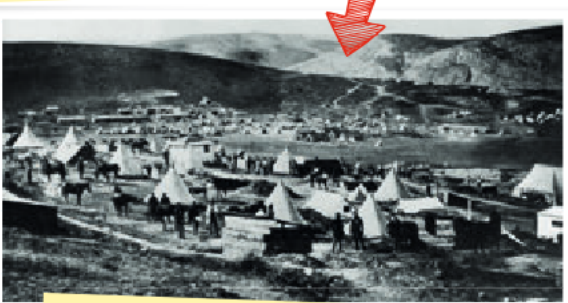
Photography brought the reality of warfare directly to British civilians for the first time. Roger Fenton's photographs from the Crimean War (1853-56) showed the public actual conditions that soldiers faced while serving their country. These images had a significant impact on public opinion because they provided first-hand visual evidence of military hardships.
The photographs revealed the harsh winter conditions and difficult circumstances that soldiers endured during campaigns. This visual evidence helped the public understand the true cost of warfare in human terms, not just financial costs.
Note
War photography marked a revolutionary change in how civilians could understand and relate to military conflicts, making warfare more real and immediate than ever before in British history.
Timeline of key events
- 1700: Army costs approximately £1 million annually
- 1757: Militia Act passed, causing public riots over fears of overseas service
- 1793-1815: Wars against France cost around £75 million per year
- 1815: The Times sells 5,000 copies daily
- 1850: The Times circulation grows to 40,000 daily copies
- 1853-56: Crimean War - first war extensively covered by newspapers and photography
- 1855: Land Transport Corps established to reduce reliance on requisitioning
- 1888: Army Service Corps created with trained personnel
- 1899-1902: Boer War extensively covered by 300 journalists
Summary
Key Points to Remember:
- War's impact on civilians grew dramatically during c1700-c1900 due to increased costs, scale, and new technology
- Poor army conditions and low pay made recruitment extremely difficult, leading to reliance on requisitioning from civilians
- Newspaper reporting revolutionised public awareness of warfare, with circulation increasing from 5,000 to 40,000 copies for major papers
- War photography, particularly from the Crimean War, brought visual reality of conflict to British homes for the first time
- Military reforms like the Land Transport Corps (1855) and Army Service Corps (1888) gradually reduced the burden on civilian populations