London’s response (Edexcel GCSE History): Revision Notes
📚Revision Notes
London's response to the Second World War, 1939-45
Government strategy to maintain civilian morale
During the Second World War, the British government recognised that keeping morale high among London's population was crucial for the war effort. They implemented several key measures to help Londoners cope with the devastating experience of the Blitz, ensuring that civilian spirit remained strong even under intense bombardment.
The government's approach focused on demonstrating unity, shared sacrifice, and effective leadership during this critical period. These measures were designed not just to keep people safe, but to maintain their confidence in Britain's ability to win the war.
Note
Civilian morale was considered so important that the government dedicated significant resources and planning to maintaining public confidence. A demoralised population could have undermined the entire war effort, making these psychological strategies as crucial as military ones.
The royal family's role in boosting morale
One of the most significant morale-boosting measures was the decision by the royal family to remain in London throughout the Blitz. King George VI and Queen Elizabeth (later the Queen Mother) stayed in the capital, making themselves visible to bombed communities and demonstrating that even the monarchy was sharing in London's suffering.
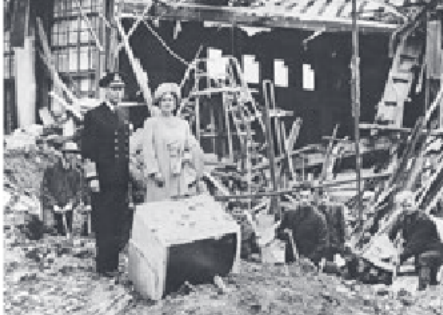
This royal presence was particularly powerful because it showed that Britain was united in facing the German threat. When Buckingham Palace was bombed, the King and Queen were photographed among the rubble, which helped present Britain as a nation where "even the most privileged were suffering equally." This image of shared sacrifice was essential for maintaining civilian support for the war effort.
Important
The royal family's decision to stay helped counter German propaganda that suggested Britain's leaders were abandoning ordinary people. Instead, it reinforced the message that everyone was in the fight together.
The Cabinet War Rooms and government leadership
The government also maintained morale by demonstrating strong, continuous leadership from London itself. Government ministers refused to abandon the capital, instead operating from secure underground facilities known as the Cabinet War Rooms.
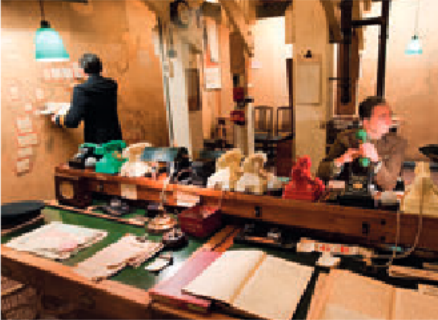
These underground bunkers allowed Winston Churchill and his wartime government to continue directing Britain's war effort from the heart of London. The Map Room became the nerve centre of military operations, where crucial decisions about Britain's strategy were made daily. This visible government presence in London showed civilians that their leaders were not running away from danger but were staying to fight alongside them.
The fact that the government remained in London, rather than relocating to safer areas, sent a powerful message that the capital would not be surrendered to German bombing.
The 'Dig for Victory' campaign and public spaces
To address food shortages caused by German U-boat attacks on supply ships, the government launched the innovative 'Dig for Victory' campaign. This initiative, organised by the British Ministry of Agriculture, encouraged civilians across the country to grow their own food to supplement rationed supplies.
In London, this campaign transformed the appearance of the city as public spaces were converted into productive allotments. Victoria Park in Hackney was turned into vegetable plots, while even the historic moat at the Tower of London was converted into vegetable patches. These changes showed how every available space was being used for the war effort.
The campaign served multiple purposes beyond just food production. It gave civilians a sense of active participation in the war effort, helping them feel they were making a meaningful contribution to victory. The widespread nature of food growing also created a visible symbol of British determination and resourcefulness.
Note
Posters and leaflets were distributed as part of a comprehensive propaganda campaign, ensuring that civilians understood both the practical aspects of growing food and the patriotic importance of their efforts. This helped maintain morale by giving people concrete actions they could take to support the war.
Timeline of key events
- September 1939: War declared; government begins planning for civilian morale
- 1940: 'Dig for Victory' campaign launched by Ministry of Agriculture
- September 1940: The Blitz begins; royal family decides to stay in London
- September 1940: Buckingham Palace bombed; King and Queen photographed in rubble
- 1940-1941: Cabinet War Rooms become centre of British war planning
- Throughout war: Public spaces across London converted to food production
Summary
Key Points to Remember:
- Government priority: Maintaining high civilian morale was seen as essential for Britain's war effort and ultimate victory
- Royal leadership: The royal family's decision to stay in London during the Blitz provided powerful symbolic leadership and demonstrated shared sacrifice
- Continuous government: The Cabinet War Rooms allowed Churchill's government to maintain visible leadership from London throughout the war
- Civilian participation: The 'Dig for Victory' campaign gave ordinary Londoners practical ways to contribute to the war effort while addressing food shortages
- Total war effort: Every aspect of London life, from royal palaces to public parks, was adapted to support the war against Nazi Germany